


 Français
 Español
 العربية
 한국어
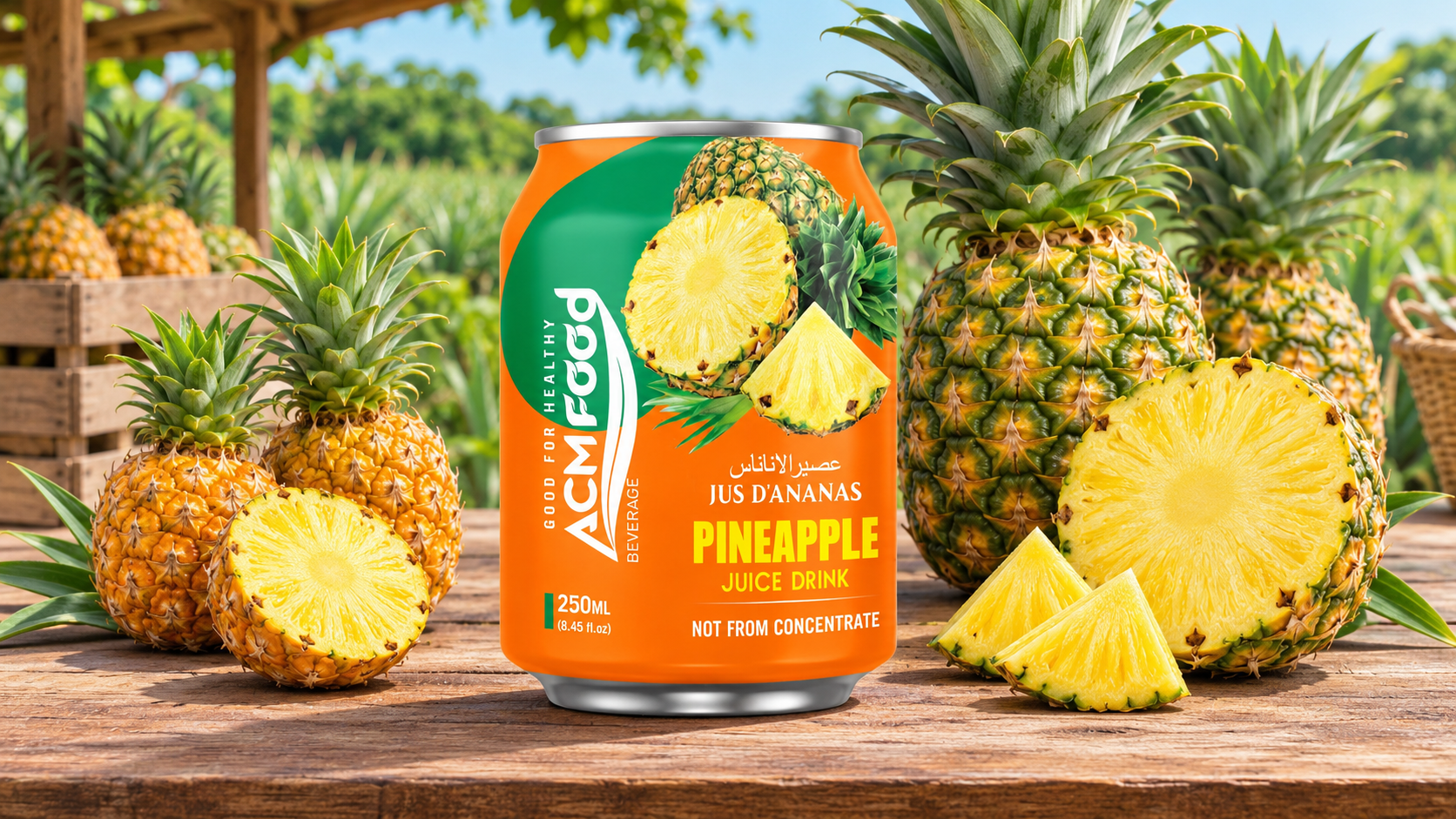
Vietnam pineapple varieties for juice come down mainly to two choices: Queen pineapple, a small, intensely aromatic fruit long grown in the Mekong Delta, and MD2, a larger, sweet, low-acid hybrid now widely planted for fresh export and processing. Neither is better in every case. Queen gives a bold, fragrant juice; MD2 gives a smoother, more uniform one.
This sourcing explainer compares the two varieties on juice yield, Brix, acidity, aroma, seasonality and growing regions, and shows which drink styles suit each. It is written for brand owners and importers specifying pineapple juice or pineapple drinks made in Vietnam. ACMFOOD uses Vietnamese pineapple in its juice and blended drinks, and the comparison reflects how variety shows up in the finished product.
What is the main difference between Queen and MD2 pineapple?
The main difference is flavour intensity versus uniformity. Queen pineapple is smaller, with deep golden flesh and a strong, perfumed aroma that many consider the classic tropical pineapple taste. MD2 is larger and more uniform, with sweet, low-acid flesh and a milder aroma. Queen suits flavour-led drinks; MD2 suits smooth, consistent juices.
MD2 was developed as a hybrid for consistent quality and has become one of the most widely traded pineapple types in the world. Queen belongs to a different group of pineapples, traditionally grown in Southeast Asia and parts of Africa, known for small fruit and strong flavour. In Vietnam, Queen has a long history in the Mekong Delta, while MD2 has been planted more recently, often in larger farms aimed at export.
How do Queen and MD2 compare for juice?
For juice, Queen typically gives a more aromatic, tangier juice with deeper colour, but lower yield per fruit because of its size and higher peeling losses. MD2 typically gives more juice per fruit, a sweeter and less acidic taste and very consistent quality, but a milder pineapple aroma. The choice depends on the drink style.
| Characteristic | Queen pineapple | MD2 pineapple |
|---|---|---|
| Fruit size | Small | Medium to large |
| Flesh colour | Deep golden yellow | Bright yellow |
| Aroma | Strong, perfumed, classic tropical | Milder, clean |
| Taste balance | Sweet with noticeable acidity | Sweet with low acidity |
| Juice yield per fruit | Lower, due to size and peeling losses | Higher, larger fruit with more flesh |
| Uniformity | More variable between fruit and seasons | Very uniform |
| Typical role | Flavour-led juice, blends needing a strong pineapple note | Smooth juice, base for blends, consistent bulk supply |
These are general tendencies. Actual values depend on farm, season and ripeness at harvest, so a specification should be based on samples from the real supply.
How do Brix and acidity differ between the two?
Both Queen and MD2 can reach a high natural sweetness when ripe, but they differ in acidity. MD2 is known for low acidity, which makes its juice taste smooth and very sweet. Queen generally has more acidity, which gives a brighter, tangier taste and supports its strong aroma. The Brix-to-acid ratio, rather than Brix alone, explains much of the difference in taste.
For a juice specification, this matters in three ways:
- Taste target. A brand wanting a bright, tropical pineapple will usually prefer Queen’s balance; one wanting a mellow, sweet juice will lean towards MD2.
- Added acid. MD2 juice may need a little acid adjustment in some recipes; Queen juice often needs none.
- Consistency. MD2’s uniformity makes Brix and acidity easier to keep within narrow ranges across batches.
Brix is the standard measure of sweetness in juice specifications. Our fruit juice Brix guide explains how it is measured and used.
Which variety gives better aroma?
Queen pineapple gives stronger aroma. Its perfumed, intensely tropical smell is the main reason it is valued for juice and drinks where pineapple must be clearly recognisable. MD2’s aroma is pleasant but milder, which can be an advantage in blends where pineapple should support rather than dominate.
Aroma is also the trait most affected by processing. Heat treatment and storage can reduce fresh pineapple aroma in both varieties, so recipes often combine juice with natural pineapple flavour to keep the profile consistent through shelf life. When a brand chooses Queen specifically for its aroma, the process should be designed to protect it as much as possible.
Where are Queen and MD2 grown in Vietnam?
Queen pineapple is traditionally grown in the Mekong Delta, where it has been cultivated for generations on the region’s acidic, low-lying soils. MD2 has been introduced more recently and is grown on larger farms in several regions, often linked to export or processing programmes. Exact areas change as planting expands, so current supply should be confirmed with the manufacturer.
From a sourcing point of view:
- Queen is often supplied by many smallholders, which can mean more variation between lots but a strong local supply base.
- MD2 is more often grown on organised farms, which supports uniform quality and planned volumes.
- Logistics from farm to factory affect freshness, so distance between growing areas and processing plants matters.
Our page on ingredients sourcing explains how raw materials such as pineapple are selected and checked on arrival.
How does seasonality affect pineapple supply?
Pineapple can be harvested over much of the year, but supply and quality still vary with season. Peak periods bring more fruit and often better prices, while off-peak periods can bring lower volumes and more variable sweetness. Growers also use flowering management to spread harvests, which helps processors maintain supply.
For a year-round juice programme, manufacturers may combine fresh fruit processing with stored pulp or juice to smooth out seasonal swings. Our calendar of Vietnam fruit harvest seasons gives a general view of timing. Buyers with tight taste specifications should ask how the manufacturer manages off-season variation.
How do the two varieties behave during processing?
Queen and MD2 behave differently from the moment they reach the factory. Queen’s small size and deep eyes mean more trimming and lower flesh recovery, while MD2’s larger, more regular fruit suits mechanical peeling and coring. Both need fast handling after cutting, because fresh pineapple juice loses aroma and can change in colour if it waits.
- Preparation. Queen often needs more manual work to remove peel and eyes; MD2’s regular shape makes preparation more efficient.
- Pressing and pulp. Both varieties give juice with natural pulp. The amount kept depends on whether the drink should be clear, lightly cloudy or pulpy.
- Heat treatment. Pineapple juice is acidic, which suits pasteurisation and hot fill. Heat reduces fresh aroma, so the profile after processing is the one to judge.
- Foaming. Pineapple juice can foam during pumping and filling, so handling and filling speeds are set with this in mind.
These differences affect cost and throughput as much as taste, which is why the variety choice is often discussed together with volume and price targets.
What drives the cost difference between Queen and MD2 juice?
The cost difference comes mainly from yield, labour and supply structure. Queen’s lower juice yield per fruit and more labour-intensive preparation raise the cost per litre, while MD2’s higher yield and uniform fruit lower it. Market prices for fresh fruit, which change with season and export demand, add further movement.
For a buyer, this means a Queen-based juice is often positioned as a flavour-led or premium product, and an MD2-based juice as a dependable mainstream one. A blend can balance cost and flavour. Because fruit prices move through the year, quotations are usually prepared per project and per season rather than fixed in advance.
Which variety suits which drink style?
Queen suits drinks where pineapple flavour must stand out: pure pineapple juice with a bold profile, tropical blends, and drinks with pineapple as the hero flavour. MD2 suits smooth, sweet pineapple juice, high-volume programmes, and blends where pineapple adds sweetness and body behind other fruits.
- 100% pineapple juice, bold profile: Queen, or a blend led by Queen.
- 100% pineapple juice, mellow profile: MD2.
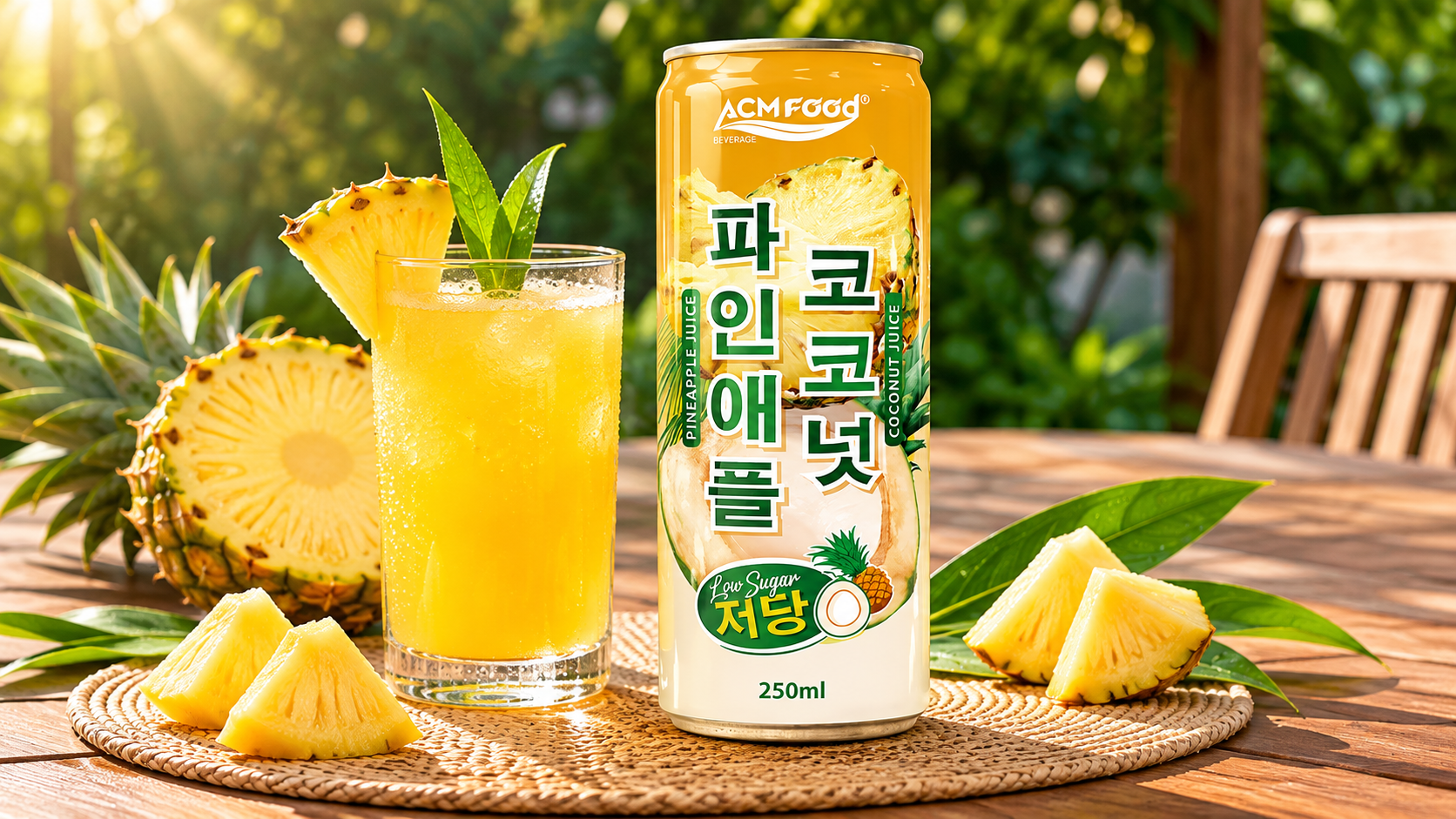
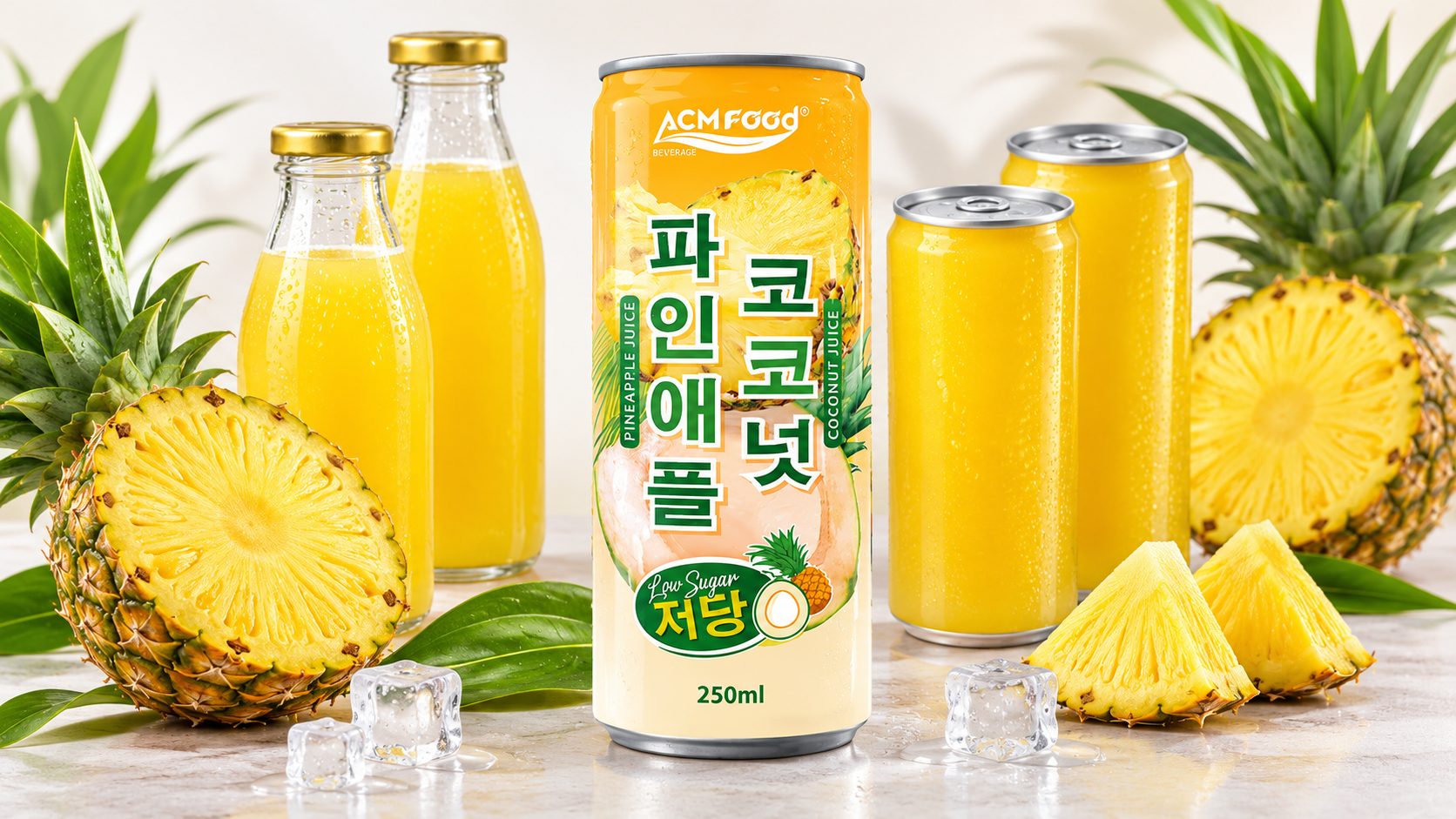
- Pineapple in coconut water: either; Queen gives stronger pineapple character, MD2 a softer note.
- Tropical blends: Queen when pineapple leads, MD2 when it supports mango, passion fruit or guava.
- Sparkling pineapple drinks: Queen’s aroma often carries better through carbonation.
Format matters too. In clear PET or glass, Queen’s deeper golden colour looks rich and natural on shelf, while MD2 juice appears brighter and lighter. In cans, colour is hidden, so taste and aroma become the deciding factors.
Some manufacturers blend juice from both varieties to combine Queen’s aroma with MD2’s volume and consistency. This can be a practical middle path for brands that want both character and reliable supply.
What should buyers specify for pineapple juice?
Buyers should specify the variety or blend of varieties, the juice form (NFC or from concentrate), Brix and acidity ranges, colour, pulp content and an approved taste reference. Where the label names the variety or origin, the specification should also require supporting sourcing records.
| Parameter | What to define |
|---|---|
| Variety | Queen, MD2 or defined blend |
| Juice form | NFC or from concentrate |
| Brix and acidity | Ranges and Brix-to-acid ratio |
| Colour | Target shade and acceptable range |
| Pulp | Clear, low pulp or with pulp |
| Taste reference | Approved sample |
| Label claims | Variety or origin wording supported by records |
For buyers building a pineapple range for import or private label, our guide to pineapple juice OEM for importers and private labels covers commercial options in more detail.
Commercial terms
ACMFOOD’s terms for pineapple juice and pineapple drinks are a minimum order of 500 cartons per SKU and a production lead time of 15–30 days after samples and artwork are approved. Production runs under HACCP, ISO 22000 and FSSC 22000 systems, with aluminium cans, PET bottles and glass bottles available. Prices depend on variety, juice form, pack and volume and are quoted per project.
Frequently asked questions
Is Queen pineapple sweeter than MD2?
Both can be very sweet when ripe. MD2 tastes sweeter to many people because its acidity is lower, while Queen has a tangier balance and stronger aroma.
Which pineapple variety gives more juice?
MD2 usually gives more juice per fruit because it is larger with more flesh. Queen is smaller and loses more in peeling, so yield per fruit is lower.
Can Queen and MD2 juice be blended?
Yes. Blending combines Queen’s aroma with MD2’s volume and consistency, and is a practical option for brands that want both character and reliable supply.
Can the label say “Queen pineapple”?
Yes, if the juice is made from Queen pineapple and sourcing records support the claim. The wording should be agreed with the manufacturer before artwork is finalised.
Choosing a pineapple variety
Queen and MD2 offer two different routes to pineapple juice from Vietnam. Queen delivers bold aroma and a tangy, tropical taste at lower yield; MD2 delivers sweet, smooth and consistent juice at higher yield. Many brands choose based on the drink style, and some combine both.
Send ACMFOOD your target taste, market and pack, and we will prepare pineapple samples so you can compare varieties side by side before choosing.