


 Français
 Español
 العربية
 한국어
한국어Juice aimed at children is one of the most tightly scrutinised segments in the beverage category. Sugar content, portion size, juice percentage and on-pack claims are all treated more strictly for products marketed to children than for the same liquid sold to adults, and the rules differ market by market.
This guide sets out what actually changes when a juice product is positioned for children: the formulation levers available, the pack formats the segment uses, and the label questions a brand has to settle before artwork is finalised. It is written for brand owners and importers, not as dietary advice.
What makes a juice a children’s product?
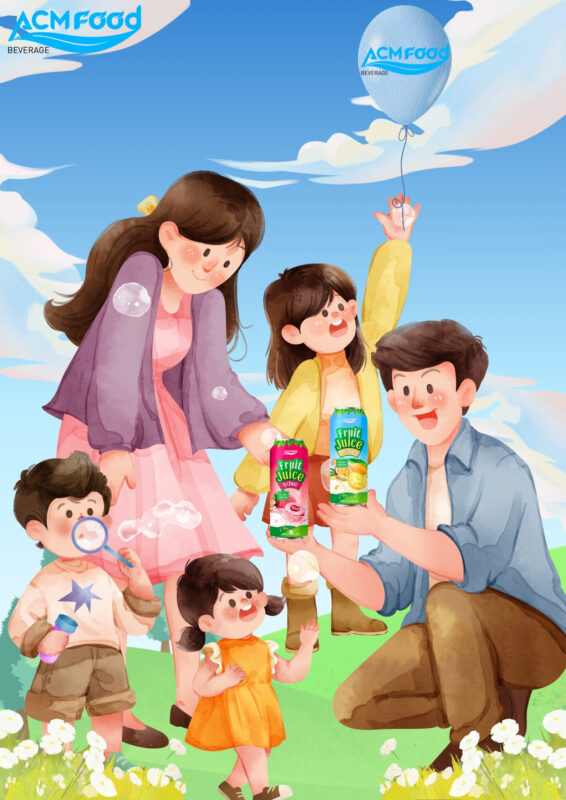
Usually the pack rather than the liquid. The same juice base can be sold as a standard SKU in a 1L bottle and as a children’s product in a 200ml carton with a straw. What turns it into a children’s product is the portion size, the pack format, the artwork, and the claims made on it — and it is those elements, not the recipe alone, that attract the extra regulatory attention.
That is worth understanding early, because it means the compliance work sits with the packaging and label decisions as much as with formulation.
Juice, nectar or juice drink: which category applies?
The single most consequential decision is which product category the item falls into, because it determines the minimum juice content and what the pack may legally be called. A 100% juice, a nectar and a juice drink are three different products with three different cost structures and three different label vocabularies.
| Category | Juice content | Added sugar | Typical use in the children’s segment |
|---|---|---|---|
| 100% juice | All from fruit | None permitted | Premium positioning; higher cost per unit |
| Nectar | Fruit plus water | Often permitted within limits | Mid-tier; allows lighter taste and lower cost |
| Juice drink | Lower fruit content | Commonly used | Value tier; most flexible on flavour and cost |
The permitted minimum for each category is set by the destination market, not by the manufacturer. See 100% juice vs nectar vs juice drink for how the three compare in more detail.
Sugar: the formulation lever everything else follows
Sugar is the parameter buyers and regulators look at first in this segment. A brand has several ways to move it, and each one has a trade-off:
- Dilution — moving from 100% juice to a nectar or juice drink lowers total sugar per serving, but changes the category and the label.
- Smaller portion — a 200ml pack delivers less sugar per serving than a 330ml pack without touching the recipe at all.
- Fruit selection — different fruits carry different natural sugar levels, so the blend itself shifts the total.
- Sweetener substitution — permitted sweeteners vary by market and are more tightly restricted in products aimed at children in some jurisdictions. Confirm before formulating.
Note that naturally occurring fruit sugar and added sugar are declared differently on most labels, so two products with the same total sugar can present very differently on pack.
Pack formats used in the children’s segment
- Aseptic carton, 125–200ml — the classic format; ambient stable, light, and portion-controlled by design.
- Small PET bottle — resealable, which suits older children and lunchbox use.
- Pouch — light and low-volume, though recycling routes for multi-material pouches are limited in many markets.
- Small can — less common in this segment, since it is not resealable.
Portion size is doing real work here: it is the simplest way to control sugar per serving, and it is also what makes the pack recognisable as a children’s product on shelf.
Label claims: what needs extra care
Claims that would pass on a general product often need substantiation or are restricted outright when the product is aimed at children. Nutrition and health claims usually require a defined composition and documented evidence, and some markets restrict certain claims on children’s products regardless of composition.
Practically, this means the claim set should be agreed before artwork begins, not after. A claim that has to be removed late forces a reprint, and a claim that ships without substantiation is a compliance exposure. For an example of how label requirements are structured in one market, see the US food label checklist for imported beverages.
Multipacks and how they change the specification
Much of this segment sells in multipacks rather than singles, which introduces a second layer of packaging decisions on top of the primary pack. A shrink-wrapped four or six pack, a printed carton sleeve and a shelf-ready case each carry different tooling costs and different artwork requirements, and each has to be decided before print plates are made.
Multipacks also change the label surface available. Where the outer pack obscures part of the primary carton, some markets require mandatory information to be repeated on the outer, which can force a redesign if it is discovered late. Confirm which panel carries which information at the same time as the pack format is chosen.
Shelf life and distribution for small formats
Small aseptic cartons are ambient stable, which is what makes them practical for this segment, but the shelf-life clock still matters commercially. Retailers commonly specify a minimum remaining shelf life on arrival, and a product shipped by sea from an overseas manufacturer consumes part of that window in transit.
For a brand importing into a distant market, this is worth calculating before the first order rather than after: total shelf life, minus sailing time, minus customs clearance, minus warehouse handling, gives the figure the retailer will actually see. See shelf life on arrival for how that clause is normally written and how to plan production dates around it.
What buyers and retailers ask for in this segment
- Declared juice content and the category the product falls into.
- Sugar per serving and per 100ml, with the serving size stated.
- Allergen status and the full ingredient declaration in the destination language.
- Certification evidence from the production facility.
- Shelf life and how much of it remains on arrival at the warehouse.
Frequently asked questions
Does a children’s juice need a different recipe from an adult one?
Not necessarily. Many products use the same base and differentiate through portion size, pack format and artwork. Where the recipe does change, it is usually to lower sugar per serving or to simplify the ingredient list.
Which is more common in this segment, 100% juice or a juice drink?
Both are widely used. 100% juice supports a premium position and a cleaner label; nectars and juice drinks allow a lighter taste and a lower cost per unit. The choice usually follows the retail price point rather than the other way round.
Are sweeteners allowed in children’s beverages?
It depends entirely on the destination market. Permitted sweeteners and their use levels vary, and several markets apply tighter rules to products marketed to children. This must be confirmed for each target market before the formulation is finalised.
What is the most common pack size?
Small aseptic cartons in the 125–200ml range dominate the segment, because they are ambient stable, portion-controlled and easy to include in a lunchbox or multipack.
Information for beverage brands
If you are developing a juice for the children’s segment, bring three things to the first conversation: the target retail price, the destination markets, and the claims you want on pack. Those determine the category, the sugar target and the format faster than any recipe discussion. ACMFOOD produces fruit juices, nectars and juice drinks in carton, PET and can formats under OEM and private label programmes, with a minimum of 500 cartons per SKU.
Conclusion
A children’s juice product is defined less by its recipe than by its portion size, its category and its label. Settle which of the three product categories you are making, decide the serving size that carries your sugar target, and confirm the claim set against each destination market before artwork starts. The formulation work is straightforward once those decisions are made.