


 Français
 Español
 العربية
 한국어
한국어Private label beverages in Australia are drinks developed and packed by a third-party manufacturer and sold under a retailer’s or brand owner’s own label. For Australian retailers and emerging brands, they offer speed to market, cost control, and the flexibility to tailor flavour, pack, and positioning to local demand.
This guide distils what matters most for private label beverages Australia: category trends, product definitions, regulatory essentials, packaging & sustainability, sourcing models, logistics, and the commercial levers that determine margin and repeat sales. Use it as a working checklist to shape your brief and choose the right manufacturing route.
What does “private label beverages Australia” mean for brand owners?
It means creating beverages where you control the brand, positioning, and commercial model, while a specialist manufacturer handles formulation, production, and packing. You decide the concept; your partner provides technical execution, quality assurance, and compliance with the Australia New Zealand Food Standards Code.
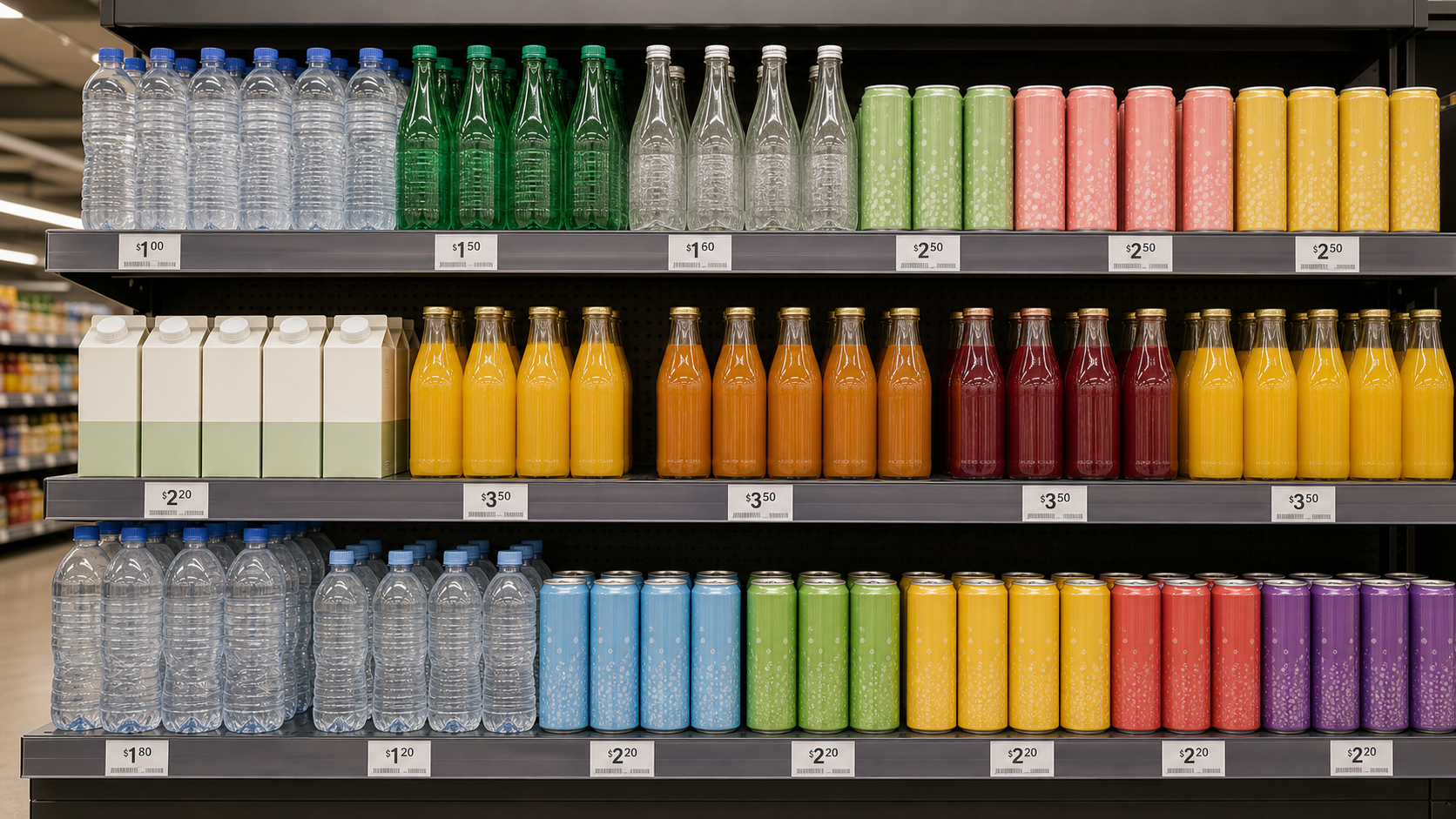
In practice, private label spans water, juice, juice drinks, functional sodas, kombucha-style beverages, iced teas, coffees, plant-based milks, energy drinks (where allowed), and tropical or Asian-inspired flavours. It is used by national supermarkets, convenience chains, independents, pharmacy front-of-store, and fast-growing DTC brands. For many, the appeal is the ability to launch a tailored range—sizes for on-the-go, family packs for value, or premium glass for gifting—without building a factory.
Which beverage categories are trending in Australian private label?
Australian shoppers gravitate to value, taste, and simpler labels. Within that, several platforms continue to grow:
- Flavoured & sparkling waters: Light taste, lower sugar, and refreshment cues suit lunchboxes and office fridges.
- Tropical & coconut-based drinks: Coconut water, coconut juice blends, and tropical fruit mixes remain popular across grocery and convenience.
- Better-for-you sodas: Reduced-sugar soft drinks and botanical sodas with citrus, ginger, yuzu, or berry notes.
- Cold teas & coffees: Iced tea, milk tea, and RTD coffee for afternoon pick-me-ups.
- Juice & juice drinks: From 100% juice at breakfast to lighter nectars and juice drinks for everyday refreshment.
- Functional-style propositions: Caffeine, electrolytes, or botanicals—subject to formulation limits and local labelling rules—where flavour and refreshment stay central.
Across these, Australian consumers respond to clear flavour cues, transparent ingredients lists, and packaging that signals convenience, quality, and recyclability.
How big is the opportunity across grocery, convenience, and online?
Private label beverages are now embedded across Australia’s major supermarkets and gaining space in convenience, independents, and online. Larger chains use own brand to differentiate and manage price tiers, while smaller retailers use it to build loyalty and margin in staple categories like water, juice, and mixers.
- Grocery: High-volume formats (multi-packs, family bottles, value cans) and premium ranges in glass or limited flavours for seasonal promotions.
- Convenience & petrol: Single-serve cans and 300–600 ml bottles positioned for immediate consumption, with cold chain and fast replenishment.
- Online & DTC: Club-size packs, variety bundles, and subscription-ready SKUs with shipping-friendly packaging.
Private label can also expand a retailer’s seasonal calendar—tropical summer editions, festive mixers, or back-to-school lunchbox formats—while maintaining consistent core SKUs year-round.
Regulatory essentials for private label drinks in Australia
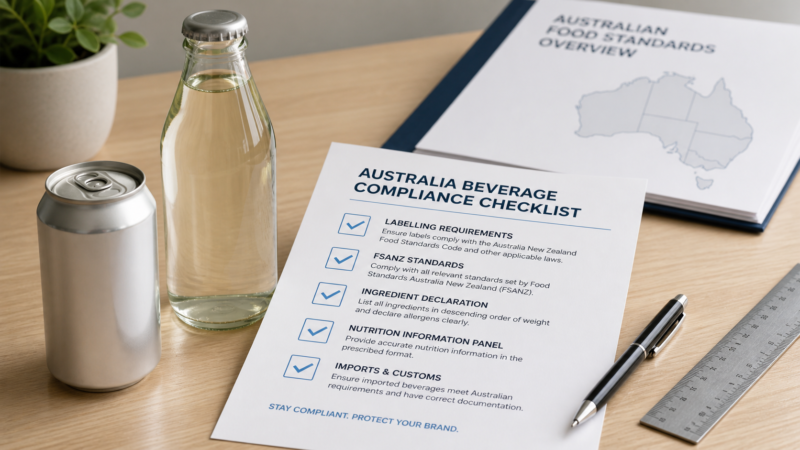
Every private label product must comply with the Australia New Zealand Food Standards Code and other applicable laws. Your manufacturer should help, but the brand owner carries responsibility for what appears on pack. Key areas include:
- Ingredients & composition: Ensure the product type (e.g., 100% juice, nectar, juice drink) aligns with formulation and any category definitions in the Code.
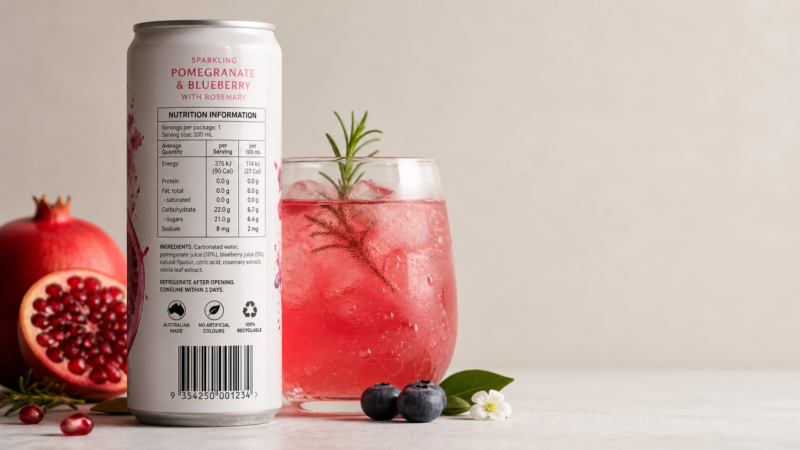
- Labelling basics: Ingredient list in descending order by weight, allergen declarations where relevant, nutrition information panel, date marking, lot identification, storage instructions, and name & address details as required.
- Characterising ingredients: Percentage labelling may be required for highlighted ingredients or flavours (e.g., mango, strawberry) to reflect their proportion in the product.
- Sweeteners & claims: Use of non-nutritive sweeteners and statements like “no added sugar” depend on formulation and applicable standards. Claims must be accurate and substantiated.
- Caffeine & botanicals: If using caffeine or botanical extracts, observe permitted sources, levels, and any advisory statements that may apply.
- Country of origin: Country of origin statements are regulated; requirements can differ for locally produced versus imported foods. Confirm the correct framework for beverages and your final supply chain.
- Recycling & container deposits: Australian states and territories operate container deposit schemes. If your pack is eligible, labels may need specific refund messaging and a compliant barcode. Check state-based guidance before artwork finalisation.
- Voluntary frameworks: Some brands adopt the Health Star Rating or the Australasian Recycling Label. If used, follow program rules and evidence requirements.
Build a structured regulatory review into your timeline—pre-brief (concept feasibility), pre-pilot (draft artwork checks), and pre-print (final compliance sign-off).
Product definitions: 100% juice, nectar, and juice drink
Clarity on product type helps avoid mislabelling and consumer confusion. While exact definitions depend on local standards, the distinctions below guide commercial positioning:
| Product type | Typical composition | Positioning & notes |
|---|---|---|
| 100% juice | Fruit juice only (from concentrate or NFC), no added sugars | Breakfast staple; premium cues; often in ambient or chilled |
| Nectar | Fruit purée/juice plus water; may include sweeteners where allowed | Thicker mouthfeel; mid-tier price; family-friendly flavours |
| Juice drink | Lower fruit content plus water; flavours; sweetened where allowed | Everyday refreshment; clear value cues; bold flavour profiles |
Confirm the permitted naming conventions and any minimum fruit content or compositional requirements before finalising labels or marketing claims.
Sugar, sweeteners, and label claims
Australia’s shoppers look for taste first, then sugar content and ingredient simplicity. For private label drinks:
- Formulation levers: Fruit selection, brix-to-acid balance, carbonation level, and aroma all influence perceived sweetness independently of added sugar.
- Non-nutritive sweeteners: If you consider stevia, monk fruit, or other permitted sweeteners, check applicable standards and how they must be declared on pack.
- Claims discipline: Statements such as “no added sugar” or “low sugar” depend on formulation and regulatory definitions. Use only when you can substantiate and when permitted for your product type.
- Consumer language: Use clear flavour descriptors and serving suggestions. Avoid medical or therapeutic claims.
Packaging formats and sustainability expectations
Packaging affects shelf impact, supply chain cost, and shopper trust. Choose a format that suits your channel mix and sustainability goals.
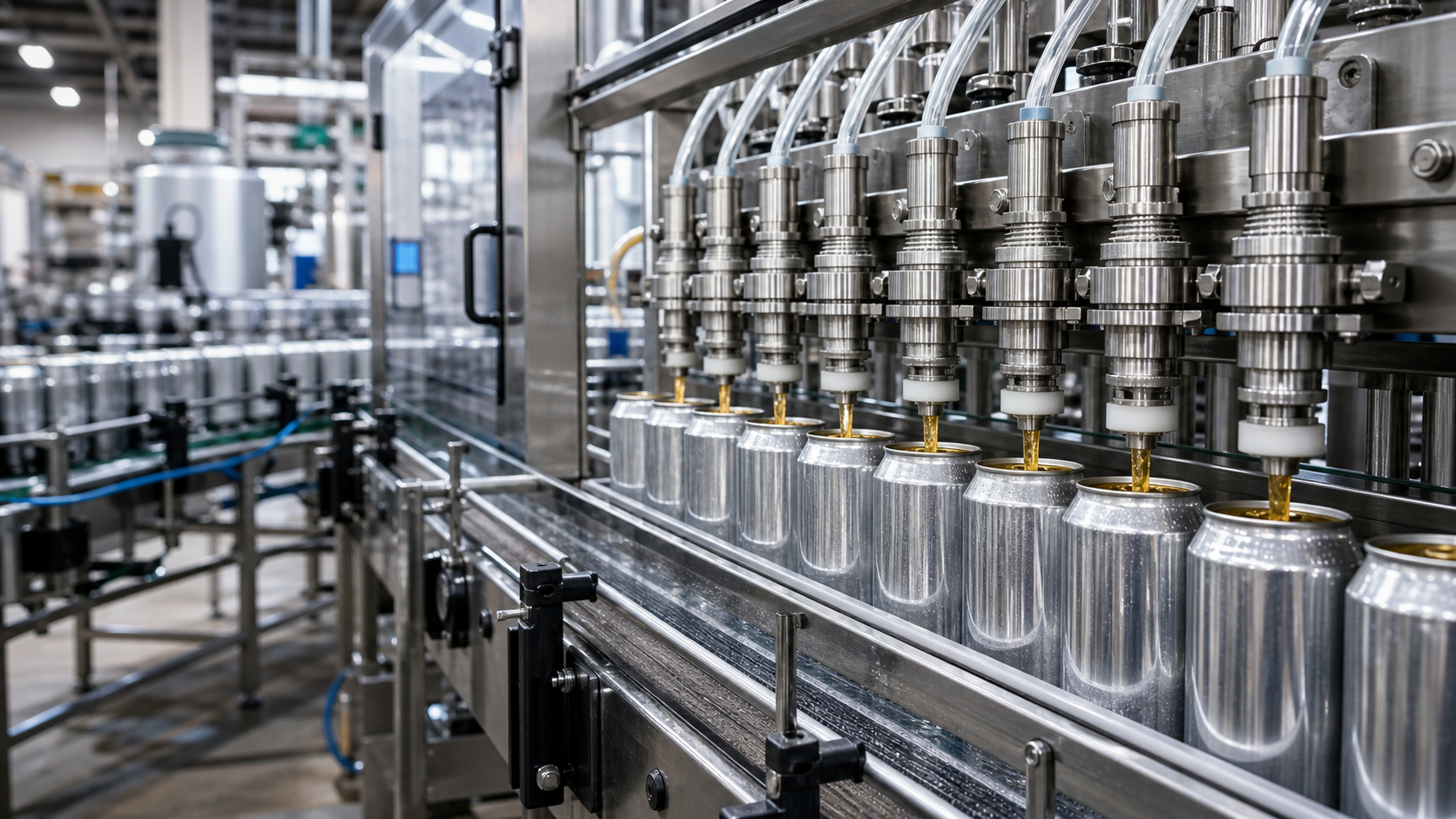
Which pack is right for your private label beverage?
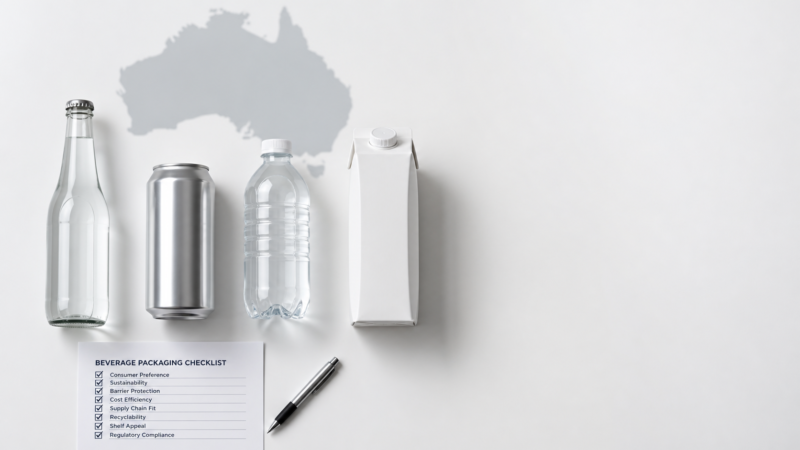
Below is a qualitative comparison frequently used in Australian ranges:
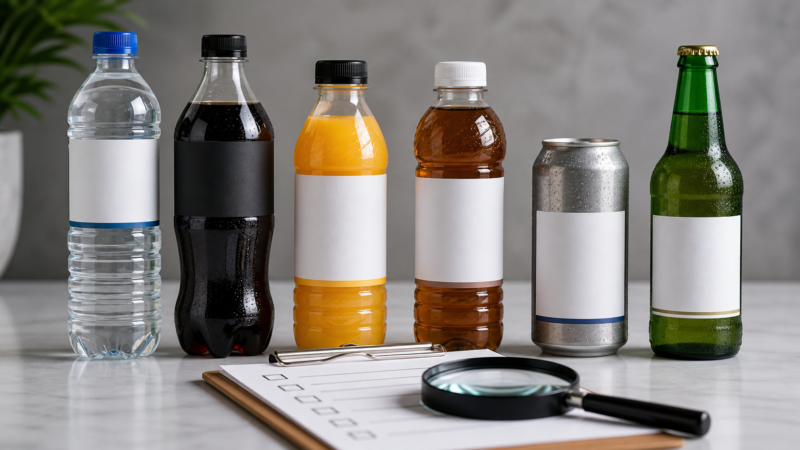
| Format | Where it excels | Positioning & notes |
|---|---|---|
| Aluminum can | Carbonated drinks, flavoured water, coconut-based drinks | Strong cold-shelf appeal; widely recyclable; portable; fast chilling |
| PET bottle | Still & sparkling water, juice drinks, everyday formats | Lightweight; value cues; multiple closures; check recyclability claims |
| Glass bottle | Premium juices, mixers, cold teas/coffees | Premium perception; heavier; breakage considerations; on-premise friendly |
| Aseptic carton | 100% juice, family packs, pantry storage | Ambient logistics; large sizes; sustainability messaging varies by system |
Align pack choice with your retail planogram, CDS eligibility, and e-commerce requirements. For online, consider shippability and pack durability to protect margin.
Domestic vs offshore manufacturing for Australian private label drinks
Australian brands source domestically for speed and local provenance, and offshore for specialty formats, tropical sourcing, or scale. Both paths can work—choose based on your product brief and risk profile.
| Route | Potential advantages | Points to verify |
|---|---|---|
| Domestic manufacturing | Shorter lead times, easier factory visits, local compliance familiarity | Capacity at peak periods, cost competitiveness, access to specialty ingredients |
| Offshore manufacturing | Access to tropical inputs, broader can/carton options, potential cost benefits | Import timelines, artwork-to-print controls, labelling for AU, logistics & CDS coordination |
Many brands use a hybrid model: local water and everyday carbonates produced domestically; tropical juices or coconut-based cans imported to complement the range.
How to brief a private label beverage manufacturer
A crisp, decision-ready brief saves weeks. Cover the following:
- Consumer & channel: Who is the buyer, what occasion (lunchbox, gym, BBQ), and primary channels (grocery, P&C, online)?
- Flavour & sensory: Flavour direction, sweetness target, acidity profile, carbonation level, aroma cues, and mouthfeel.
- Product type: 100% juice vs nectar vs juice drink, flavoured water vs soda, still vs sparkling, caffeinated vs caffeine-free.
- Ingredients strategy: Fruit origins, natural flavours, botanicals, permitted sweeteners, and any exclusions.
- Claims & messaging: Only what you can substantiate under local rules (e.g., “no added sugar” if eligible). Avoid therapeutic language.
- Packaging: Format, size(s), closure, secondary packaging, pallet pattern, CDS considerations, and e-commerce readiness.
- Quality & testing: Shelf-life target, micro and stability testing plan, transport trials (heat/cold), organoleptic checks over time.
- Regulatory: FSANZ compliance review points, allergen assessment if relevant, country-of-origin approach, recycling marks.
- Commercials: Indicative volumes, promotional plan, forecast accuracy, and timeline gates (pilot, pre-production, first PO).
- Artwork workflow: Proofing steps, barcode testing, CDS messaging where applicable, color standards, and dielines.
Quality, testing, and shelf life
Work with manufacturers that operate robust food safety systems (e.g., HACCP-based programs) and document controls for incoming ingredients, processing, and packing. Typical validation steps include:
- Microbiological testing: Appropriate to product type and process (heat-treated, cold-filled, or aseptic).
- Stability studies: Monitor flavour, colour, carbonation, and pack integrity over the intended shelf life.
- Transit & temperature trials: Simulate Australian conditions across corridors to major distribution centres.
- Retain samples & traceability: Keep retains from each batch and ensure full lot traceability.
Agree acceptance criteria for pilots and first production, and document change controls for ingredients or processes.
Logistics to Australia: what matters
Importing beverages is operationally straightforward when you plan early with your supplier and forwarder. Address the following:
- Incoterms & responsibilities: Clarify who handles freight, insurance, customs clearance, and last-mile to DCs.
- Ports & lead times: Build buffers around sailings to Sydney, Melbourne, Brisbane, or other ports aligned to your DC network.
- Labelling timing: Finalise AU-compliant labels and CDS messaging (if eligible) before print; barcodes tested for scan speed.
- Import controls: Some ingredients may require additional review; confirm documentation with your customs broker and ensure accurate product classification.
- Warehousing & rotation: Set FEFO practices, temperature guidance, and promotional uplift forecasts with 3PLs.
Cost drivers and how to protect margin
Private label margin relies on disciplined specification and volume planning. Major levers include:
- Ingredients: Fruit origin, concentration vs NFC, flavour system complexity, and sweetener choices.
- Process & format: Hot-fill vs cold-fill vs aseptic; can, PET, glass, or carton; single-serve vs multi-pack.
- Minimums & changeovers: Fewer flavours and harmonised pack sizes help utilisation and reduce write-offs.
- Freight & duties: Optimise palletisation, carton counts, and container utilisation; confirm landed cost scenarios.
- Promotions & EDLP: Bake promotional cadence into the standard cost so rebates don’t erode long-term margin.
Category examples and development pathways
Here are practical starting points that align with Australian shopper expectations and retail needs:
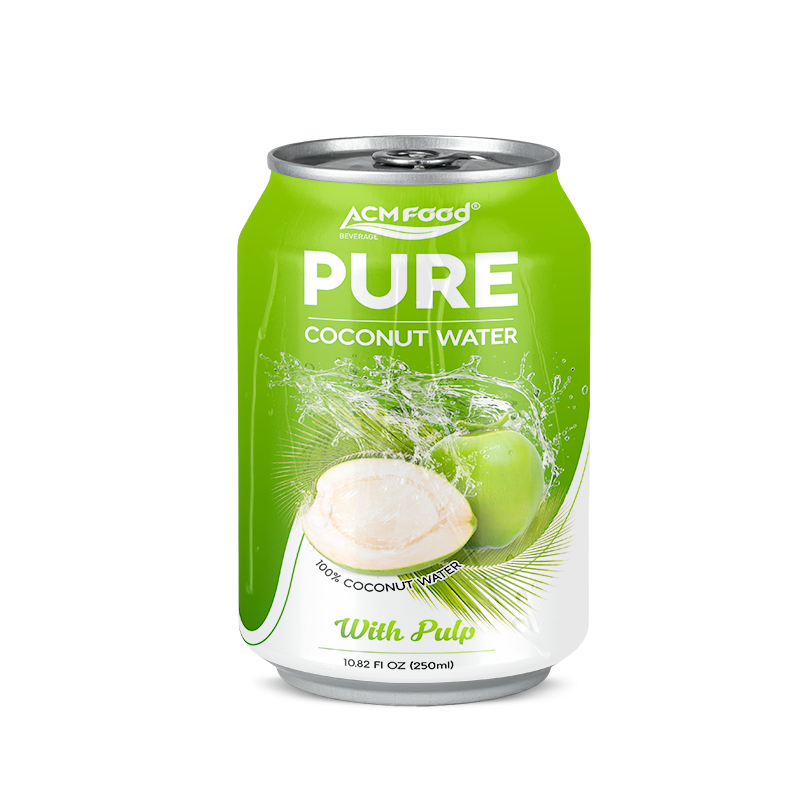
- Coconut water cans: A recognised refreshment format for grocery and convenience. For sourcing and can formats, explore coconut water cans in bulk solutions.
- Fresh-positioned coconut water: Where channel supports chilled handling and a short ingredient list, see the fresh coconut water private label opportunity.
- Coconut juice blends: Fruit-forward taste with light texture cues; consider a private label coconut juice can for entry-price refreshment.
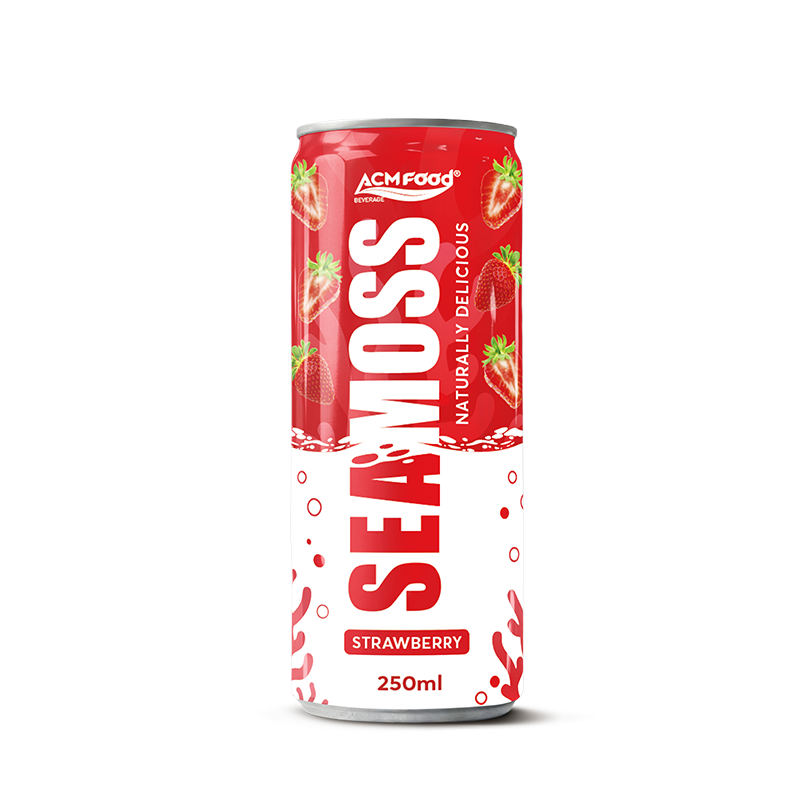
- Seasonal berry launches: For insights on flavour direction and timing, review strawberry juice OEM trends.
- Stone fruit ranges: If you plan a summer nectar or tea blend, learn how to choose the right peach juice OEM manufacturer.
Route-to-market: grocery, convenience, foodservice, and online
Tailor your pack, flavour, and price architecture by channel:
- Grocery: Core plus limited editions; range breadth supports cross-merchandising with snacks and breakfast items.
- Convenience: Immediate consumption sizes, bold flavour cues, and high chill retention; faster resets require forecast discipline.
- Foodservice: Larger PET or carton for back-of-house; dispense-friendly closures; simplified flavours.
- Online: Multi-packs and variety bundles; protective secondary packaging to reduce damages.
Designing labels that convert without over-claiming
On busy Australian shelves, the best private label packs are clear and compliant:
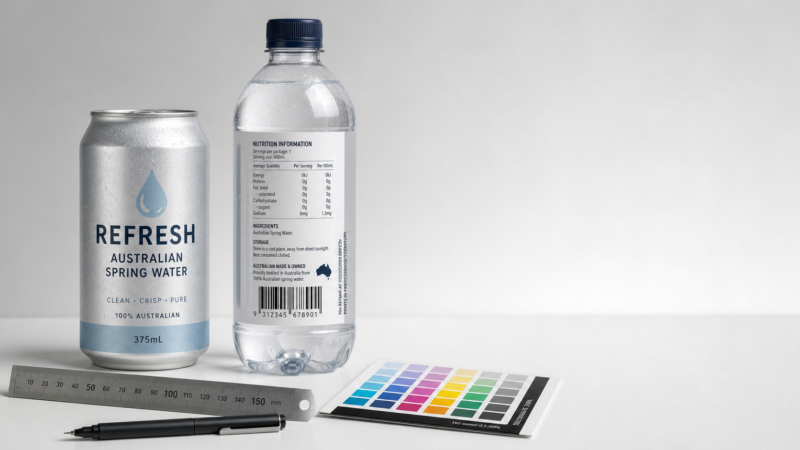
- Front-of-pack: Obvious flavour, pack size, and still/sparkling signals; avoid medical or therapeutic language.
- Side/back-of-pack: Clean ingredients panel, nutrition information panel, storage/use directions, and batch/date marking.
- Recycling: Consider voluntary recycling guidance where appropriate, aligned with actual pack components and local programs.
- CDS text (if eligible): State-based wording can vary—confirm before artwork lock.
Working with private label beverage manufacturers (selection criteria)
Evaluate suppliers on more than just price:
- Technical fit: Capability with your intended process (hot-fill, tunnel pasteurisation, aseptic) and your pack formats.
- Ingredient access: Secure supply of key fruits, flavours, or botanicals in your desired origins.
- Scale & flexibility: Ability to grow volumes and manage seasonal changeovers without disrupting service levels.
- Quality systems: Documented food safety programs, traceability, and a responsive QA team.
- Regulatory support: Practical labelling and compliance guidance for Australian requirements.
- Communication: Clear project management, samples, and transparent timelines.
Pilots, validation, and line trials
Pilots reduce risk while aligning stakeholders on taste and cost:
- Bench to pilot: Start with lab prototypes to lock flavour direction, then move to pilot for carbonation, fill temperature, and mouthfeel under real conditions.
- Packaging validation: Test closures, seams, and label adhesion; confirm barcode scan reliability.
- Stability & transport: Validate across expected temperatures, including Australian summer peaks.
- Consumer checks: Lightweight sensory panels can confirm go/no-go before scale-up.
Building a resilient range architecture
Think in layers: an everyday core, a premium tier, and limited editions. Harmonise components (closures, cartons, pallet patterns) to simplify supply. Use limited flavours to test novelty without committing to year-round complexity.
Risk management across the supply chain
Private label success is measured over many replenishments, not just the first launch:
- Specification discipline: Granular specs for raw materials and finished goods reduce drift over time.
- Dual-sourcing: Where practical, qualify a back-up source for critical ingredients.
- Artwork control: Versioning and sign-off logs prevent misprints and obsolete stock.
- Recall readiness: Maintain batch traceability and a clear escalation pathway.
White label vs private label: what’s the difference?
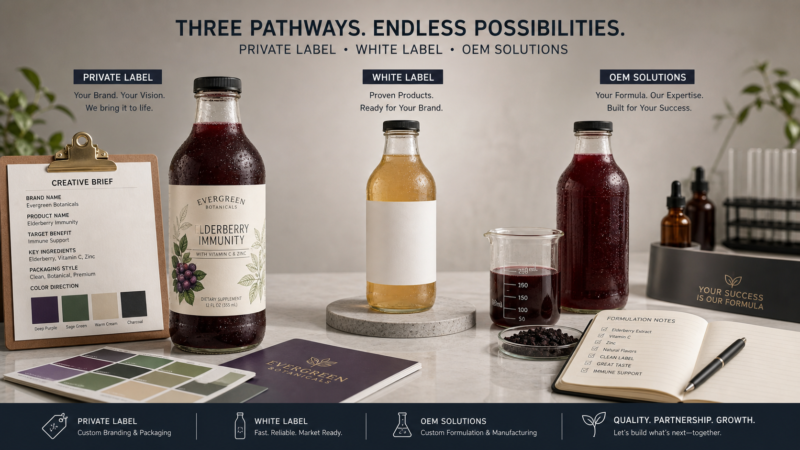
In practice, people use the terms interchangeably. White label beverages Australia often means selecting from a ready-made recipe and design template with minimal changes. Private label drinks Australia typically implies a tailored formulation, pack, or flavour strategy informed by a retailer’s range plan. Choose based on speed, budget, and the level of differentiation you need.
Budgeting time: artwork, print, and first PO
Lead times vary by manufacturer and pack format. Build a realistic plan with buffers for artwork revisions, dieline checks, print scheduling, ingredient procurement, and shipping or DC intake bookings. Align promotional calendars only after your first production window is secured.
Case pointers: flavour systems and tropical sourcing
When you lean into tropical cues, integrate supply with product positioning. For example, coconut water and coconut juice blends should balance flavour authenticity with shelf stability and pack convenience. For specific pathways and buyer expectations, refer back to the examples in this guide, including coconut and fruit SKUs suited to Australian shoppers.
FAQ: private label beverages for Australian brands
Do I need an Australian address on the label?
Brands must meet applicable name and address requirements under the Australia New Zealand Food Standards Code. Confirm the exact wording and placement during your regulatory review.
Are private label beverages profitable in Australia?
They can be when the range is tightly specified, packs are channel-fit, and promotions are planned into landed cost. Ingredient choices, format, and supply chain efficiency are the main levers.
Can I use stevia or monk fruit?
Use of non-nutritive sweeteners depends on product type and applicable standards. Confirm permissibility, declarations, and sensory impact during formulation.
What about container deposit schemes?
Australia’s states and territories operate CDS programs. If your pack is eligible, confirm any refund text and barcode requirements before artwork lock and coordinate registrations operationally.
What minimum order quantities and lead times should I expect?
MOQs and timelines vary by manufacturer, format, and season. Align expectations early in your brief and build buffers for artwork, validation, and logistics.
Conclusion: make private label beverages work for Australian shoppers
Winning private label beverages in Australia blend shopper-first flavour, clear labelling, and channel-fit packaging with reliable manufacturing and logistics. Keep formulations honest, claims compliant, and pack formats aligned to where you sell. Whether you produce domestically or import, specification discipline and a strong pilot plan protect margin and repeat sales.
If tropical or fruit-forward SKUs are part of your roadmap, explore the linked guides on coconut and fruit formats for practical pathways to market. When you are ready, consolidate your product brief—consumer, flavour, pack, compliance, and testing—so your manufacturing partner can respond quickly and accurately.
For own brand drinks Australia strategies that scale, return to the essentials in this guide and build around your shopper promise. That is how private label beverages Australia becomes a repeatable growth engine across grocery, convenience, and online.
Manufacturing for Australian brands
If you are sourcing for the Australian market, start with the OEM route for how a specification becomes a shipped container, certifications and food safety systems for the evidence importers and retailers require, and export and logistics for shipping terms and documentation. To price a programme, request a quote.
Request a quoteWhere to go next
Planning an Australian launch? The Australia beverage market page covers the full OEM and private label programme for Australian brands and importers: MOQ 500 cartons per SKU, 15-30 day production, HACCP / ISO 22000 / FSSC 22000, and shipping from Ho Chi Minh City. Request a quote and we reply within 24 hours.