


 Français
 Español
 العربية
 한국어
한국어The fruit juice manufacturing process is the end-to-end industrial sequence that converts raw fruit into a safe, consistent, and commercially packaged beverage. It spans raw material sourcing, preparation, extraction, clarification, standardization, thermal processing, filling, and quality assurance.
This guide walks beverage developers and buyers through each step, highlighting key decisions, control points, and documentation you should expect from a professional juice producer when moving from concept to a finished product.
What is the fruit juice manufacturing process?
In short, it is a controlled workflow that takes sound fruit, extracts its juice, stabilizes and standardizes that juice, then packages it to meet food safety and shelf-life targets. The exact route varies by fruit type, whether the product is NFC (not-from-concentrate) or from concentrate, and the chosen packaging format.
Across all variants, the objectives are consistent quality, ingredient traceability, food safety compliance, efficient line hygiene, and repeatable sensory outcomes that match the product specification.
Raw material sourcing and incoming inspection
Great juice begins with great fruit. Processors define purchase specs by variety, maturity index, defects tolerance, pesticide residue limits (per market regulations), and post-harvest handling conditions. Deliveries are accompanied by supplier documentation and are checked against the agreed specification.
- Visual quality: size, color, bruising, decay, foreign matter.
- Basic chemistry: soluble solids (Brix) and acidity that influence flavor balance.
- Food safety: hygiene of transport containers and temperature control for perishable fruit.
- Traceability: lot IDs and supplier records for end-to-end product history.
Fruit is then segregated by lot and processed on a first-in, first-out basis within an appropriate time window to preserve flavor and reduce spoilage risk.
Sorting, washing, and preparation
After receiving, fruit moves through manual and automated sorting to remove stones, leaves, moldy units, and other defects. Washing uses potable water in one or more stages (rinse, scrub, spray) to reduce soil and surface contamination.
Preparation steps depend on the fruit: destemming (e.g., grapes), de-calyxing (e.g., strawberries), peeling (e.g., citrus where peel bitterness is undesirable), coring or pitting (e.g., apples, mangoes), and size reduction (crushing, chopping) to facilitate juice release.
Juice extraction methods: which one is used?
Processors choose extraction based on fruit anatomy and target sensory profile. Common approaches include pressing for pome and grape, and pulping/finishing for citrus and tropical fruits. The goal is high juice yield with minimal bitter notes and optimized clarity or body, depending on product style.
- Pressing: whole or milled fruit is pressed in belt or rack-and-frame presses to separate juice from pomace. Suited to apples, grapes, pears.
- Pulping and finishing: broken-down fruit passes through screens to remove seeds/peel while keeping desired pulp; widely used for citrus and many tropicals.
- Decanter or centrifugation: enhances separation of solids where needed, improving clarity and downstream filtration efficiency.
Bycatch (pomace, peels) may be valorized for feed or ingredients where permitted, improving process sustainability.
Enzyme treatment, clarification, and filtration
Depending on the style (clear vs. cloudy/pulpy), enzymes (e.g., pectinases) may be used to break down pectins and aid clarity, filtration speed, and yield. For clear juices, processors use settling, flotation, centrifugation, and multi-stage filtration to reduce turbidity.
Cloudy juices maintain suspended solids for a fuller mouthfeel; here, the objective is stability—preventing rapid sedimentation or phase separation—through careful particle size control and downstream homogenization where appropriate.
Concentration and NFC vs. from concentrate
Producers may concentrate juice to reduce transport and storage costs. Concentration removes water under controlled conditions, and aroma recovery systems can capture volatile flavors for later re-addition. Alternatively, NFC juice is stabilized and packed without concentrating, preserving a profile closer to fresh.
Both routes can deliver high quality. The deciding factors include target market positioning, supply chain efficiency, seasonality, and packaging. Reconstituted juice uses concentrate plus potable water and any permitted natural flavors from the same fruit to meet the target Brix and sensory standard.
Blending, standardization, Brix and acidity control
Standardization aligns each batch with the product specification. Technologists adjust Brix and acidity (using permitted inputs and water where applicable) to minimize lot-to-lot variability. When creating multi-fruit concepts, controlled blending unlocks layered flavor, color, and nutrition targets.
- Blend architecture: lead fruit for aroma, support fruits for color/body, and micro-notes for top-line accents.
- Spec alignment: target ranges for Brix, titratable acidity, pH, turbidity or pulp level, color coordinates.
- Regulatory fit: juice, nectar, or juice drink categories vary by market rules for minimum juice content and permitted ingredients.
For concept work, pilot blends and sensory panels help converge on the brief. If you plan multi-fruit SKUs, explore development approaches in fruit juice blends. To navigate formulation choices around sweetness and labeling, see no added sugar vs reduced sugar.
Deaeration, homogenization, and thermal processing
Before heat treatment, deaeration removes dissolved oxygen to help protect color, flavor, and certain sensitive compounds. For cloudy juices or products with pulp, homogenization reduces particle size to improve suspension stability and texture.
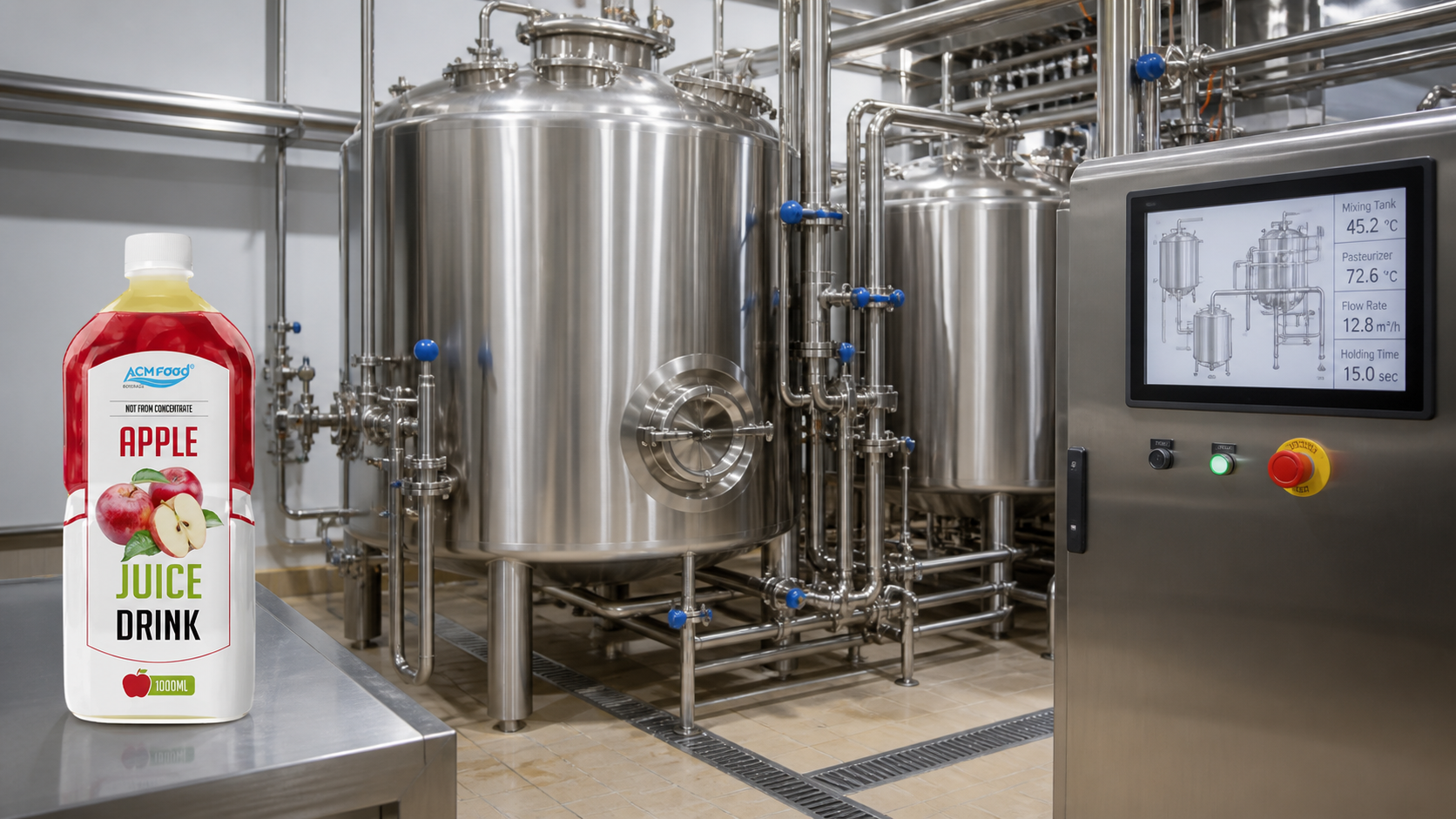
Thermal processing (e.g., pasteurization) is validated to achieve the desired microbiological stability while preserving flavor. The exact thermal profile depends on fruit type, product composition (clear vs. with pulp), and packaging method (hot-fill vs. aseptic). Documentation of the validated heat process is a core food safety record.
Filling and packaging options
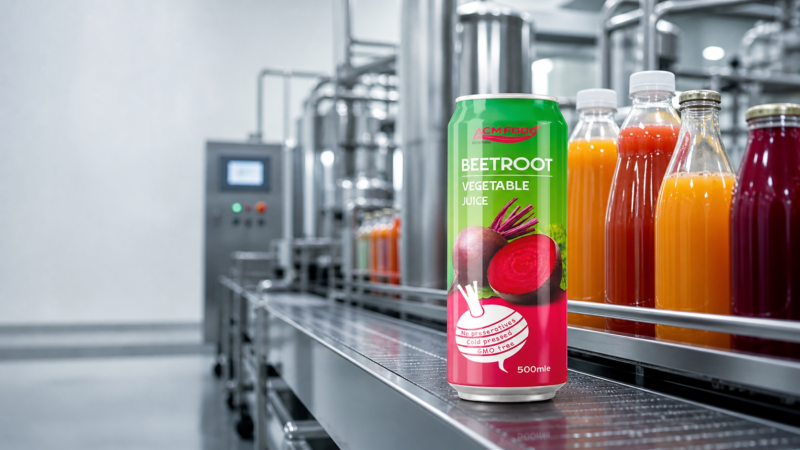
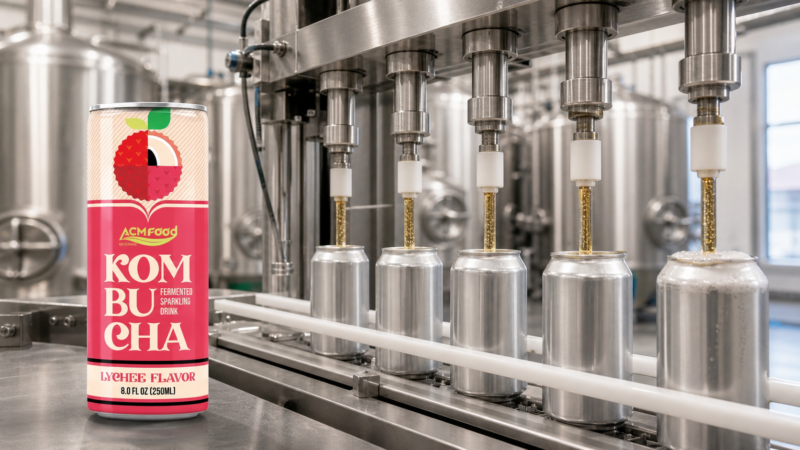
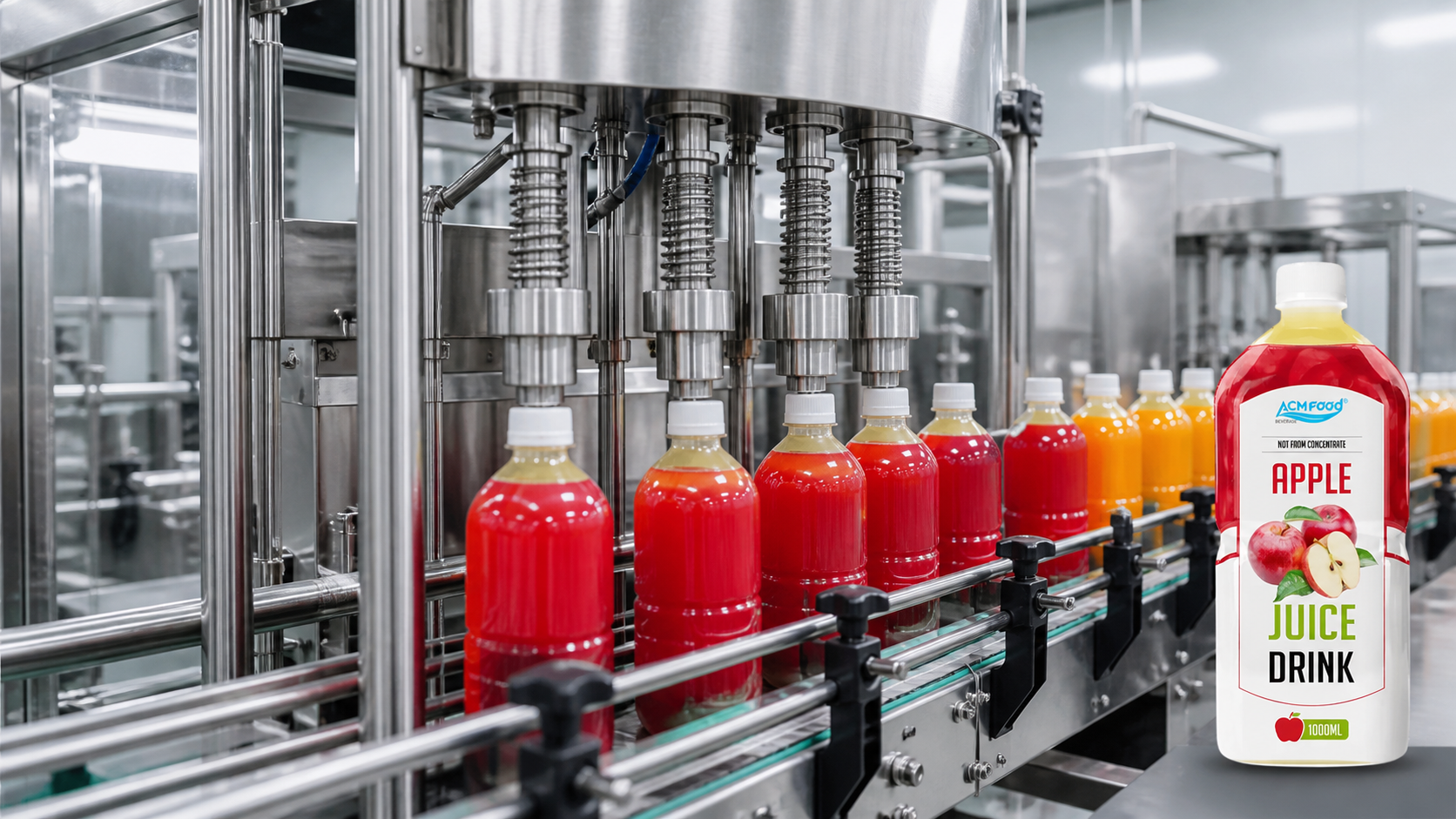
Filling method aligns with shelf-life and distribution goals. The principal routes are hot-fill, aseptic cold-fill, and chilled-fill for short shelf-life products. Each requires precise control of fill temperature, container integrity, and immediate sealing to protect the headspace.
- Hot-fill: the product is filled at elevated temperature into containers designed for it, then closed to form a vacuum on cooling.
- Aseptic filling: product and packaging are sterilized separately, then filled in a cleanroom environment to achieve ambient-stable shelf life.
- Chilled-fill: used for NFC juices meant for cold-chain distribution with shorter shelf life.
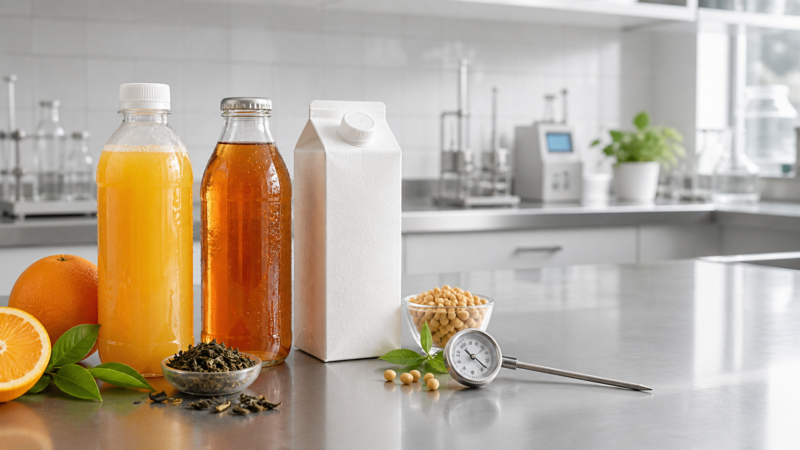
Typical packaging includes PET and glass bottles, HDPE, aseptic cartons, and multi-serve bags-in-box. Barrier requirements (oxygen and light), closure systems, label adhesion, and secondary packaging are validated to protect the product through transport and storage.
Quality control, food safety, and traceability
A robust quality system spans raw materials to finished goods, anchored in a HACCP plan with defined control points and verification records. Testing regimes are product-specific but generally include chemistry, microbiology, and sensory checks supported by calibrated instrumentation.
- Critical control points may include: juice pre-heat/hold, sterile zone conditions during aseptic fill, container seal integrity, and metal detection or X-ray inspection for foreign matter.
- Routine monitoring: Brix, acidity, pH, turbidity, color, and packaging torque/vacuum where relevant.
- Micro testing: indicators aligned with product category and shelf-life strategy.
- Retention samples and traceability: retain per lot with full documentation for potential investigations or shelf-life verification.
For teams planning commercialization, understanding sampling and sign-off improves speed and clarity—see how approvals typically work in fruit juice samples and approval.
CIP, utilities, and line hygiene
Cleaning-in-place (CIP) maintains hygienic conditions inside tanks, heat exchangers, fillers, and pipelines. A validated CIP program specifies cycle steps, chemicals, concentrations, temperatures, contact time, and rinse verification.
Utilities—process water quality, steam, compressed air, and electricity—are managed to defined standards, since variations can affect flavor, safety, and equipment reliability. Gaskets, seals, and filter elements follow preventive maintenance schedules to reduce contamination and downtime risk.
From process to product positioning
Production choices shape label category, shelf-life, and sensory experience. The matrix below summarizes common categories from a processing perspective. For a broader market view, explore our types of beverages guide.
| Category | Processing emphasis | Positioning & notes |
|---|---|---|
| NFC (Not-from-concentrate) | Stabilize fresh-like profile; careful heat and oxygen control; cold-chain for short shelf life or aseptic for ambient. | Closer-to-fresh taste; often premium; supply depends on harvest windows. |
| From concentrate (reconstituted) | Efficient storage/transport as concentrate; reconstitution and standardization before fill. | Consistent year-round profile; ambient-stable options common. |
| Nectar | Blend juice/puree with water and permitted ingredients to achieve target body and sweetness. | Fruit-forward but not 100% juice; category rules vary by market. |
| Juice drink | Lower juice content with flavor system to achieve desired taste and cost. | Broad flavor freedom; cost-effective; labeling must match local rules. |
Documentation buyers should expect
Professional manufacturers maintain transparent, auditable documents and samples that help your team make confident decisions and manage risk across markets.
- Finished product specification with target and tolerance values (sensory, chemistry, packaging).
- Bill of materials and ingredient statements matched to labeling requirements in destination markets.
- Process flow diagram linked to HACCP, identifying control points and verification records.
- Certificates of Analysis (per lot) aligned to the approved spec and method references.
- Shelf-life study summary (conditions, observations, acceptance criteria) and storage instructions.
- Packing list and traceability scheme (lot codes, date codes, decoding logic).
To map the path from ideation to shipment, see a typical private label development timeline. During formulation, align expectations and reduce rework through structured fruit juice samples and approval.
Design choices that influence processing
Product development is iterative: your brand promise, claims strategy, cost targets, and route-to-market all influence the best-fit process and packaging.
- Flavor direction: single-fruit purity vs. layered blends; clear vs. cloudy mouthfeel.
- Sweetness profile and labeling: explore pathways such as no added sugar vs reduced sugar while staying within local regulations.
- Color and aroma retention: oxygen management, aroma recovery, and heat profile selection.
- Shelf-life target and logistics: ambient distribution vs. chilled chain; retailer requirements.
- Sustainability considerations: pack weight, recyclability, and concentrate logistics where suitable.
Line trials, scale-up, and release
Before first commercial run, pilot and line trials confirm fill behavior, cap torque, label adhesion, and code legibility. Hold-time and startup/shutdown procedures are validated to protect food safety and sensory quality.
Release typically follows a gate process: pre-shipment samples, COA review against the approved spec, packaging inspection, and transport checks. Retentions are stored for future reference, and first-on-shelf monitoring can inform continuous improvement.
FAQ: fruit juice manufacturing process
What is the difference between NFC and reconstituted juice?
NFC is stabilized and packed without concentration, aiming for a fresh-like profile. Reconstituted juice is made by adding water (and any permitted recovered aroma) back to concentrate to meet the target Brix and sensory standard. Both can be high quality when processed and packed correctly.
How do producers protect delicate aroma during processing?
They use oxygen control (deaeration, inert gas blanketing), validated heat profiles, and—when concentrating—aroma recovery and later re-addition. Rapid handling between steps and appropriate storage also help maintain flavor integrity.
Are preservatives required for ambient-stable juice?
Not necessarily. Aseptic processing and hot-fill methods can achieve ambient stability without added preservatives, subject to product formulation and regulatory allowances. The chosen route depends on shelf-life goals, pack format, and brand positioning.
What determines shelf life?
It’s a combination of processing (validated microbial kill step), packaging barrier (oxygen/light), storage conditions, and product composition (pH, solids, pulp). Shelf-life is established through formal studies under defined conditions using acceptance criteria agreed in the product spec.
How are pilot samples turned into a factory-ready formula?
Development teams translate the bench recipe into a scalable spec, adjust for processing effects (e.g., heat impact, pulp stability), and run line trials to validate results. For a structured view of sign-off steps, see fruit juice samples and approval.
Conclusion
The industrial fruit juice manufacturing process transforms seasonal, variable fruit into a consistent, safe beverage through disciplined control of raw materials, extraction, clarification, standardization, validated heat treatment, and secure filling. Your final choices—NFC vs. from concentrate, clear vs. cloudy, hot-fill vs. aseptic, and pack format—should align with flavor goals, regulations, and route-to-market. With a clear brief, structured sampling, and documented quality controls, teams can move from idea to shelf with confidence.
Turning this into a product
For the formats, ingredients and processing routes the factory actually runs, see beverage product capabilities. If you are producing to your own recipe, see OEM manufacturing in Vietnam; for launching under your own label, see private label beverages. Raw material specification is covered in ingredients and sourcing. To discuss a specification, request a quote.
Request a quote