


 Français
 Español
 العربية
 한국어
한국어Private label fruit juice development moves through defined phases from idea to export, with one constant throughout: clear, shared fruit juice specifications that guide every decision. When your team and manufacturer align early on the specification, you reduce iterations, manage risk, and protect launch dates.
This guide maps each phase from concept to shipment, explains the key deliverables, and shows how to keep your project moving—without overpromising fixed week counts that vary by market, packaging, processing and approvals.
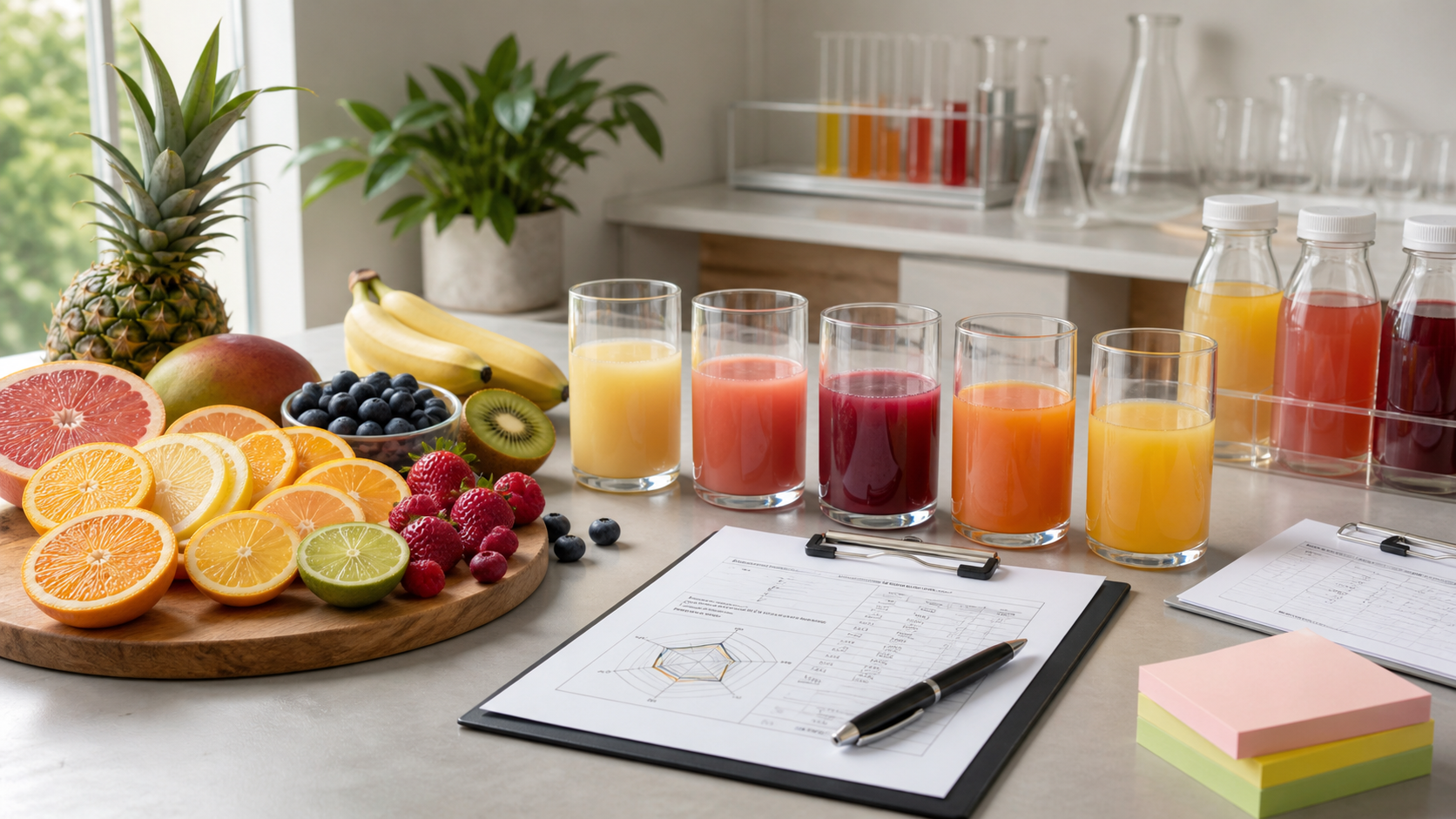
What does a private label fruit juice development timeline include?
A complete timeline covers brief alignment, specification writing, lab samples, validation trials, artwork & packaging, first production, quality release, and freight. Each phase has specific deliverables and a go/no-go decision to avoid rework downstream.
At a glance, expect these major gates:
- Concept & brief: positioning, target markets, regulatory scope, pack format, commercial targets.
- Fruit juice specifications: juice type, fruit content approach, Brix target, acidity profile, ingredient deck.
- Lab samples & iteration: bench development against the spec and sensory target.
- Validation: process choice, packaging compatibility, shelf-life plan, micro safety strategy.
- Artwork & packaging: dielines, label copy, regulatory checks, component approvals.
- First production: raw material readiness, line setup, in-process controls, retains, COA.
- Logistics & export: booking, documents, inspections, load plan, dispatch.
If you are still selecting partners, see how to choose a fruit juice manufacturer to match your format, fruit portfolio and target markets.
How do you define fruit juice specifications at the start?
Begin with a written, version-controlled juice product specification that anchors formulation, processing, packaging and label claims. It should be practical for the chosen production method and compliant for your destination market.
Core fields to align:
- Product & positioning: 100% juice, nectar or juice drink; flavor(s); sweetened vs. no-sugar-added; ambient vs. chilled.
- Fruit content specification: how much fruit juice/pulp the finished product must contain, and how that is declared on pack. Local regulations often set minimums for certain categories.
- Juice Brix specification: target soluble solids for sensory consistency; note whether achieved via fruit selection, blending, or concentrate reconstitution.
- Acidity profile: pH and titratable acidity ranges appropriate to the fruit and process.
- Ingredients: juice sources (single fruit vs. blend), water, sweeteners (if allowed), natural flavors, antioxidants, stabilizers where permitted.
- Allergens & dietary: absence/presence statements as required by target markets.
- Processing: filtration level (clear vs. cloudy), thermal strategy suitable for shelf-life, sediment expectations.
- Sensory: color, aroma, mouthfeel, flavor intensity descriptors with acceptance ranges.
- Micro & chemical: release criteria appropriate for the category and process.
- Packaging: format (e.g., PET, glass, can, aseptic carton), sizes, closures, secondary packaging.
- Label copy boundaries: what you intend to state about fruit content and ingredients, subject to regulatory review.
Different retail categories imply different specification levers. The comparison below helps your team align commercial goals with formulation and labeling pathways.
| Category | Fruit content approach | Brix & sweetness approach | Processing & sensory | Positioning & notes |
|---|---|---|---|---|
| 100% fruit juice | Derived solely from fruit juice/pulp; no added sweeteners | Driven by fruit selection and blending; reconstituted if from concentrate | Clear or cloudy; color and flavor vary by fruit & season | Labeling regulated; simple ingredient list |
| Nectar | Fruit plus water; fruit level varies by fruit type & market | Sweetness may be adjusted within local rules | Often thicker, pulpy options; wider flavor flexibility | Minimum fruit content often defined by regulation |
| Juice drink | Lower fruit content, typically blended with water and flavors | Sweetness profile set to target consumer preference | Lighter body; often emphasis on refreshment | Cost-effective, brandable flavor range |
Aligning on category up front prevents late-stage relabeling or reformulation. Your specification should explicitly state the category and how fruit content is calculated and expressed.
What happens in concept and brief alignment?
The concept brief turns strategy into requirements the factory can execute. It summarizes the consumer promise and the operational constraints that make it feasible.
- Market & channels: retail vs. foodservice; ambient vs. chilled supply chain.
- Regulatory scope: destination countries and any known local category definitions.
- Portfolio: hero SKUs first vs. full range; phased launches to reduce complexity.
- Commercials: target ex-works price band, MOQ tolerance, expected order cadence. For planning, review how much private label fruit juice costs to understand cost drivers before locking specs.
- Timeline drivers: seasonal fruit, custom packaging lead times, artwork approvals, retailer windows.
Decision gate: the team confirms category, pack format, flavor scope, and approves a first-draft specification to proceed to lab work.
How are lab samples and iterations managed?
Bench samples translate the written specification into taste, color and mouthfeel you can approve. The fastest path is focused iteration: change one variable at a time and document results.
- Sample set planning: bracket Brix and acid within your spec to locate the preferred point.
- Fruit sourcing: ensure samples use representative fruit or concentrates likely for scale-up.
- Filtration & body: compare clear vs. cloudy or pulpy for the desired mouthfeel.
- Stability cues: observe sedimentation and color over a short hold under ambient/chilled as applicable.
- Feedback method: structured sensory notes vs. open comments; keep a shared tracker tied to spec versions.
Sample approval checklist:
- Confirmed category and fruit content specification match intended labeling.
- Juice Brix specification and acidity taste-balanced and documented.
- Color and aroma within acceptance ranges.
- Ingredient deck and potential allergens reviewed against target markets.
- Any stabilizers or flavors noted with usage limits in spec.
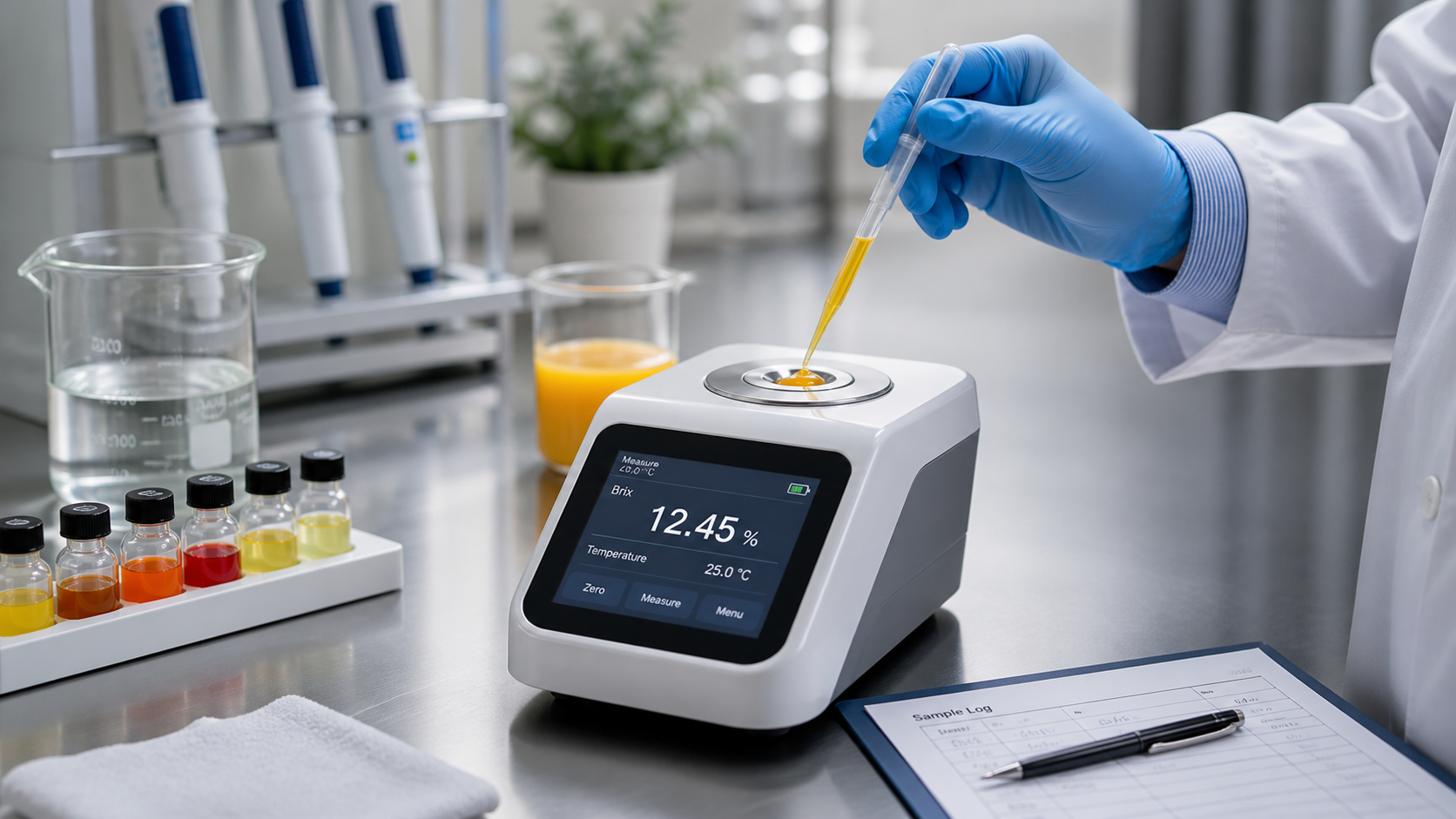
Which trials and validations come before first production?
Validation reduces scale-up surprises. Depending on category and packaging, you may include processing trials, packaging compatibility checks, and a documented shelf-life plan.
- Process confirmation: align on thermal strategy suitable for your category and shelf-life goal; confirm filtration/clarification choices.
- Packaging fit: verify closures, liners, coatings and fill temperatures are compatible with the product and process.
- Shelf-life plan: define storage conditions, test intervals, and acceptance criteria for sensory, micro and chemistry.
- Micro safety approach: agree on raw material and finished product micro criteria and sampling plans appropriate to the product and process.
- Pilot or line trial (if needed): run at representative conditions to confirm flow, fill weights, headspace and appearance.
Decision gate: validation sign-off with updated specification reflecting any learnings, then green-light for artwork and production booking.
What is needed for packaging artwork and label compliance?
Artwork timing often governs your critical path. Build in review loops that tie back to the signed specification and destination market rules.
- Dielines & components: lock bottle/can/carton sizes, closures, cartons and pallet patterns before final copy.
- Label copy drafting: ingredient list order, fruit content statements, storage and serving information aligned to the product spec.
- Regulatory review: nutrition format, claims, and category naming follow the rules of each target market. Labeling outcomes depend on your final formula and local regulation.
- Prepress & proofs: verify barcodes, legibility, contrast, and overprint areas. Keep an internal QC for print approvals.
Tip: Your manufacturer selection should consider artwork workflow and packaging options. See the guide to choosing a fruit juice manufacturer for questions to cover during onboarding.
How is first production, QC and release structured?
First production (often called the first commercial run) proves the complete system: ingredients, process, packaging, and people. Make it highly observable and well-documented.
- Raw materials: fruit inputs, concentrates, flavors and packaging components released against incoming specs.
- Line setup: CIP records, fill temperature and weight checks, seam/cap validation, coding setup.
- In-process controls: Brix/acidity spot checks, appearance confirmation, closure integrity checks.
- Finished product tests: micro, chemistry, sensory against the release criteria in the specification.
- Documentation: batch records, certificate of analysis (COA), retains and traceability map.
Decision gate: QA release after results meet agreed criteria. Nonconformances trigger documented disposition and corrective actions.
How do freight booking and export documents affect the timeline?
Freight readiness depends on product release, finished goods staging, and document completion. Share your routing and document requirements early to prevent warehouse holds.
- Booking: mode (sea/air), Incoterms, container type or pallet specs, and pickup windows.
- Documents: commercial invoice, packing list, transport document (e.g., bill of lading or airwaybill), and any required origin or health certificates per destination.
- Inspections: if pre-shipment inspection is required by buyer or retailer, align sampling plan and timing.
- Load plan: palletization, temperature guidance, bracing and seal records captured.
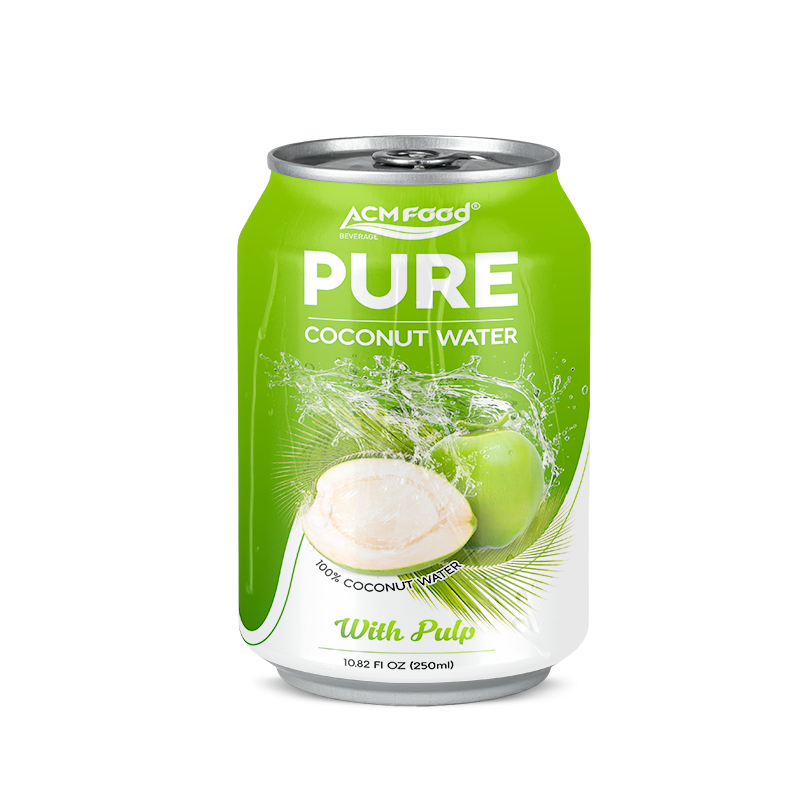
If you also develop coconut formats, see our OEM pathway for coconut water in Vietnam to compare logistics and packaging choices: Coconut Water Supplier Vietnam: OEM, Private Label & Wholesale Manufacturing.
While exact week counts depend on your markets, packaging and review speed, the sequence below clarifies responsibilities and decision gates without locking artificial dates.
| Phase | Key deliverables | Decision gate |
|---|---|---|
| Concept & brief | Positioning, channels, category, pack format, commercial targets | Approve scope to write specification |
| Specification | Fruit content, Brix & acidity, ingredients, processing, packaging, labeling intent | Sign spec v1.0 for sampling |
| Lab samples | Bench samples, sensory notes, spec refinements | Select preferred formula within spec |
| Validation | Process confirmation, packaging fit, shelf-life plan | Approve for artwork & production booking |
| Artwork & packaging | Dielines, label copy, regulatory check, prepress proofs | Final print approval |
| First production | Materials release, in-process QC, COA, retains | QA release for shipment |
| Logistics & export | Booking, documents, inspection (if any), load plan | Dispatch confirmed |
Common risks to schedule and how to de-risk early
Most delays trace back to unclear specs, late packaging, or unmanaged approvals. Build risk controls into your plan.
- Spec drift: freeze category, fruit content and Brix ranges before artwork; track changes by version.
- Packaging lead times: confirm dielines/components early; hold buffer stock of standard closures where possible.
- Regulatory surprises: pre-check how your category and fruit content are labeled in each destination.
- Raw material variability: specify acceptable fruit origins and blending rules to maintain sensory Brix and color.
- Holiday & seasonality: plan around factory closures and fruit harvest windows.
- Quality holds: align micro and chemistry release criteria in writing; share test labs and methods upfront.
- Supplier readiness: run a factory capability review. Use this fruit juice supplier audit checklist for importers to structure your audit.
Information for beverage brands: your product brief checklist
Send a concise product brief that lets your partner quote and schedule accurately. Include the essentials; everything else can follow after feasibility.
- Category & promise: 100% juice, nectar or juice drink; flavor(s); ambient or chilled.
- Fruit juice specifications: intended fruit content expression, target Brix/acidity ranges, filtration level.
- Ingredients boundaries: allowed sweeteners, flavors, antioxidants, stabilizers; dietary constraints.
- Packaging: format(s), sizes, closure preferences, secondary packaging.
- Markets: countries for launch; any retailer-specific rules you already know.
- Commercial targets: price band, MOQ tolerance, intended order frequency.
- Timeline drivers: buyer windows, marketing milestones, events.
- Quality: target micro and chemistry release criteria if you have house standards.
With these inputs, your partner can outline validation steps and confirm where the juice product specification might need trade-offs to protect launch timing and cost. If you are comparing budgets, read how much private label fruit juice costs for a structured look at cost components and decision levers.
FAQ
How long does private label fruit juice development take?
Timelines vary by packaging, regulatory reviews, and artwork pace. Projects move fastest when category, fruit content, Brix range and pack format are fixed early and approvals are consolidated into clear decision gates.
What information do manufacturers need to start?
A brief with category, target markets, packaging, intended fruit juice specifications (fruit content, Brix/acidity ranges), ingredient boundaries, commercial targets, and timing drivers is enough to scope samples and validation.
What drives MOQ and lead time?
Packaging component availability, production line format, changeover complexity, and fruit sourcing plans are common drivers. Standard formats and focused SKU counts generally help scheduling.
Do I need a formal specification sheet?
Yes—treat the spec as the single source of truth. It underpins formulation, QC release, artwork, and label copy across markets. Keep it versioned and signed at each gate.
How do I reduce supply risk before launch?
Audit capabilities, confirm process-packaging fit, and align test methods. Start with our supplier audit checklist for importers to structure your review.
Conclusion and next steps
A dependable private label juice timeline is less about fixed week counts and more about disciplined gates tied to a precise, shared specification. Lock your category, fruit content expression and Brix/acidity ranges early; validate process and packaging; then move artwork, production and logistics in a controlled sequence.
If you are shortlisting partners, review the guide to choosing a fruit juice manufacturer and align your brief against the fruit juice specifications outlined here. For budgeting conversations, consult the structured view of private label fruit juice cost drivers before you freeze your spec and packaging.