


 Français
 Español
 العربية
 한국어
한국어Water treatment in beverage manufacturing ensures that the largest ingredient in most drinks is clean, consistent, and neutral to flavor. In practice, the right water specification depends on source quality, product style, and the treatment train used, so there is no one-size-fits-all recipe. This article explains standards frameworks, core unit operations, and practical testing rhythms to help teams design and run reliable systems.
If you are evaluating water treatment beverage requirements for a new line or a technology transfer, focus first on defining the intended water use, then select treatment steps that address microbiological safety, undesirable taste & odor, and minerals that affect stability. Verification through routine monitoring closes the loop and safeguards batch-to-batch performance.
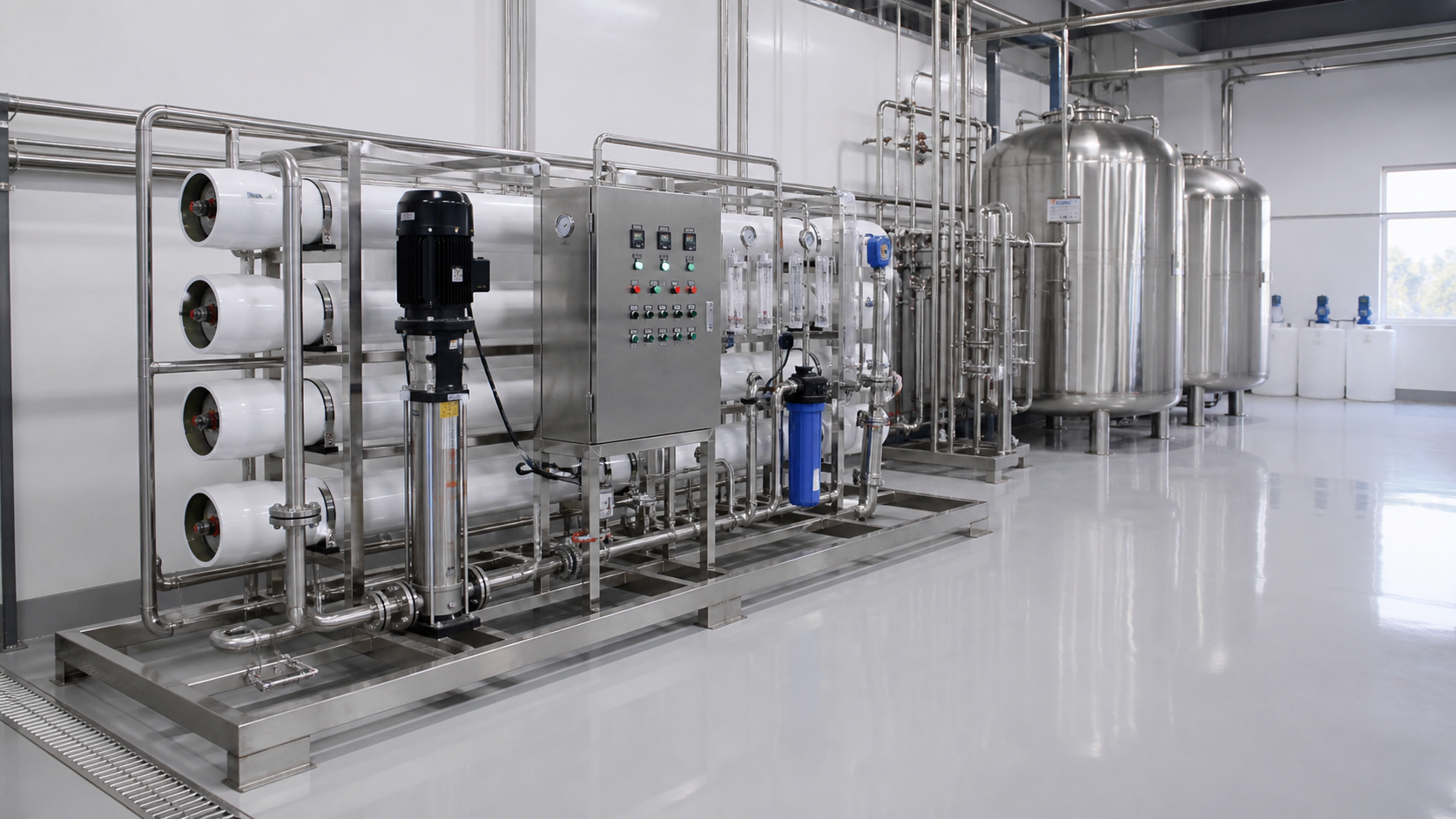
What is process water in a beverage plant?
Process water is the water used to formulate beverages, clean and sanitize equipment, and drive utilities, with the strictest requirements applied to the portion that becomes an ingredient in the final product. In short, ingredient water must be drinking-water grade and suitable for the intended beverage, while utility water (for CIP, steam, cooling) follows specifications appropriate for equipment protection and hygiene.
Inside a typical beverage facility, you may encounter several distinct water types:
- Ingredient water: directly blended into the product; highest sensory neutrality and microbiological stringency.
- Process/flush water: used to rinse lines between flavors or batches; cleanliness prevents carryover.
- CIP water: heated and dosed with chemicals for cleaning; quality protects equipment and chemistry.
- Boiler feed water: treated to control scaling and corrosion for safe, efficient steam generation.
- Cooling water: circulates to remove heat; spec focuses on scaling, corrosion, and biofouling control.
What standards define suitable water quality for beverages?
Use drinking-water standards that align with your market, then tighten or tailor parameters based on product needs and brand specification. Many beverage companies reference local regulations and recognized frameworks (for example, public drinking-water rules and Codex-aligned guidance) and then apply a HACCP-based plan for the plant.
Rather than memorizing numbers, align on categories and control points:
- Microbiological: absence of indicator organisms in ingredient water; validated disinfection and hygienic storage/distribution.
- Chemical: manage residual disinfectants, heavy metals, and any source-specific contaminants per applicable regulation.
- Organoleptic: neutral taste, color, and odor to avoid flavor clashes or off-notes in delicate SKUs.
- Physical: low turbidity and particles to protect downstream filtration and filling equipment.
- Mineral balance: hardness, alkalinity, and total dissolved solids (TDS) adjusted for stability, carbonation performance, and sensory profile.
For multi-market brands, ensure the water program can meet the most stringent applicable rule among your target markets and your internal specification, and verify with documentation suitable for audits and importer reviews.
Typical water treatment train in beverage manufacturing
The common approach is a modular treatment train that progressively removes particles, chlorine or chloramine, taste & odor compounds, dissolved salts, and microbes, followed by hygienic storage and distribution. The exact sequence depends on source water, product type, and whether you target partial demineralization or near-pure water with controlled remineralization.
- Source qualification & pre-screening: validate municipal or well supply; coarse filtration to remove grit and large particles.
- Clarification (as needed): multimedia filtration or equivalent for turbidity reduction when source water is variable.
- Activated carbon: dechlorination and removal of taste/odor compounds; protects RO membranes and product flavor.
- Softening or anti-scalant dosing: reduces scaling potential ahead of membranes or heat exchange equipment.
- Fine filtration: cartridge or microfiltration to protect sensitive downstream steps.
- Reverse osmosis (RO) or nanofiltration (NF): broad reduction of dissolved salts and many dissolved organics; creates a neutral base for blending.
- Polishing step(s): options include additional microfiltration or ion exchange, depending on target profile.
- Disinfection: UV for inactivation in-line; ozone for storage tank protection and distribution loop hygiene when compatible with packaging and product.
- Hygienic storage & distribution: sanitary tanks with controlled headspace; recirculation loops designed to minimize dead legs and maintain water quality.
- Remineralization/blending (if using RO/NF): add selected minerals or blend with bypass water to reach the desired taste and carbonation behavior.
- Point-of-use filtration: final protection at fillers or ingredient addition points to control last-meter risks.
| Step | Primary purpose | Positioning & notes |
|---|---|---|
| Carbon filtration | Remove chlorine/chloramine, taste/odor | Upstream of RO; monitor breakthrough and change-out intervals |
| Softening / anti-scalant | Control scaling on membranes & heaters | Choose based on hardness profile and downstream compatibility |
| RO / NF | Reduce TDS and many dissolved species | Foundation for neutral base; may require remineralization |
| UV | Inactivation of microbes in-line | Non-chemical; requires clear water for effectiveness |
| Ozone | Maintain hygiene in tanks/loops | Effective oxidant; ensure packaging & product compatibility |
| Final filtration | Last-meter protection | Located at point of use near fillers or blenders |
For an in-depth focus on why process water decides product consistency, see our overview of process water in a beverage plant.
How do RO, carbon, UV and ozone compare?
They solve different problems and often work best together: carbon improves flavor and protects membranes, RO reduces dissolved minerals and organics, UV provides non-chemical inactivation, and ozone maintains tank and loop hygiene when compatible with your process.
- Activated carbon: targets chlorine/chloramine and organoleptic issues. Plan for periodic sanitization or media change and monitor for breakthrough.
- RO (reverse osmosis): broad reduction of TDS and many dissolved contaminants; creates a clean slate for flavor-building. Needs pre-treatment to control fouling and scaling, and sanitary design for hygienic operation.
- UV disinfection: inactivates microbes without chemical residuals; relies on adequate UV transmittance and maintenance of lamps and sleeves.
- Ozone: powerful oxidant for storage/distribution hygiene; decomposes to oxygen, leaving no flavor residual when properly managed. Check compatibility with closures, elastomers, and product style.
Monitoring and testing: how often should you check water?
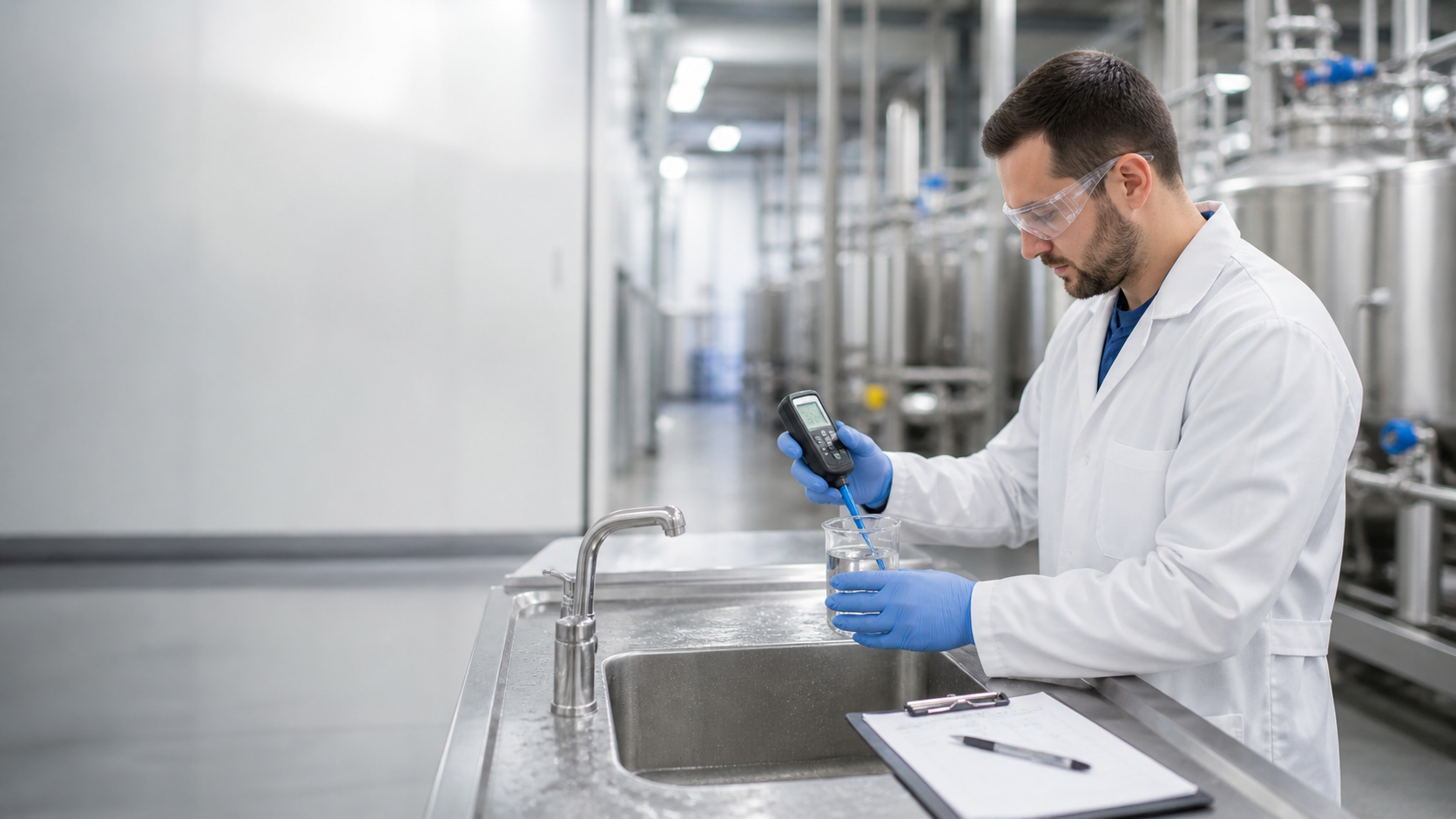
Set frequencies through your HACCP plan, source risk, and market requirements. In many beverage plants, critical operational checks occur per shift or daily, microbiological verification runs weekly to monthly, and broader chemical analyses are scheduled periodically with accredited laboratories.
A practical, risk-based scheme might include:
- Incoming water checks: verify key operational parameters (for example, odor, appearance) and confirm treatment system status before production.
- Carbon filter monitoring: routine checks for chlorine/chloramine breakthrough and differential pressure to determine change-out timing.
- RO performance: track conductivity or proxy indicators across membranes to detect fouling or loss of rejection.
- UV dose assurance: confirm setpoints and maintain cleanliness of sleeves; log lamp hour counters.
- Ozone residual (if used): confirm target ranges in storage/distribution when compatible with the product and packaging.
- Microbiological verification: sample at representative points (post-treatment, tank, distribution loop, point of use) per your HACCP frequency.
- Mineral profile: verify hardness/alkalinity or blended minerals when sensory or carbonation performance is critical.
- Periodic full panels: commission external labs for extended chemical and metal panels at defined intervals aligned to local rules and company policy.
Document results, define action limits and escalation steps, and trend over time to spot gradual drift. When changing seasons or sources, consider short-term increased sampling to re-validate stability.
Design considerations by beverage type
Ingredient water should fit the beverage's sensory and processing needs, not a generic spec. The following considerations help teams tailor water design to the SKU portfolio:
- Carbonated soft drinks: consistent minerals support carbonation bite and foam behavior; control alkalinity to keep flavor brightness. Neutral taste is essential to prevent masking citrus or cola top-notes.
- Juices and nectars: deodorize and polish to avoid earthy or chlorinous off-notes that clash with fruit volatiles; manage hardness to protect pasteurizers and evaporators.
- Iced tea & coffee RTD: low hardness and controlled alkalinity can stabilize extraction and reduce haze; flavor clarity depends on neutral water with low residual disinfectants.
- Sports & electrolyte drinks: RO base plus defined remineralization ensures clean taste while matching label-claimed electrolyte profiles, subject to market regulations.
- Dairy alternatives and protein drinks: minimize mineral interactions that affect stability; verified hygiene in storage and distribution is critical.
- Carbonated water and seltzers: very neutral base, often RO with precise remineralization for signature mouthfeel; strict organoleptic control.
- Brewing and fermentation-based drinks: consistent mineral balance supports yeast performance; avoid disinfectant residuals that inhibit fermentation.
If you are mapping categories and formulation approaches across a portfolio, see our overview of popular beverage categories to align water profiles with product positioning.
Common deviations and how to troubleshoot them
Even with robust design, deviations occur. A structured response shortens downtime and protects product quality.
- Chlorine/chloramine breakthrough: flavor complaints or membrane damage risk. Check carbon bed life, flow rates, and consider parallel beds for service/sanitize rotation.
- RO fouling or scaling: rising differential pressure or loss of rejection. Review pre-treatment (turbidity load, softening/anti-scalant), cleaning protocols, and recovery settings.
- UV underperformance: high counts downstream. Inspect lamp hours, sleeve fouling, and verify UV transmittance; confirm correct sensor calibration.
- Ozone interference: off-aroma or packaging effects. Re-check dosing, contact time, and material compatibility; validate ozone destruction before filling if required.
- Biofilm in storage/loops: count spikes or visible films. Increase sanitation frequency, review dead legs and flow velocities, and validate tank headspace management.
- Taste drift batch-to-batch: investigate changes to mineral profile or blending ratios; re-verify remineralization additions and carbon change-outs.
When moving a recipe to a new plant, re-qualify water side by side with pilot blends to confirm equivalent sensory outcomes and carbonation behavior. Guidance for changeovers is outlined in our note on moving an existing beverage recipe to a new manufacturer.
Documentation, compliance, and importer expectations
Retailers and importers often expect clear documentation that your water meets the brand specification and applicable market rules. Keep treatment schematics, validation records for critical control points, maintenance logs, and third-party lab certificates organized for audits.
- For market-specific manufacturing support, review our overview of manufacturing for U.S. brands.
- Confirm front-of-pack and ingredient list implications when you remineralize or blend waters; our U.S. food label checklist can help coordinate formulation, claims, and documentation.
If your product roadmap includes coconut-based SKUs and you want to see how process water and ingredient water controls interplay with a single-ingredient category, explore our note on coconut water production & QC systems.
FAQ: concise answers to common water questions
Is RO mandatory for beverage water? No. It depends on your source and product. Some beverages perform well with carbon, softening, and disinfection only. Brands seeking a very neutral canvas or tight mineral control often choose RO.
Do we need UV if we already use ozone? They serve different roles. UV provides in-line inactivation without chemical residuals, while ozone helps maintain tank and loop hygiene. Many systems combine both, validated by HACCP.
Should we remineralize after RO? Often yes for taste and functionality. Remineralization or blending can restore desired mouthfeel and carbonation behavior, aligned with your sensory target and labeling plan.
What’s the difference between ingredient and utility water? Ingredient water goes into the product and requires the tightest sensory and microbiological control. Utility water supports cleaning, steam, or cooling and follows specifications suited to equipment and hygiene.
Can water spec vary by market? Yes. Align to local drinking-water rules and importer expectations, then meet or exceed the strictest applicable requirement across your target markets.
Bottom line: a fit-for-purpose water program—clear specification, well-designed treatment train, and risk-based monitoring—underpins product consistency. When scoping or scaling, build the plan around your beverage portfolio, regulatory landscape, and operational realities. This approach to water treatment beverage systems supports reliable flavor, smoother audits, and fewer surprises in production.