


 Français
 Español
 العربية
 한국어
한국어Sweetener systems for export beverages are the deliberately designed combinations of sugars, high-intensity sweeteners, and bulking agents that deliver target sweetness, body, and label fit across markets. The right system balances taste, calories, cost, and compliance—factors that shift when a beverage crosses borders.
This guide focuses on formulation, not labelling artwork. It explains how to architect blends, anticipate sensory and processing issues, and plan for regulatory differences so your sweetener systems beverage projects scale cleanly into multiple countries. For category context, see our overview of popular beverage types and formats.
What is a beverage sweetener system?
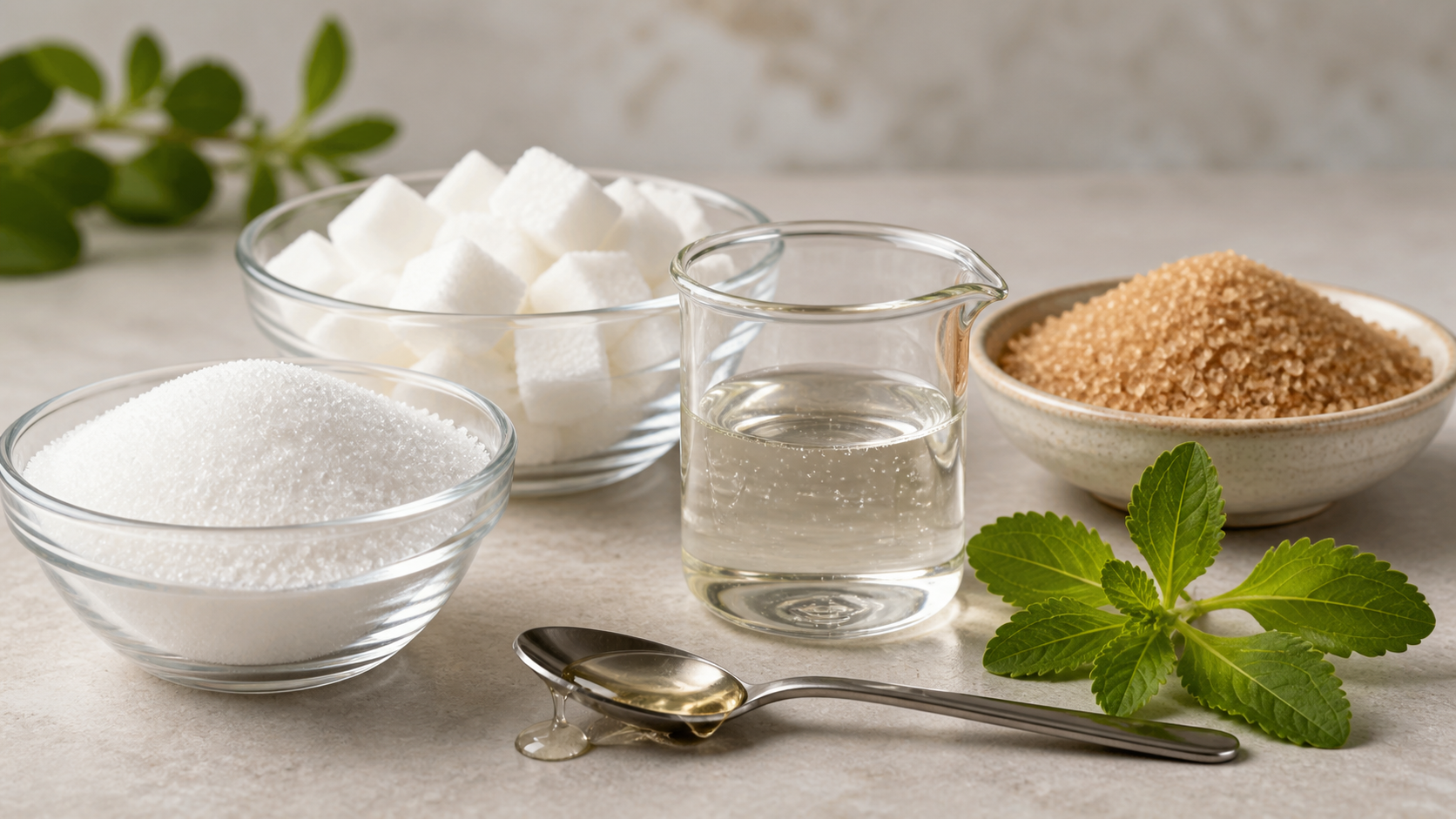
A beverage sweetener system is the complete strategy—ingredients, ratios, and processing—that achieves a defined sweetness, mouthfeel, and aftertaste in a specific drink while meeting market regulations and cost targets. In practice it blends sugars, high-intensity sweeteners, and optionally bulking agents to mimic a desired sugar profile.
Rather than “adding sugar until it tastes right,” a system formalizes the sweetness curve (onset, peak, and finish), builds body to replace sugar where needed, and manages off-notes from acids, caffeine, botanicals, or minerals. It also considers shelf-life, thermal and pH stability, and how packaging or storage may affect flavor over time.
How do sweetness curve and sugar profile shape taste?
Sweetness is not just intensity; it is time-based. Fast-onset sweeteners can feel bright but thin, while slow-linger sweeteners can taste heavy or cloying if unbalanced. Matching the original sugar profile often requires combining ingredients with different temporal curves.
Key temporal elements include onset (how quickly sweetness appears), peak (maximum perceived sweetness), and linger (how long it lasts). Sucrose tends to present a rounded, familiar curve; many high-intensity sweeteners are faster or slower than sucrose and may have secondary notes. By layering complementary curves, you can emulate sugar’s arc and reduce perceptible off-notes. Acid balance, carbonation, caffeine, polyphenols, and salts all modulate the perceived curve, so evaluate the system in the finished matrix, not water.
Which sweeteners are commonly used and why?
Most export-ready systems combine a caloric sugar (for body and familiarity) with one or more high-intensity sweeteners (for potency) and, when needed, a bulking agent (for mouthfeel). The exact options you can use—and their maximum levels—depend on the target market’s rules.
Sucrose and other caloric sugars
- Sucrose: Benchmark taste, reliable processing, and label familiarity. Provides body, balances acids, and rounds fruit or tea tannins.
- Glucose/fructose syrups: Useful for process efficiency and sweetness modulation; fructose is sweeter than glucose and can boost perceived fruitiness in some matrices.
- Invert sugar: Offers slightly higher perceived sweetness and can improve stability in some syrups.
High-intensity sweeteners (HIS)
- Sucralose: Clean, sugar-like profile in many beverages and heat-stable under typical pasteurization; may show slight lingering sweetness in some formulas.
- Acesulfame K (Ace-K): Fast onset; often paired with sucralose or aspartame for synergy and to fill mid-palate.
- Aspartame: Familiar taste in certain categories; sensitivity to heat and pH can be a consideration in processing and shelf-life.
- Steviol glycosides (stevia extracts): Potent sweetness from the stevia plant; different glycosides (e.g., Rebaudioside A/M, others) can modulate bitterness or licorice-like notes. Performance is highly matrix-dependent.
- Monk fruit (luo han guo) extracts: Natural high-intensity option with characteristic lingering sweetness; often blended to manage aftertaste.
Availability, permitted use levels, and labelling for HIS vary by country. Always verify market-specific regulations before finalizing a formula for export.
Bulking agents & body builders
- Erythritol and other polyols: Provide bulk and a light cooling effect; cooling can be desirable in some beverages but distracting in others.
- Soluble fibers or dextrins: Can add body and reduce thinness in reduced-sugar beverages; compatibility with clarity and stability must be checked.
- Glycerol or small amounts of non-sweet solids: Sometimes used to adjust mouthfeel; ensure regulatory fit and sensory neutrality.
Rare sugars and emerging sweeteners may offer promising sensory or calorie advantages, but their approval status and labelling frameworks can differ widely across regions. Treat them as market-by-market decisions.
How do export rules affect your sweetener choices?
Regulations determine which sweeteners are allowed, maximum use levels, and how they must be declared on labels—often differently from market to market. Before scale-up, lock a version per target region and confirm labelling, claims, and multilingual requirements.
Use the following table as a framing checklist—not a substitute for legal review.
| Target market | Key sweetener considerations | Labelling & claims | Positioning & notes |
|---|---|---|---|
| United States | Broad availability of common HIS and sugars; confirm state sugar taxes where applicable. | Nutrition Facts format, ingredient names, any required statements for specific sweeteners. | See U.S. food label checklist for beverages for shared requirements. |
| European Union | Harmonized but specific permitted lists and categories; verify additive codes and maximum levels. | EU nutrition & ingredient rules; multilingual needs in some member states; sweetener statements when required. | Review the EU labelling and import rules overview early in development. |
| GCC (selected Gulf states) | Confirm permitted sweeteners and any halal-related considerations for carriers or processing aids. | Arabic labelling and GSO standards apply in many cases; verify sweetener declarations. | Start with the GCC beverage import requirements guide. |
| Australia | Check permitted sweeteners and category conditions; align with local taste norms. | Local nutrition panel and ingredient naming; claim thresholds may differ from other markets. | Coordinate early if also producing for New Zealand. |
Final labelling and claims always depend on the finished formula, serving size, and destination-market regulations. Where you produce, how you process, and which carriers you use can also affect compliance.
How to build a sweetener blend by beverage category
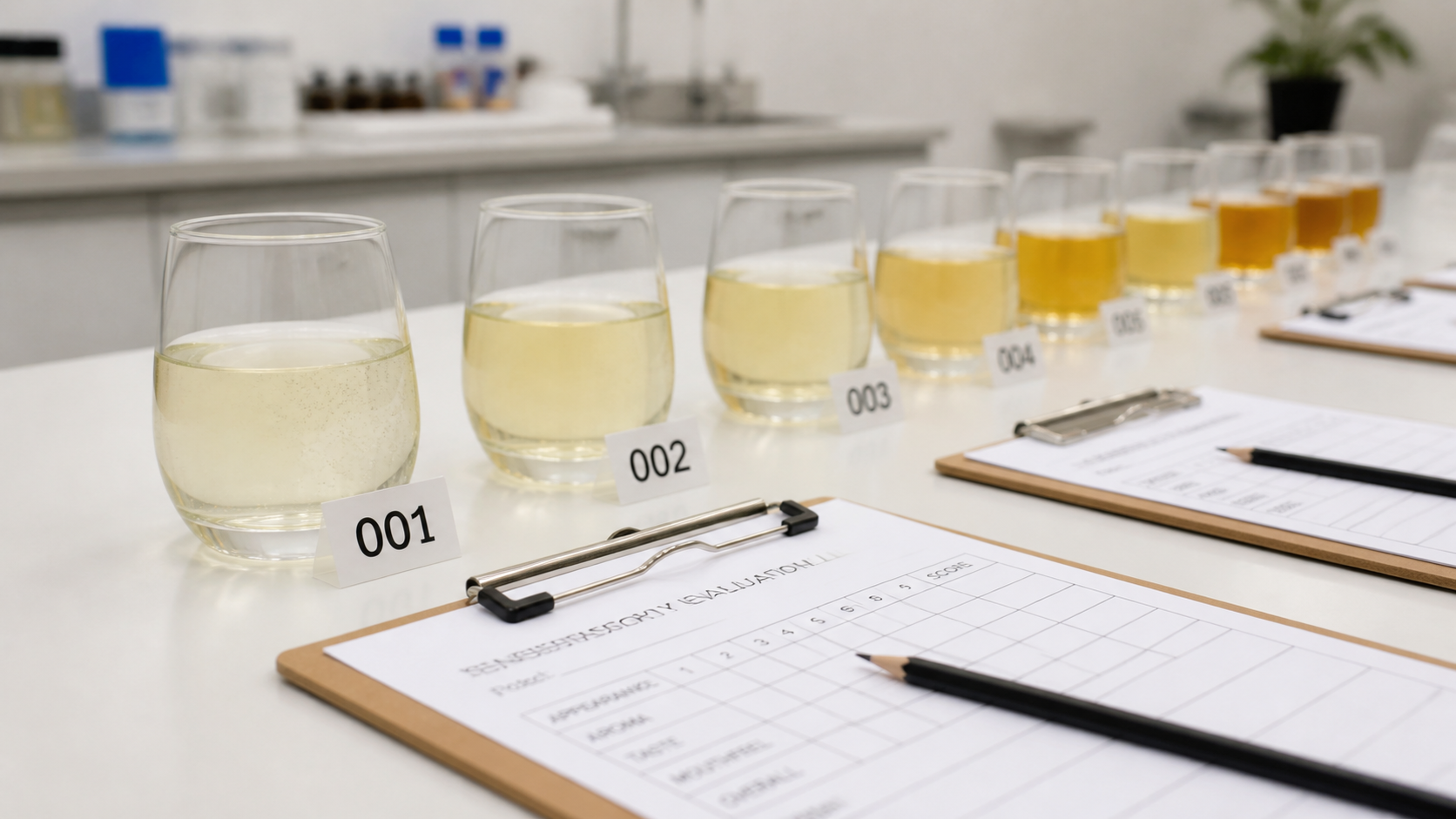
Start with the sensory target for your exact drink type and processing method, not a generic “all-purpose” blend. Prototype in the real matrix with acids, flavors, and minerals present, and evaluate cold and warm, still and carbonated as applicable.
- Carbonated soft drinks: Aim for crisp onset and clean finish. A fast HIS (e.g., Ace-K) often pairs with a more rounded HIS (e.g., sucralose) and a modest sugar backbone for body. Watch for aftertaste amplification by carbonation.
- Iced tea & botanicals: Tannins can amplify bitterness. Softer HIS choices and steviol glycoside blends can work, but small amounts of sucrose or fructose syrup often help mid-palate. Rebalance acid if switching away from sugar.
- Sports & electrolyte drinks: Light-to-medium body is critical. Combine modest sugar (for mouthfeel and rapid acceptance) with HIS to reduce total sugars; manage salt-sweet interactions carefully.
- Juice drinks & nectars: If not 100% juice, a reduced-sugar base may need bulking (e.g., erythritol or fiber) to avoid thinness. Preserve fruit character by aligning sweetness curve with acid profile and aroma release.
- Energy & functionals: Caffeine, vitamins, or botanicals can add bitterness. Use synergy between HIS, add small body builders, and consider bitterness blockers where allowed. Validate stability after thermal processing.
- Dairy/plant-based beverages: Protein and fat alter sweetness perception. Expect to increase absolute sweetness or re-shape the curve to avoid flatness; check heat stability and Maillard browning with sugars.
What pitfalls should formulators watch for?
Several recurring issues can derail an otherwise solid formula. Address them proactively in benchtop and pilot runs.
- Bitterness or metallic notes: Certain HIS or stevia glycoside ratios can accentuate bitterness, especially in tea, coffee, or high-acid systems. Counter with complementary HIS, minimal sugar, or flavor modulation.
- Hollow mid-palate: Removing too much sugar may thin body. Add carefully selected bulking solids or adjust acid and flavor top-notes to rebuild structure.
- Lingering sweetness: Overly long finish can feel cloying. Blend a faster-onset HIS, reduce total intensity, or tweak acid profile.
- Processing stability: Some sweeteners are sensitive to heat, pH, or light. Validate stability through pasteurization or hot-fill and under realistic storage.
- Color and clarity shifts: Bulking agents or fibers may haze clear beverages. Confirm clarity targets and filtration compatibility.
- Foam and carbonation behavior: Sugars and polyols can change bubble size and foam. Test in-pack carbonation, not just post-mix beakers.
- Flavor interactions: Aromas can mask or accentuate aftertastes. Re-optimize flavor load and top-notes after each sweetener tweak.
How to plan cost-in-use and sourcing
Cost is a function of sweetness equivalence, not price per kilogram. Model cost-in-use at the target sweetness, then layer in volatility, logistics, and multi-market compliance to avoid surprises during export scale-up.
- Sweetness equivalence: Standardize on a defined sucrose-equivalent target (e.g., “like 8 g/100 ml sucrose in-water”) for R&D and procurement alignment.
- Supply risk: Secure secondary options for critical HIS or bulking agents in case of regional shortages or regulatory shifts.
- Specifications: Lock Brix (for syrups), DE (for dextrins), purity, carrier systems, and microbiological criteria up front.
- Contracts and hedging: Consider indexed agreements for sugars where feasible, and align shipment sizes with production cadence.
Work closely with your procurement team to validate supplier availability and alternatives. For broader ingredient planning, see our page on ingredients and sourcing for beverages.
Product brief checklist for your sweetener system
A tight, export-ready brief accelerates formulation and avoids rework when you add new countries. Use this checklist to guide your next project.
- Target markets and priority launch order (e.g., U.S., EU, GCC, Australia)
- Category and processing (still/carbonated; hot-fill/tunnel; UHT; aseptic)
- Target sensory description of sweetness curve (onset/peak/finish) and overall intensity
- Acceptable sweetener classes (sugars, HIS, polyols, fibers) and any exclusions
- Body/mouthfeel expectation; clarity requirements (still vs. sparkling; clear vs. turbid)
- Acid system and pH range; mineral content; caffeine or botanicals present
- Calorie, sugar, and positioning goals (e.g., reduced sugar, no added sugar), subject to local rules
- Label preferences (e.g., natural sources where permitted), plus multilingual needs
- Packaging and shelf-life targets; expected storage and light exposure
- Regulatory notes by market (permitted sweeteners, maximum levels, naming)
- Cost-in-use target and flexibility band
- Pilot plan: batch size, hold times, and sensory protocol
Sugar levels also decide how much levy a drink pays in many markets; see sugar taxes and soft drink levies by market for the thresholds that shape reformulation.
FAQ
Is there one global sweetener blend that works everywhere?
No. Ingredient permissions, maximum use levels, labelling language, and consumer preferences vary by market, so most brands lock a region-specific version. Keep your base flavor system stable and adapt the sweetener system per market.
Stevia vs. sucralose: which tastes more like sugar?
Many tasters find sucralose closer to sucrose in some matrices, while modern steviol glycoside blends can be very sugar-like in others. The answer depends on beverage type, acid system, and flavor top-notes—run side-by-side sensory in the finished drink.
How can I cut sugar without losing body?
Combine HIS for sweetness potency with carefully chosen bulking solids (e.g., erythritol or soluble fibers where suitable), and re-balance acids and flavors. Small amounts of caloric sugar can also restore mid-palate in some categories.
Can I keep the same Brix when switching to HIS?
Not necessarily. Brix measures soluble solids, not perceived sweetness. You can match sweetness intensity with lower Brix, but confirm mouthfeel, stability, and all label implications before committing.
Key takeaways & next steps
Design the sweetness curve, not just the sweetness number. Blend sugars, HIS, and bulking agents to match a target profile in the real beverage matrix, then confirm stability through processing and shelf-life. For export, finalize a version per region and verify compliance using guides such as the U.S. beverage labelling checklist, the EU rules overview, and the GCC import requirements. Align sourcing early via ingredients and sourcing.
There is no universal formula, but disciplined briefs, matrix-based sensory, and market-by-market verification will help your sweetener systems beverage plans scale with fewer surprises. Build pilots, document learnings, and maintain alternate options so you can adapt quickly as preferences or regulations change.