


 Français
 Español
 العربية
 한국어
한국어Colour and flavour drift describe the gradual changes consumers notice as beverages move through storage and distribution; colour can fade or brown, and flavour can lose top notes or develop off-notes. Managing colour flavour stability means formulating and processing drinks so these changes are slowed, predictable, and acceptable across the intended shelf life.
Drift is rarely caused by a single factor. Oxygen, light, heat history, pH, metals, emulsion stability and packaging all interact. The good news: targeted formulation, paired with fit-for-purpose processing and pack choice, can significantly improve stability without compromising the product’s positioning.
What is colour and flavour drift in beverages?
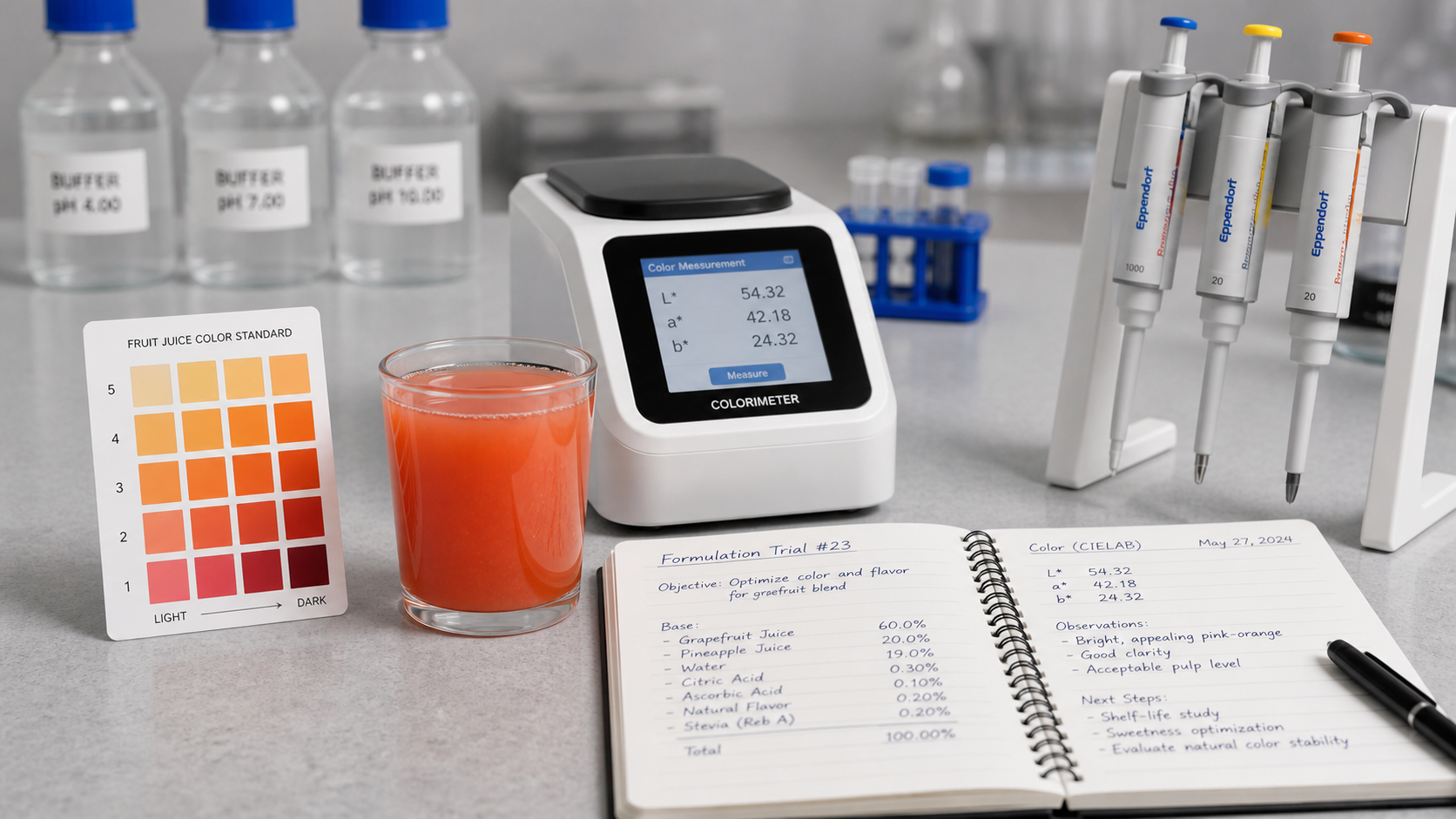
Colour and flavour drift are time-dependent sensory shifts that happen after production, even when microbiological quality is under control. In practice, you may see hue shifts (e.g., red to brown), loss of brightness, faded aroma top notes, or stale, cardboard-like, or cooked notes appearing.
These changes come from chemical and physical pathways: oxidation of pigments and volatiles, photodegradation, acid- or heat-catalysed reactions, emulsion breakdown, and interactions with dissolved metals. Each beverage matrix has its own risk profile.
Why do colour and flavour drift over shelf life?
Most drift arises from oxidation and light exposure, accelerated by heat and influenced by pH and metal ions. Oxygen reacts with pigments and flavour molecules; light (especially UV) can break down natural colours and delicate aromatics; heat speeds these reactions; and certain pH ranges or catalysts make them progress faster.
Beyond chemistry, physics matters: if an aroma-bearing emulsion separates or droplets coalesce, flavours can feel muted or unbalanced even when chemistry is unchanged. Stability is therefore a holistic target across formulation, process, and packaging.
Which ingredients and drink types are most sensitive?
Sensitivity depends on both the molecule and its environment. Typical high-risk areas include:
- Natural red/blue pigments (anthocyanins): pH-dependent colour, oxidation-sensitive.
- Yellow & orange pigments (carotenoids, curcumin): light- and oxygen-sensitive, oil-phase location.
- Green pigments (chlorophyll): acid and heat can cause rapid hue changes.
- Delicate citrus and tropical top notes (terpenes, esters): prone to oxidation and volatilisation.
- Tea/coffee/botanical volatiles: can stale or develop astringency and bitterness with oxygen and heat.
- Fortified vitamins (e.g., riboflavin): can degrade under light, altering both colour and flavour perception.
- Cloud/emulsion systems: droplet growth or phase separation can dull flavour delivery and visual appeal.
How does oxygen drive change?
Oxygen is a primary driver of both colour loss and off-note formation. It can be introduced via raw materials, mixing, filling headspace, or permeation through certain packaging materials over time.
Typical results include pigment bleaching or browning, loss of bright top notes, and development of paper/cardboard notes. Trace metals (iron, copper) can catalyse these reactions, making small oxygen amounts far more damaging. Reducing dissolved oxygen pickup and binding catalytic metals are high-impact actions.
Does light cause flavour drift?
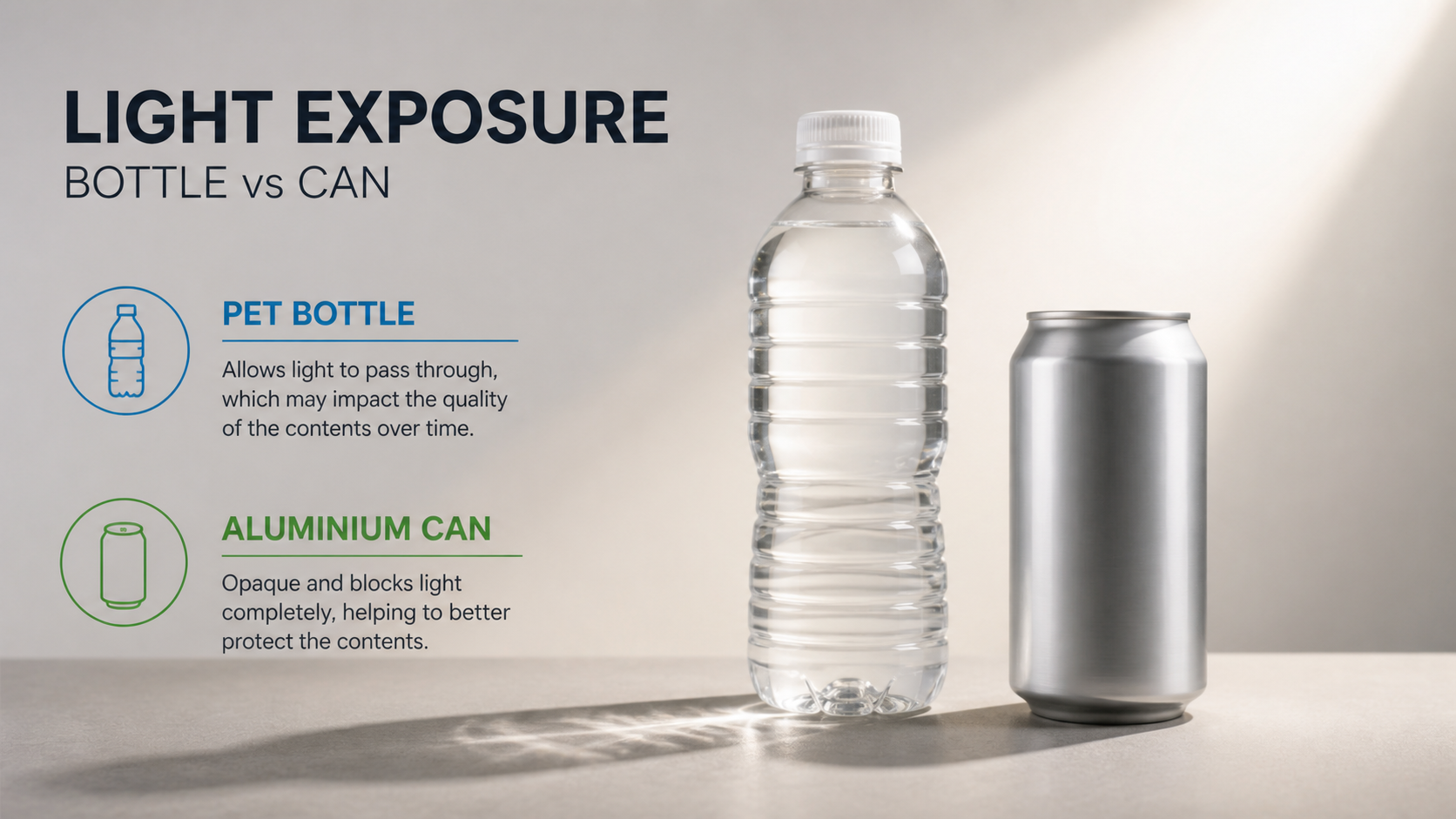
Yes. UV and visible light can degrade pigments like carotenoids and curcumin, and break down light-sensitive aromas and vitamins. Even when oxygen is controlled, light alone can fade colour and shift aroma balance, especially in clear packaging and open chillers with strong lighting.
Light protection can include selecting more robust colourants, using UV absorbers where allowed, and choosing packaging that provides an effective barrier or tint. Store display exposure should be part of your risk assessment.
Heat and pH: what shifts matter?
Heat accelerates most chemical reactions that change colour and flavour. High-temperature steps (e.g., pasteurisation, UHT) can be necessary for safety but should be optimised to minimise sensory impact. pH affects pigment state (notably anthocyanins) and reaction pathways; a small pH shift can mean a visible hue change or faster degradation.
Buffering systems, acid type (citric vs. malic vs. phosphates, for example), and heat profiles should be aligned to the desired colour target and flavour integrity, then validated in pilot runs and shelf-life studies.
Formulation levers to improve colour & flavour stability
Formulation is the first line of defence. The options below are commonly used—always subject to the regulations of your target markets and the specific product brief.
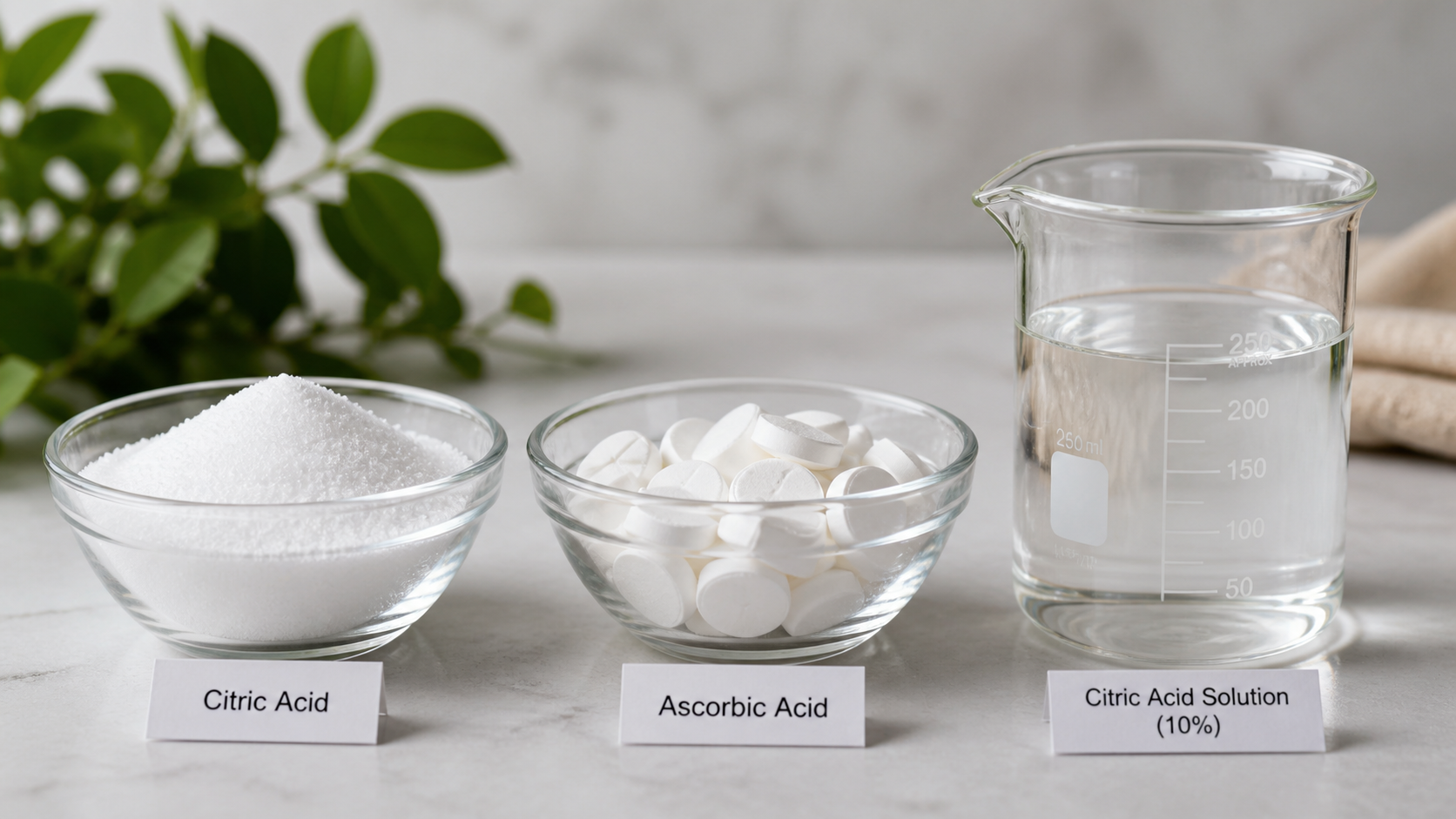
- Antioxidants: Water-phase (e.g., ascorbic or erythorbic acid) and, for oil-in-water emulsions, oil-phase antioxidants (e.g., tocopherols) where permitted. These can slow oxidation of pigments and key volatiles.
- Chelators/sequestrants: Bind catalytic metals to reduce oxidation rate. Options vary by jurisdiction (e.g., EDTA types, citrate complexes); confirm local permissions.
- Acid & buffer systems: Choose acids for flavour and pH control; use buffers to limit pH drift during shelf life. Consider their taste contribution and interaction with colours.
- Emulsion design: For flavour or colour in the oil phase, control droplet size, choose suitable emulsifiers, and consider weighting agents where allowed. Validate freeze-thaw and heat tolerance.
- Colour selection & dosage: Prefer more stable natural colour sources at the target pH and light exposure; use blends to balance hue and robustness.
- Aroma design: Build top notes with stability in mind (encapsulation, redundancy of critical notes, or partial overage to compensate expected fade—only if compliant with flavour regulations).
- Water quality & minerals: Trace metals catalyse oxidation; treat water appropriately and manage contact with metallic equipment.
- Microencapsulation: For sensitive notes or colours, controlled-release or protection can improve stability in some matrices.
Packaging strongly influences outcomes. In one line: cans typically block light and oxygen ingress better than clear PET, which is why some sensitive formulas are steered toward cans or high-barrier formats when branding allows.
| Instability mechanism | Typical symptoms | Key formulation levers | Process/packaging allies |
|---|---|---|---|
| Oxidation of pigments & volatiles | Browning, colour fade; stale/cardboard notes | Antioxidants; chelators; control metals; robust colours | Deaeration; inert gas dosing; high-barrier packs |
| Photodegradation (UV/visible) | Loss of vibrancy; off-notes; vitamin loss | Light-stable colours; UV absorbers if allowed | Opaque/tinted packs; minimised light exposure |
| pH-driven pigment shift | Hue changes (e.g., red to purple/brown) | Acid choice; buffering; colour selection by pH | Tight pH control; stable heat profile |
| Heat history | Cooked notes; accelerated fade | Optimise heat step; protective antioxidants | Efficient heat exchange; rapid cooling |
| Emulsion breakdown | Ring/banding; muted aroma; haze changes | Emulsifier choice; droplet size; weighting agents | Homogenisation; storage temperature control |
| Metal catalysis | Faster oxidation at low O2 | Chelators; water treatment; equipment selection | Avoid reactive contact surfaces; filtration |
Most projects benefit from cross-functional work between your formulation team and processing specialists. If you are planning trials or reformulations, align early on oxygen control, heat treatment and the target pack. For support on the formulation side, see our Formulation & R&D page, and for plant-side options explore Processing Technology.
Process choices that support stability
Processing determines the product’s starting point at day zero. Even strong formulations can drift quickly if the process introduces oxygen or creates unnecessary heat load.
- Deaeration and mixing: Remove dissolved oxygen before sensitive additions; use low-shear mixing and controlled inlets to avoid reintroduction.
- Inert gas dosing: Nitrogen (or CO2 where stylistically appropriate) can reduce headspace oxygen and improve stability; validate sensory impact.
- Heat treatment optimisation: Match time/temperature to the product’s microbial and sensory needs; rapid heating and cooling often reduce flavour damage.
- Hygienic design: Shorten hold times, reduce dead legs, and limit opportunities for oxidation and contamination.
- Filling & closure: Minimise headspace oxygen at fill and choose closures with appropriate barrier.
Where permitted and compatible with brand positioning, barrier-enhancing packaging or liners help preserve sensitive colours and aromas. Remember the earlier rule of thumb: cans generally provide superior light and oxygen barriers compared with clear PET.
Regulatory considerations when choosing stabilisers
Antioxidants, chelators, encapsulants and weighting agents are regulated differently by market. Always confirm allowed substances, dosage limits, and labelling requirements before locking a formula.
- Review additive statuses and naming conventions under your destination rules. See our guide to Australian beverage regulations.
- For cross-border products, align flavour and colour declarations with EU beverage labelling rules if Europe is in scope.
- If your brand targets Australia, our overview on finding a beverage manufacturer for Australian brands may help plan technical and commercial fit.
How to design a stability plan and specifications
A robust plan turns risks into measurable acceptance criteria and testable hypotheses. Align the following before pilot production:
- Define the shelf-life target & distribution reality: Ambient vs. chilled, light exposure on shelf, and expected temperature excursions.
- Lock the sensory goalposts: Describe target colour (e.g., reference swatch) and flavour profile (descriptive terms), including what changes are acceptable.
- Set analytical & sensory specs: pH range, dissolved oxygen at fill, colour space metrics (e.g., L*a*b* with delta E as a trigger), and a simple sensory check protocol.
- Select packaging & process: Choose the feasible pack for the brand and the product’s sensitivity; set filling and oxygen-control targets with the plant.
- Build a test matrix: Real-time storage, accelerated temperature, and light exposure testing. Include abuse tests representative of distribution risk.
- Decide decision gates: Criteria for pass/fail, reformulate, or change pack/process.
- Document and iterate: Capture learnings and refine formulation, process, or pack based on data.
Instrumental tools (colorimetry, dissolved oxygen meters) help quantify change, but trained sensory panels remain essential to detect subtle flavour drift and confirm consumer relevance.
Troubleshooting: quick diagnostic map
Use the symptom first, then trace likely causes and confirm with targeted tests.
- Rapid browning in weeks: Check dissolved oxygen pickup, chelation strategy, and metal sources; consider antioxidants and barrier pack.
- Colour fades only in clear bottles: Suspect light; evaluate tinted or opaque packs and light-stable colour options.
- Muted citrus top notes over time: Review oxygen control, consider oil-phase antioxidants for citrus emulsions, assess encapsulation or partial overage where compliant.
- Green drinks turning olive: Investigate pH and heat; adjust acid system and time/temperature profile.
- Ring/banding in emulsion drinks: Re-optimise emulsifier system, droplet size, and homogenisation; validate storage temperature sensitivity.
Information for beverage brands and buyers
Planning colour flavour stability early reduces reformulation loops and cost. When preparing a product brief for your partners, include:
- Target markets and rules: So additive permissions and labelling can be confirmed upfront (see Australian beverage regulations and EU beverage labelling rules).
- Commercial constraints: Cost-in-use, supply continuity for key flavours/colours, and pack type preferences.
- Shelf conditions: Ambient/chilled, light exposure expectations, and temperature ranges.
- Processing window: Available heat treatments, deoxygenation capability, and filling options (see processing technology overview).
- Sensory target & benchmarks: Provide golden samples, colour targets, and competitor references.
- Test plan & timing: Agree on accelerated and real-time checks before committing to scale.
If you are at concept stage or optimising an existing SKU, our Formulation & R&D resource covers how to translate a brand idea into testable technical hypotheses. For Australian brand owners weighing local vs. offshore options, see how to choose an overseas manufacturer while keeping quality risks controlled.
FAQ
Can natural colours match synthetics for stability?
Not always. Some natural colours approach the stability of synthetics under specific pH, light and oxygen conditions, but many remain more sensitive. Smart selection, blends, antioxidants, and protective packaging can narrow the gap.
Do I need EDTA or other chelators?
Only if your risk and regulations support it. Chelators help where trace metals catalyse oxidation, but permissions and labelling vary by market. Consider citrate-based options or formulation/process changes first if chelators are restricted.
Does nitrogen dosing change flavour?
Typically it is neutral in taste when correctly applied and can improve freshness by reducing headspace oxygen. Always validate at pilot scale to confirm no unintended sensory effects.
How can I protect flavour in clear PET?
Control oxygen at fill, use antioxidants where allowed, and consider UV-absorbing options or tints. If the product is highly light- or oxygen-sensitive, evaluate high-barrier formats or cans if branding permits.
What causes citrus drinks to brown?
Usually oxidation and heat history. Review dissolved oxygen control, metals management, antioxidant strategy, and thermal profile; then confirm with accelerated shelf testing under your real distribution conditions.
Conclusion
Colour and flavour drift are predictable outcomes of oxygen, light, heat and pH acting on sensitive pigments and volatiles. Strong colour flavour stability comes from an integrated plan: choose robust colours and aromas, control oxygen and metals, set pH and buffers wisely, design emulsions properly, and pair with suitable processing and packaging. Validate with a clear specification and a practical test matrix before scale-up.
If you are scoping a new beverage or seeking to improve an existing SKU, align your brief with your technical partners and test early. Explore our Formulation & R&D approach and plant-side options in Processing Technology to translate your concept into a stable product on shelf.