







 Français
 Español
 العربية
 한국어
한국어Case count, pallet pattern, and units per container are decided together, not separately, because each one constrains the others: the number of bottles or cans in a case affects how many cases fit on a pallet layer, and the pallet footprint affects how many pallets fit inside a shipping container. Getting this configuration right before production starts is what determines how efficiently a container is used and how stable a shipment stays in transit.
For beverage brands preparing an export order, case and pallet configuration is often decided late, after the bottle or can size is already fixed. Planning it earlier, alongside the packaging brief, generally leaves more room to adjust before tooling and case artwork are finalized.
The cost of getting this configuration wrong rarely shows up as a single line item. It appears instead as higher freight cost per unit shipped, damaged cases from an unstable pallet pattern, or a case size that has to be redesigned once a retailer’s shelf requirements turn out to differ from the export configuration already in production. It also affects planning around sea freight transit times from Vietnam, since a container that is not fully optimized can mean booking an extra shipment to cover the same order.
What Determines How Many Units Fit in a Case, Pallet, or Container?
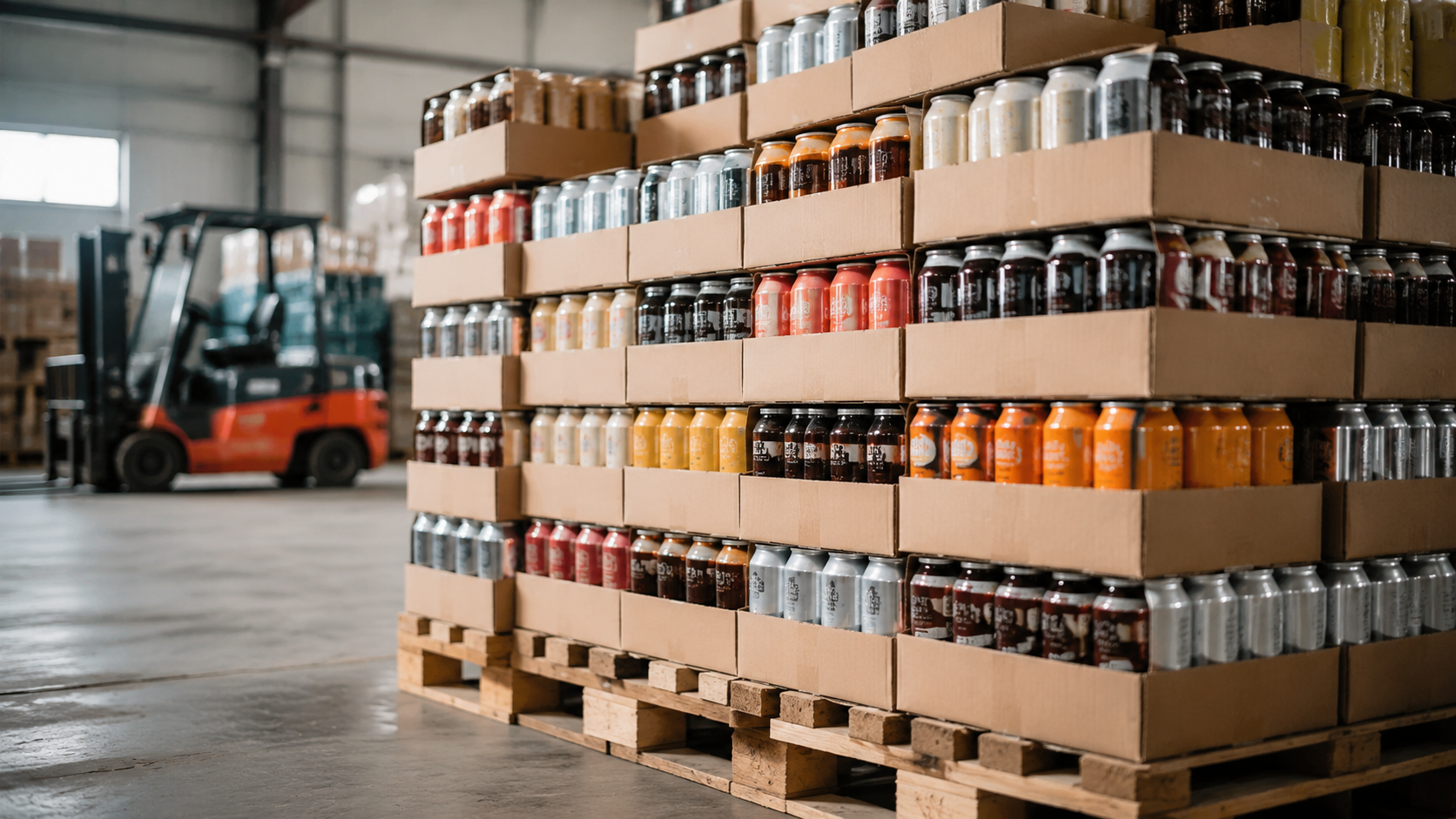
The final unit count is shaped by four linked factors: the primary package dimensions, the case dimensions built around it, the pallet footprint used, and the container type booked for the shipment. Changing any one of these without checking the others is the most common reason a shipment ends up with wasted container space.
- Primary package shape — round bottles and cans leave more unused space in a case than square or rectangular packs of the same volume.
- Case dimensions — how the case is built around the primary package, including wall thickness and internal dividers.
- Pallet footprint — the standard pallet size used affects how many case columns fit per layer.
- Container type — the internal dimensions and door opening of the container booked for the shipment.
How Case Count Per Carton Is Decided
Case count per carton is generally chosen to balance handling weight, shelf-ready display needs, and how efficiently the case dimensions divide across a pallet layer. A case that is easy for one person to lift is not automatically the most space-efficient option, and a retailer’s preferred shelf-ready pack size does not always match the most efficient export configuration.
Because of this, the case count that works best for a domestic retail order and the case count that works best for an export container are not always the same number, and it is worth confirming both requirements before finalizing case artwork.
How Pallet Pattern Affects Space Utilization
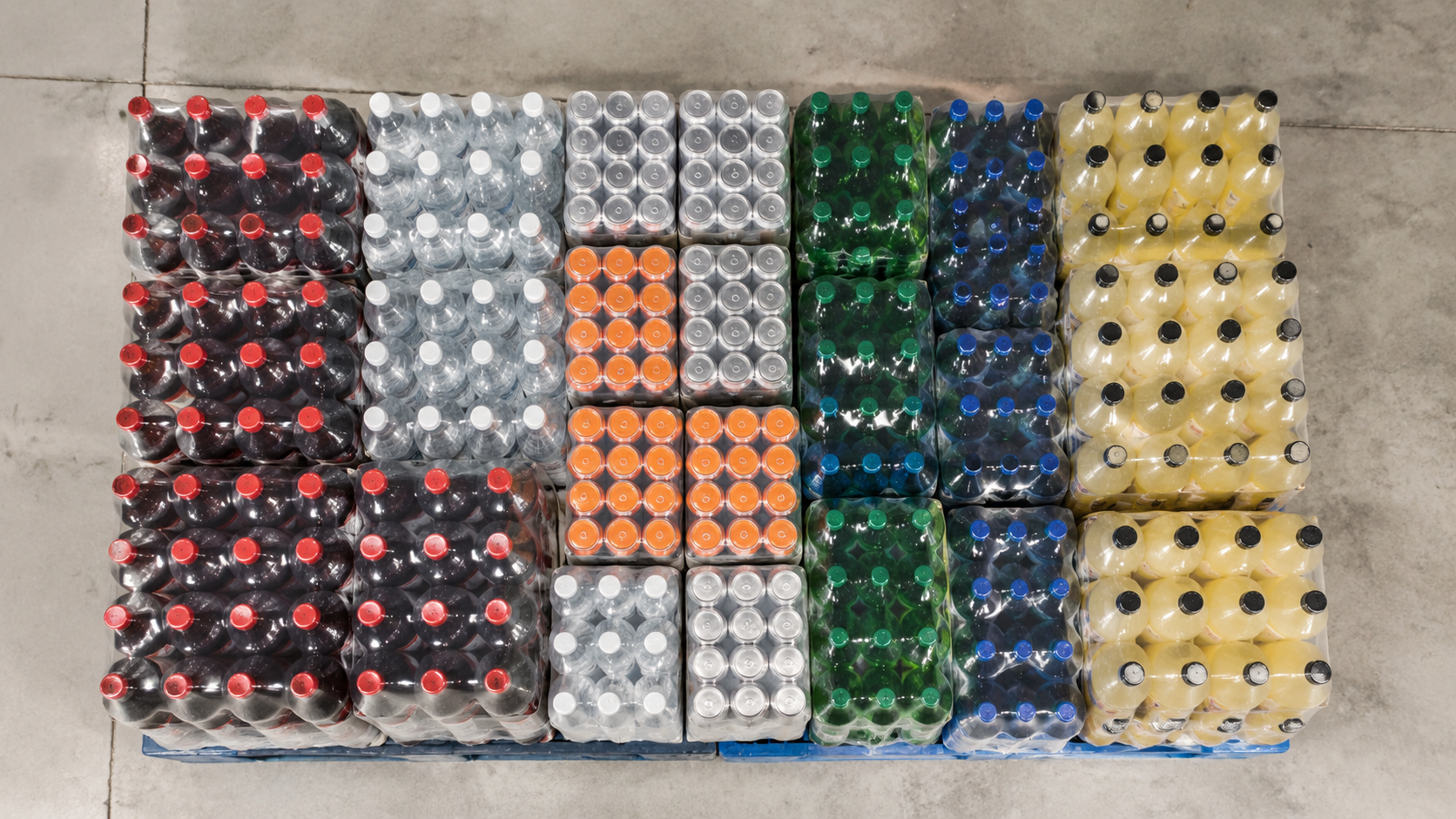
Pallet pattern refers to how cases are arranged on each layer of a pallet, and different arrangements can leave more or less unused edge space depending on how the case dimensions divide into the pallet footprint. A pattern that leaves a gap around the edge of each layer wastes space on every layer stacked, which compounds across the height of the pallet.
Pallet patterns are typically built around one of two common pallet footprints used in international trade, and the case dimensions should be checked against whichever footprint the destination market or logistics provider expects, since the two are not interchangeable without re-testing the pattern.
How Stacking Height and Load Stability Affect the Plan
Stack height determines how many layers of cases sit on a single pallet, and it is limited by whichever is more restrictive: the carrier’s height allowance, the destination warehouse’s storage equipment, or the load stability of the case material itself. A case that performs well at a moderate stack height can crush or shift at a taller one, particularly under the vibration and handling a shipment experiences in transit.
Load stability is also affected by whether the pallet pattern interlocks between layers or simply repeats the same arrangement straight up. An interlocking pattern generally holds together better during transit, which is worth testing before committing to a stack height that looks efficient on paper but has not been validated under real handling conditions.
Standard Container Types and How They Affect Unit Count
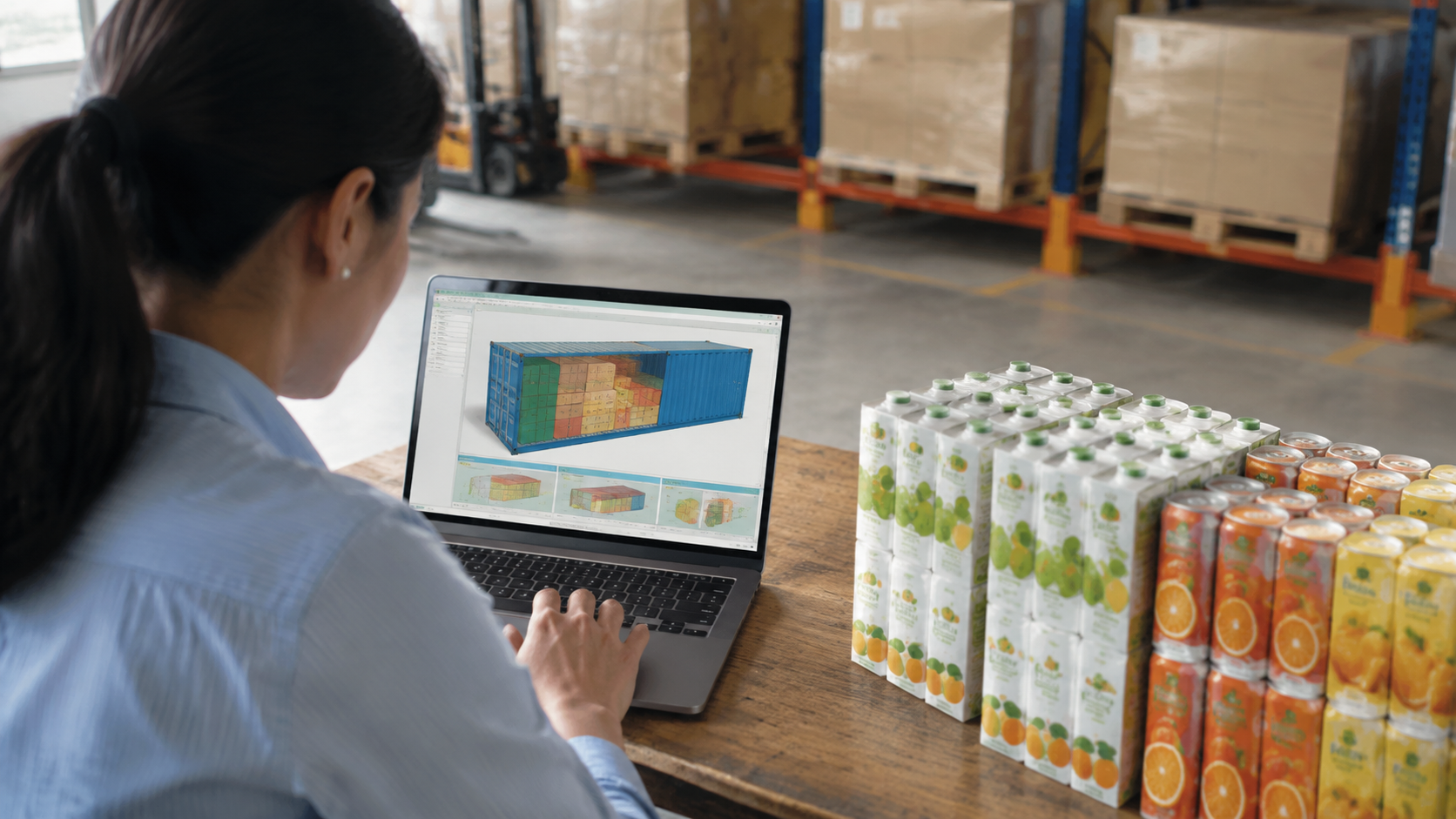
Ocean freight for beverages typically moves in standard dry containers, most commonly in 20-foot and 40-foot lengths, with a 40-foot high-cube variant offering additional internal height. A heavier, denser product such as bottled beverages often reaches a container’s weight limit before it reaches its volume limit, which is why container choice for beverages is frequently driven by weight rather than by how much physical space remains. For a step-by-step method to estimate this, see our guide on how many cartons fit in a 20ft container.
This is also why a straightforward per-unit comparison between container types can be misleading. A 40-foot container generally offers more usable volume than two 20-foot containers combined would suggest per dollar of freight, but only if the product’s weight allows the extra volume to actually be used before the weight limit is reached.
The high-cube variant adds internal height rather than length or width, which mainly benefits shipments that are already volume-limited rather than weight-limited. For a dense beverage product already reaching its weight limit in a standard container, switching to a high-cube option adds cost without adding usable capacity, since the extra height goes unused once the weight limit is hit first.
Comparing Common Export Packaging Considerations
The table below summarizes general trade-offs to frame a planning conversation, rather than to predict an exact unit count for a specific product.
| Factor | What It Affects | Key Question to Confirm |
|---|---|---|
| Case dimensions | How cleanly cases divide across a pallet layer | Does the case size leave unused edge space on the pallet? |
| Pallet footprint | Number of case columns per layer | Which pallet standard does the destination market expect? |
| Stack height | Number of layers per pallet | Are there height limits from the carrier or destination warehouse? |
| Container weight limit | Whether volume or weight is the limiting factor | Does the product reach the weight limit before the volume limit? |
How Bottle or Can Shape Affects Packing Efficiency
Round primary packages such as bottles and standard cans leave consistent gaps between units inside a case, which is normal and expected, but it means the case itself carries more of the responsibility for efficient packing. Square or rectangular packages, such as some carton formats, can pack more tightly inside the same case footprint.
This does not mean one shape is universally better. A round bottle may still be the right choice for branding, handling, or filling-line reasons, but the packing efficiency trade-off should be factored into the case design rather than treated as a fixed cost that cannot be improved through case engineering.
Case internal dividers can partly offset the gaps left by round packaging by keeping each unit fixed in place, which reduces movement during transit even though it does not change the underlying void space. Whether dividers are worth the added material cost depends on how fragile the primary package is and how many handling transfers the shipment goes through before reaching its destination.
Common Mistakes When Planning Case and Pallet Configuration
Most inefficiency in beverage case and pallet planning comes from finalizing the primary package first and treating case and pallet design as an afterthought. Each mistake below tends to surface only after the first production run or the first export shipment, which is later than most of them are cheap to fix.
- Finalizing bottle or can dimensions before checking how they divide across a standard pallet footprint.
- Designing a case size for retail shelf appeal without checking its export pallet efficiency.
- Assuming container volume is the limiting factor without checking the product’s weight against the container’s weight limit.
- Not confirming which pallet standard the destination market or retailer requires before finalizing the pattern.
- Skipping a real stacking or transit test and relying only on a calculated stack height that assumes ideal handling conditions.
Information for Beverage Brands Planning Export Shipments
When planning an export order, it helps to share the primary package dimensions, target market, and preferred pallet standard with a manufacturing or logistics partner before case artwork is finalized. This allows case and pallet configuration to be checked against the actual container and destination requirements, rather than adjusted after the fact.
ACMFOOD works with beverage brands on export packaging configuration and can review how a proposed case and pallet pattern performs against standard container options before a shipment is booked. Confirming this early tends to avoid the more costly fix of reworking a case design after the first shipment reveals inefficient container utilization. The container booking itself should also be paired with the right Incoterms for a beverage import, since who books and pays for freight affects how much control a brand has over the final configuration.
This is also a useful step to revisit whenever a brand adds a new pack size or enters a new destination market, since a case and pallet configuration that worked well for one product line or one country’s pallet standard does not automatically carry over to another.
- Share the primary package dimensions and target shelf-ready case size, if one is required.
- Confirm the pallet standard expected by the destination market or retailer.
- Ask for a review of case and pallet fit against both weight and volume limits, not volume alone.
Common Questions About Beverage Case and Pallet Configuration
Is it always more efficient to use the largest available container?
Not necessarily. A larger container only improves efficiency if the product’s weight allows the additional volume to actually be used; for denser beverage products, a container can reach its weight limit well before its volume limit, making the larger container’s extra space unused rather than cost-saving.
Can case dimensions be changed after a product has already launched?
Yes, though it usually requires new case tooling or die-lines and should be re-tested against the pallet pattern before rolling out, since a dimension change that looks small on paper can shift how cleanly cases divide across a pallet layer.
Do different destination markets require different pallet standards?
Often, yes. Pallet standards can vary by region and by retailer, so it is worth confirming the expected standard for each destination market rather than assuming one pallet footprint works everywhere.
How much stacking height should be tested before finalizing a case design?
Enough to cover the tallest stack the case will realistically experience across transit, warehouse storage, and any transfer between pallets, since a case that only gets tested at a lower height than it will actually face in the supply chain risks failing under real handling conditions later.
Conclusion
Case count, pallet pattern, and container choice are linked decisions rather than separate ones, and planning them together before packaging is finalized is what determines how efficiently a shipment uses the space and weight allowance it is paying for. Reworking any one of these after production has started is usually more disruptive than checking the fit upfront. Once the physical configuration is set, the remaining piece is making sure the export documents that travel with the container match what was actually loaded.
For brands preparing an export shipment, sharing primary package dimensions, target markets, and pallet requirements early makes it easier for a manufacturing partner like ACMFOOD to confirm a case and pallet configuration that fits the shipment’s actual constraints.