


 Français
 Español
 العربية
 한국어
Flash pasteurisation heats a drink in a continuous flow before it is packed, while tunnel pasteurisation heats the drink after it is already sealed inside its bottle or can. The choice between them decides where contamination risk sits, which containers you can use and how much heat the flavour has to survive.
This article compares the two routes for beverage brands and importers writing a product brief: how each one works, where it fits, and which questions separate a workable route from an expensive mistake.
What is the difference between flash and tunnel pasteurisation?
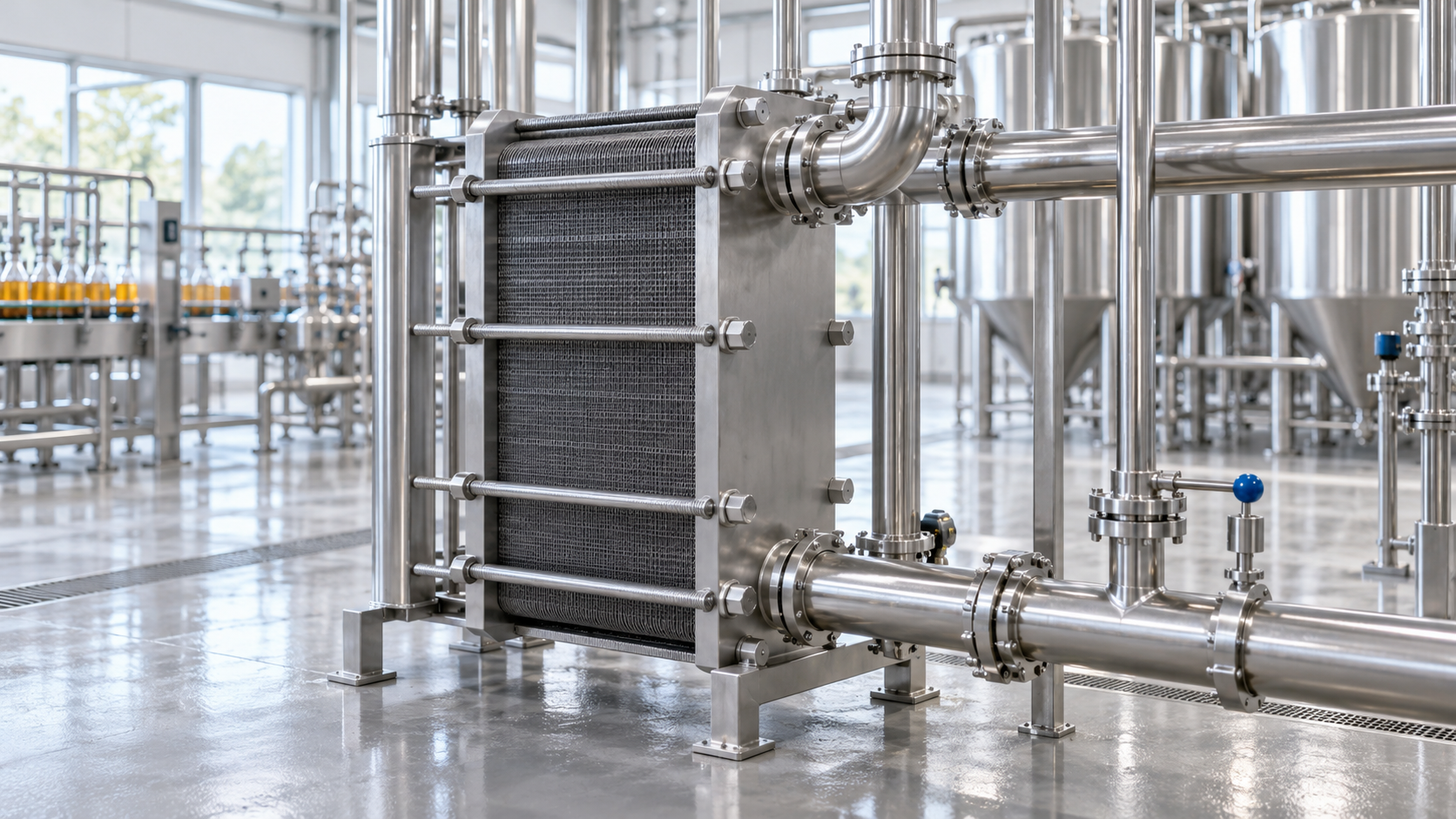
Flash pasteurisation, also called HTST (high temperature, short time), treats the liquid in a heat exchanger and then fills it into clean containers. Tunnel pasteurisation fills and seals first, then moves the closed containers through spray zones that heat, hold and cool them together with the product.
In practical terms, flash treats the liquid, tunnel treats the pack. That one distinction explains almost every other difference in the sections below.
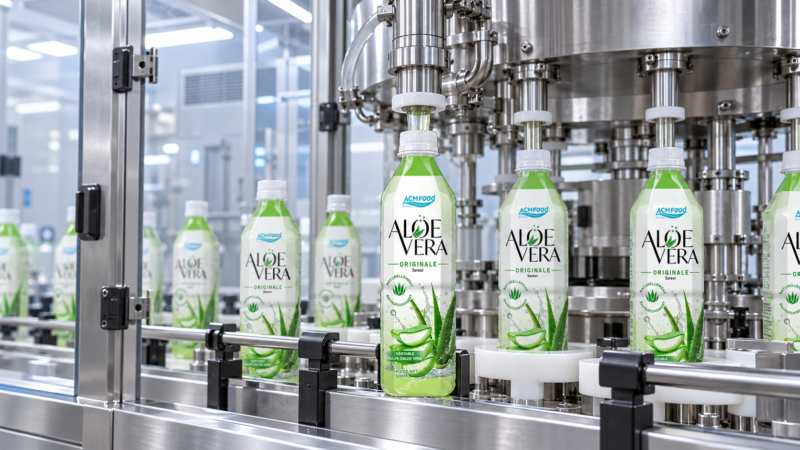
A flash line pumps product through a plate or tubular heat exchanger, holds it at temperature for a set time in a holding tube, then cools it. What happens next depends on the filler: hot filling the product into bottles, or cooling it and filling into a hygienic or aseptic environment. A tunnel line has no such second decision, because the sealed container is the final barrier. The general role of tunnel systems is covered in our guide to tunnel pasteurisation for bottled and canned drinks.
How does the flash route work, step by step?
The flash route moves product through four stages: balance tank, heating section with a holding tube, cooling, and filling. Each stage has its own control point, which is why the process is easy to document but unforgiving of weak filling hygiene.
- Preparation. Juice, blend or base is mixed, deaerated if needed and held in a balance tank at the temperature the line expects.
- Heating and holding. The liquid is heated in a heat exchanger, then flows through a holding tube sized so that every part of the flow spends at least the target time at temperature.
- Cooling or hot hold. For hot fill, product leaves the holding tube at filling temperature. For cold or aseptic fill, it passes through a cooling section first.
- Filling and closing. Product enters containers that must already be clean enough for the chosen route, and the closure is applied.
The short heating time is the main advantage. Heat-sensitive flavour, colour and fresh notes usually suffer less than they would in a long in-pack cycle, although the actual result depends on the product and the temperature chosen.
How does the tunnel route work?
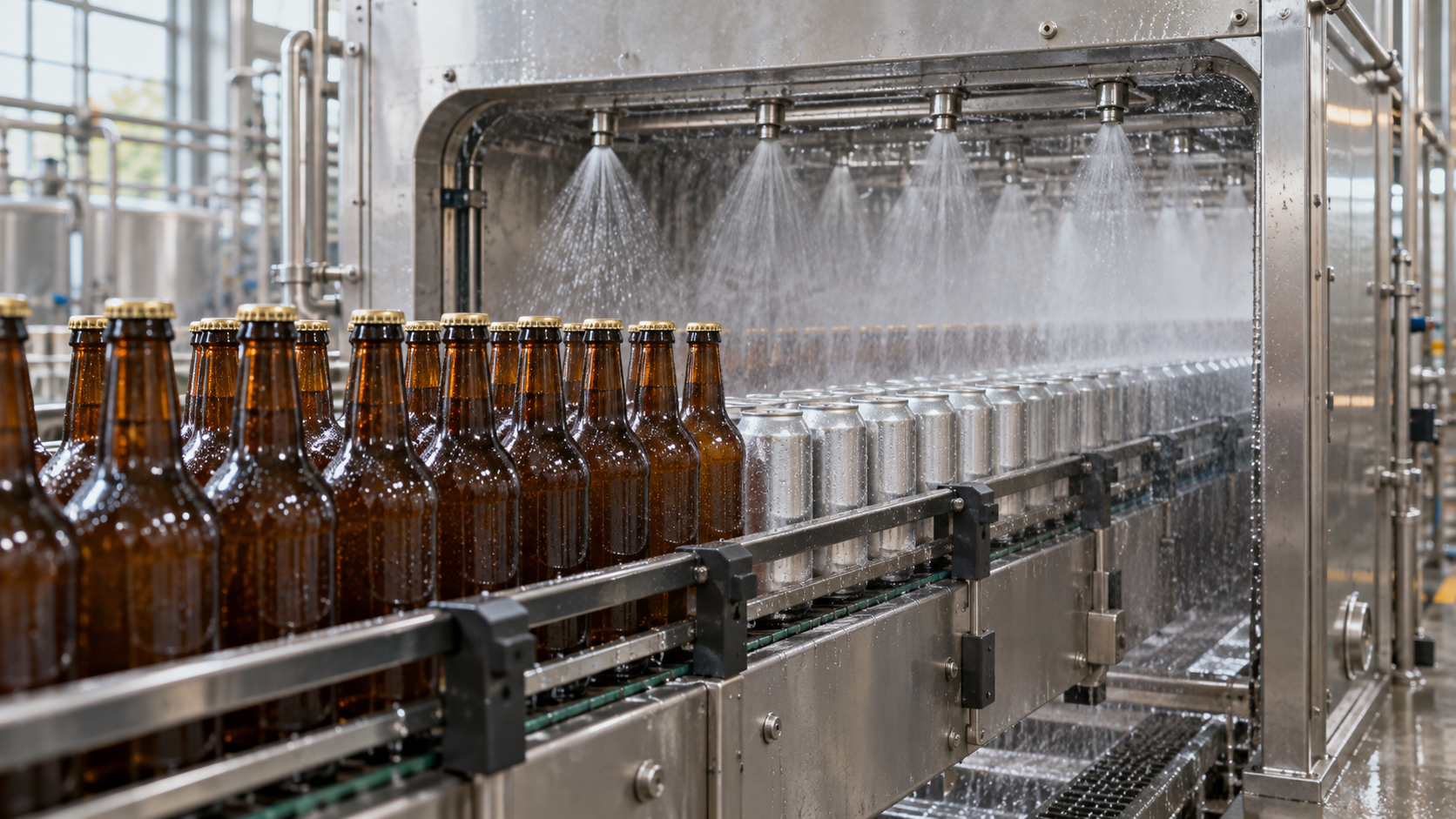
A tunnel pasteuriser carries sealed containers on a conveyor through successive zones. Early zones warm the containers gradually, a middle zone holds them at pasteurising temperature, and final zones cool them with progressively cooler water.
The gradual ramp matters. Glass can crack if the temperature difference between container and spray water is too large, and a can or bottle that is cooled too aggressively can develop closure problems. Tunnel lines are therefore built around gentle temperature steps, which makes the cycle long compared with a plate heat exchanger. The upside is that the sealed container protects the product from the moment it leaves the filler, so a contamination event after filling is much less likely to reach the consumer unnoticed.
Which route protects better against re-contamination?
Tunnel pasteurisation gives the stronger protection against re-contamination, because heat is applied after the container is closed. Flash pasteurisation depends on everything downstream of the heat exchanger staying clean, including pipework, filler, containers and closures.
With flash plus hot fill, the hot product itself treats the inner surfaces of the bottle and the closure when the container is held or inverted for long enough, so the pack is part of the kill step. With flash plus cold or aseptic fill, nothing heats the pack after closing, and the filler environment and container sterilisation carry the full burden. A deeper look at the packaging side of that second case is in our article on choosing a filling technology by beverage pH.
Which route suits carbonated drinks, cans and bottles?
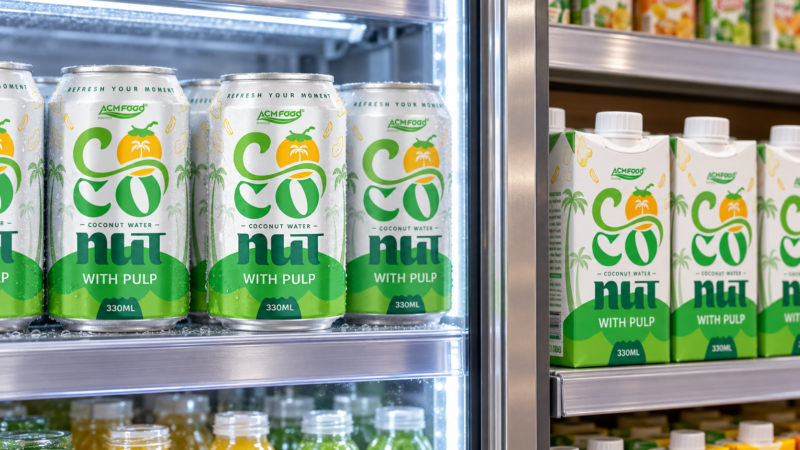
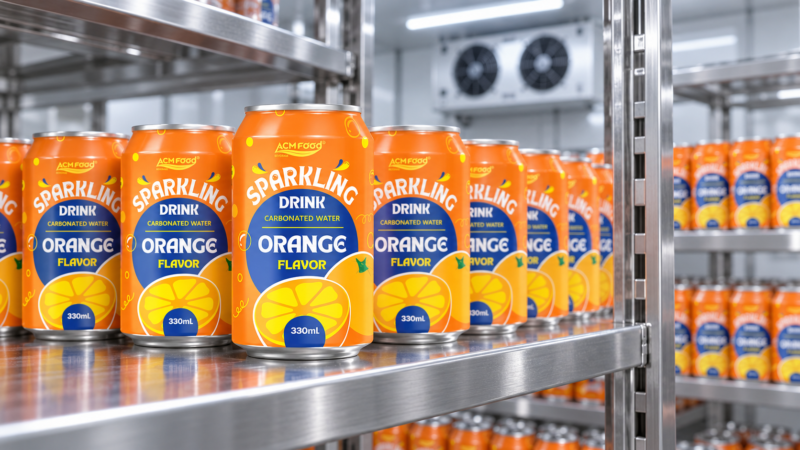
Tunnel pasteurisation is the usual fit for carbonated drinks and for cans, because sealed pressure-rated containers tolerate the in-pack cycle and carbonation stays in the container. Flash is a better fit for still drinks in heat-tolerant or aseptically filled bottles.
Several container details change the picture:
- Cans: they handle tunnel heat well and cool quickly, so tunnel is common for canned drinks. Flash can also be used when the line fills cans hot or in a clean fill setup, but the filler has to be designed for it.
- Glass: tunnel works if the temperature steps are gentle. Flash with hot fill also works, provided the glass can take the filling temperature.
- PET: standard PET deforms under hot fill and in-pack heating. Heat-set bottles, or a cold or aseptic route, are the usual answers.
- Carbonated products: dissolved gas makes in-line heating awkward because the product must stay under pressure until filling, so tunnel is simpler.
What does each route do to flavour, colour and energy use?
Flash heating is shorter, so it generally preserves fresh flavour and colour better than a long in-pack cycle. Tunnel heating exposes the whole container and its contents for longer, which can flatten delicate notes in some products but is gentler on liquid handling after sealing.
Energy use depends heavily on how each plant is built. A plate heat exchanger with heat recovery between incoming and outgoing product is efficient by design. Tunnel pasteurisers heat large volumes of water and containers, and they rely on water recirculation and heat recovery between zones to stay efficient. Because these figures depend on a specific line, treat any general claim that one is always cheaper with caution, and ask for line-specific data instead.
How do the two routes compare side by side?
The table below summarises the main differences. It describes general principles, not the capability of any one plant, and real choices depend on the product, container and target market.
| Factor | Flash / HTST | Tunnel |
|---|---|---|
| Where heat is applied | To the liquid, before filling | To the sealed container and product together |
| Heating time | Short, in a holding tube | Longer, with gradual ramp and cool-down |
| Re-contamination risk after heating | Depends on filler, container and closure hygiene | Low, because the pack is already sealed |
| Typical fit | Still juices, teas and plant drinks with hot or clean fill | Carbonated drinks, cans, glass and sealed formats |
| Flavour impact | Often lighter for heat-sensitive drinks | Can be heavier for delicate flavours |
| Container limits | PET needs heat-set or aseptic route | Containers must withstand heating and cooling |
| Process verification | Temperature and hold time at the heat exchanger, plus filling hygiene checks | Temperature and time inside the tunnel zones, in the container |
Which products fit which route?
The right route usually follows the product’s acidity, its carbonation and the container. High-acid still juices tolerate both routes. Carbonated drinks lean toward tunnel. Low-acid drinks, including many plant-based and coffee drinks, usually need a stronger route than either of these.
A practical way to think about it:
- High-acid still juice: flash with hot fill is common, and tunnel is a valid alternative for sealed glass or can formats.
- Carbonated soft drinks and sparkling juice: tunnel is the usual choice for cans and glass.
- Tea and herbal drinks: either can work, depending on acidity and container.
- Low-acid or dairy-alternative drinks: pasteurisation alone often does not give a stable shelf life at ambient temperature, so UHT, aseptic or retort routes come up instead.
The FDA uses a pH of 4.6 in its acidified and low-acid food rules (21 CFR Part 114) to separate acid from low-acid foods. Where a drink sits relative to that line is one of the first facts to put in a product brief.
What should a buyer ask before choosing a route?
Ask which microorganisms the process is designed against, how the temperature and time are recorded, and what happens between the heat step and the closed container. A clear answer on each of these is more useful than a general statement that a line is pasteurised.
- What is the target shelf life, and at what storage temperature?
- Is the product acid or low-acid, and is it carbonated?
- Which container is planned, and can it take the heating or filling temperature? Our comparison of cans, PET bottles, glass and Tetra Pak is a useful starting point.
- For flash, how are the filler, containers and closures cleaned or sterilised after the heat step?
- For tunnel, how are temperature and time monitored in the tunnel zones?
- How is the process validated for the target market, and what records can be shared?
For markets with juice HACCP rules, the validation question is not optional. The US rule at 21 CFR Part 120 requires juice processors to include control measures that consistently deliver a 5-log reduction of the pertinent microorganism, with specific exemptions for some thermal processes. Whether a given flash or tunnel set-up meets that standard is a documented validation matter, not an assumption.

Frequently asked questions
Is flash pasteurisation the same as HTST?
In beverage practice the two terms are usually used for the same family of processes: heating liquid in a continuous flow at a higher temperature for a short time. Exact temperatures and times vary by product, so they should be specified in the process description rather than assumed from the name.
Does tunnel pasteurisation work for PET bottles?
It can, but standard PET is sensitive to heat and may deform or lose shape. Bottles for in-pack heating usually need a design and resin suited to the temperature, and carbonated products add pressure on top of the heat load.
Can a brand switch from tunnel to flash later?
Switching changes the container requirements, the filler, the hygiene plan and often the validation file, so it is a project rather than a setting. It is better to decide the route during product development than after labels and packaging are approved.
How to choose between the two routes
Choose flash when the product is a still drink, the container tolerates hot fill or the filler provides a clean environment, and flavour freshness matters. Choose tunnel when the product is carbonated or sealed in cans or glass, and the safest protection after sealing is the priority.
If your product does not fit neatly into either, the route may be hot fill with a hold step, cold aseptic fill, UHT or retort, or a cold process such as in-pack treatment combined with controlled storage. These alternatives change the cost, shelf life and packaging options, so they belong in the same product brief.
Next step: send us your product spec and target market, and we confirm the route that fits your drink, container and destination rules.
Sources
- U.S. FDA / eCFR — 21 CFR Part 120, Hazard Analysis and Critical Control Point (HACCP) Systems (juice)
- U.S. FDA / eCFR — 21 CFR Part 114, Acidified Foods