


 Français
 Español
 العربية
 한국어
한국어Switching beverage manufacturer means moving your production from one co-packer or contract manufacturer to another while keeping the finished product as close as possible to what your customers already recognize. Done well, the switch is invisible to the shelf; done poorly, small differences in water, equipment, or process parameters show up in taste, color, or shelf life before anyone catches them.
This guide covers what actually transfers between manufacturers, what typically needs re-validation, the documents a new partner will ask for, and a realistic timeline for a transfer that does not put a live SKU at risk.

Signs a manufacturer relationship needs a formal review
Most brands do not decide to switch beverage manufacturer overnight. The decision usually follows a pattern of smaller issues that, taken individually, might not justify a move, but that add up over several production cycles. Reviewing your relationship formally, rather than reacting to a single bad batch, tends to produce a clearer decision.
- Recurring corrective actions: the same defect or deviation keeps recurring despite documented corrective action plans from previous occurrences.
- Slipping lead times: production slots are consistently delayed relative to what was originally agreed, affecting your own launch or replenishment planning.
- Communication gaps: sample approvals, quality holds, or change requests take noticeably longer to resolve than they used to.
- Capacity ceiling: your manufacturer has been transparent that they cannot grow with your forecast volume over the next planning cycle.
If several of these apply at once, it is usually more efficient to start a structured transfer process than to keep managing the relationship issue by issue.
What changes when you switch beverage manufacturer, and what stays the same?
Your formulation, packaging specification, and brand identity stay the same on paper, but the equipment, water source, and process settings used to execute them are new. A transfer succeeds when the new manufacturer reproduces the sensory result of your original recipe, not just the ingredient list.
Three categories tend to travel differently:
- Formulation: Ingredient ratios, sourcing specifications, and target sensory parameters (Brix, pH, color) should transfer directly, provided the new manufacturer can source equivalent ingredients.
- Process: Filling temperature, pasteurization or aseptic parameters, homogenization pressure, and CIP cycles are equipment-specific and often need re-tuning even when the target spec is unchanged.
- Packaging: Can, bottle, or carton formats may need re-sourcing if the new manufacturer’s filling line is built for a different format or closure.
Can you switch manufacturers without changing your product?
In most cases yes, provided the switch is treated as a formal technology transfer rather than a simple handoff of a spec sheet. The finished product can stay within your existing sensory and quality tolerances, but this depends on running a trial batch and a sensory match-off before committing to commercial volume.
| Element | Usually transfers directly | Often needs re-validation |
|---|---|---|
| Recipe & ingredient ratios | Yes, if ingredients are sourced to the same spec | Ingredient substitutions from a different supplier base |
| Target sensory profile (Brix, pH, color) | Yes, as a target | Achieving the same target under new equipment |
| Packaging format | Yes, if the new line runs the same format | Closure type, fill height, or can gauge on a different line |
| Process parameters (fill temperature, pasteurization) | No | Almost always re-tuned to the new equipment |
| Shelf life & stability | No | New accelerated and real-time stability data expected |
Building a transfer package for your new manufacturer
A complete transfer package lets the new manufacturer quote accurately and start trials without back-and-forth. Missing documents are one of the most common reasons a transfer timeline slips.
- Full ingredient specification sheet, including an approved supplier list where relevant.
- Target sensory parameters and acceptable tolerance ranges.
- Packaging specification: format, closure, fill weight or volume, and artwork files.
- Current certificates of analysis (COAs) from recent commercial batches.
- Existing stability or shelf-life data, even if it needs to be re-validated on new equipment.
- Retained physical samples from your current manufacturer for a side-by-side comparison.
It helps to send this package to more than one candidate manufacturer at the same time, using identical documents for each. Comparing quotes and trial availability on a like-for-like basis makes it easier to see whether a difference in quoted price actually reflects a difference in process capability, or simply a different assumption about your volume or packaging format.
How to run a fair comparison between candidate manufacturers
A quote is only comparable across manufacturers if every candidate is pricing against the same assumptions. Before requesting quotes, confirm that each manufacturer has the same volume forecast, the same packaging specification, and the same quality documentation requirements, since differences in any of these can make two quotes look further apart in price than they actually are once the scope is equalized.
- Volume tiers: ask each candidate to quote at the same set of volume tiers so per-unit cost is comparable.
- Packaging scope: confirm whether packaging materials, artwork setup, and freight are included in the quoted price or billed separately.
- Trial and sample cost: some manufacturers absorb the cost of an initial trial batch, others bill it; this affects the real cost of onboarding, not just the ongoing per-unit price.
- Lead time under normal and peak conditions: ask specifically about turnaround during your peak season, not only the standard quoted lead time.
Why identical specs can still taste different at a new plant
Two plants can run the same recipe on paper and still produce a noticeably different beverage, because water chemistry, heat transfer, and mixing shear are plant-specific even when a process is described the same way in a spec sheet. See how beverage plant water treatment shapes product consistency for how something as basic as incoming water can shift flavor and stability between two sites.
Packaging line differences add another variable. A can filler set up for one gauge or seam profile may need adjustment for a different can format, which can affect headspace, carbonation retention, or seal integrity even when the beverage recipe itself has not changed.
A realistic timeline for a manufacturer transfer
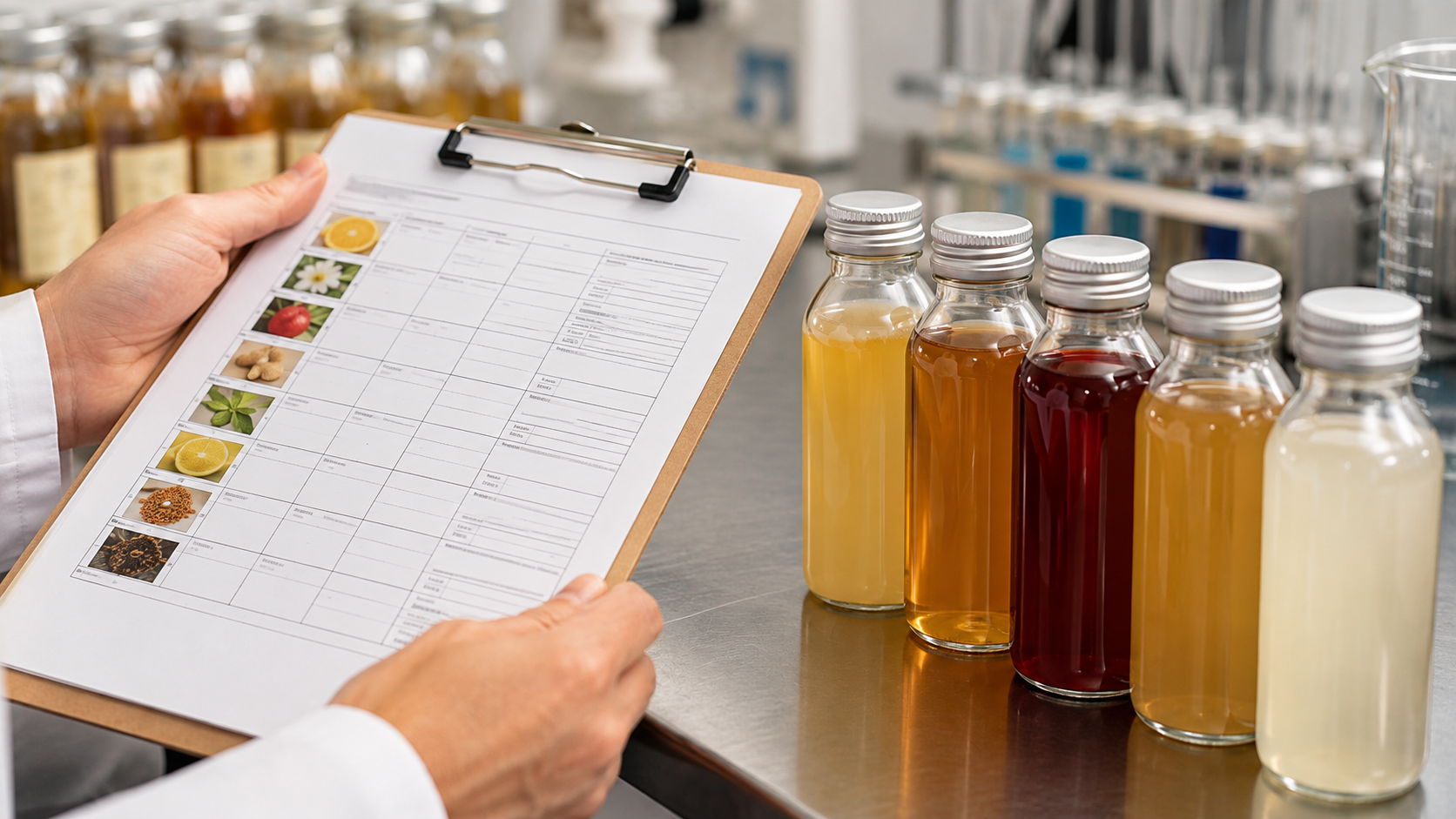
Timelines vary by product complexity, but most transfers move through the same phases. Rushing the trial and sensory match-off stages is one of the more common causes of an in-market quality complaint after a switch.
- Documentation review: The new manufacturer assesses your transfer package and flags any gaps before quoting.
- Trial batch: A small-scale run confirms the recipe is achievable on the new equipment.
- Sensory match-off: Side-by-side tasting or lab comparison against retained samples from your current manufacturer.
- Stability check: Accelerated or real-time testing confirms the product holds up over its intended shelf life.
- Commercial ramp: Full-scale production begins, often with a smaller first commercial batch before full volume.
Common reasons brands switch beverage manufacturer
Brands rarely switch for a single reason. The most frequent drivers include:
- Growth beyond current capacity: Your current partner cannot support the volume you now need.
- Minimum order quantity mismatch: Your order size has outgrown, or fallen below, what your current manufacturer is set up to run efficiently.
- Consistency or quality issues: Batch-to-batch variation that has not been resolved through normal corrective action.
- Cost structure changes: See how contract manufacturing is priced and what drives private label juice cost for how tolling versus full-service pricing and ingredient costs typically compare between manufacturers.
- New market or format needs: Expansion into a market or pack format your current manufacturer does not support.
Contract and IP considerations before you leave a manufacturer
Before initiating a transfer, review your current contract for clauses on formula ownership, sample retention rights, and confidentiality obligations that continue after the relationship ends. Formula ownership should be confirmed in writing if it is not already explicit, since a manufacturer that helped develop your recipe may hold partial rights to process-specific know-how even if the ingredient list itself belongs to your brand.
Notice periods and any exclusivity clauses should also be checked early, since some agreements require formal notice before volume can move to a new partner without penalty.
Risk checklist before committing to a new manufacturing partner
- Has a trial batch matched your retained samples within your existing sensory tolerance?
- Is packaging artwork compatible with the new manufacturer’s filling line without redesign?
- Does the new manufacturer’s minimum order quantity fit your current and near-term forecast volume?
- Have stability or shelf-life expectations been confirmed on the new equipment, not just assumed from your old data?
- Are formula ownership and confidentiality terms documented in the new agreement?
What to watch during the first commercial batch at a new manufacturer
Even after a successful trial and sensory match-off, the first full commercial batch is worth monitoring more closely than routine production, because pilot-scale results do not always hold exactly at commercial scale. Line speed, tank size, and continuous rather than batch processing can each introduce small shifts that were not visible in a smaller trial run.
- Request retained samples: ask the new manufacturer to hold retained samples from the first commercial batch specifically for extended comparison against your previous supplier’s product.
- Check early-batch consistency: compare the first few pallets produced against the middle and end of the run, since some process drift only appears once equipment has been running for several hours.
- Confirm documentation matches the trial: the commercial batch record should reference the same specification and acceptance criteria agreed during the trial phase, not a revised version introduced without your sign-off.

FAQ: switching beverage manufacturer
How long does it take to switch beverage manufacturer?
Most transfers move through documentation review, a trial batch, sensory match-off, and stability confirmation before commercial ramp-up. The overall timeline depends on product complexity and whether new packaging sourcing is also required, so it is best confirmed against your specific product with each manufacturer under consideration.
Will my product taste exactly the same after switching manufacturer?
A well-run transfer aims to keep the product within your existing sensory tolerance, not to guarantee an identical result on every parameter. Equipment and water differences make some fine-tuning normal, which is why a sensory match-off against retained samples is a standard step before commercial volume.
Who owns the formula if I switch manufacturers?
This depends on your contract with your current manufacturer. If the recipe was developed jointly, rights to process-specific know-how may be shared even when the ingredient list itself belongs to your brand, so this should be confirmed in writing before a transfer begins.
Do I need new packaging artwork when I switch manufacturer?
Not necessarily, but you should confirm the new manufacturer’s filling line runs the same can, bottle, or carton format and closure. Where dimensions or die-line specifications differ, artwork will need to be adapted rather than reused as-is.
Conclusion
Switching beverage manufacturer is manageable when it is treated as a documented technology transfer rather than a simple change of supplier. Confirm what actually needs re-validation on the new equipment, assemble a complete transfer package early, and build in time for a trial batch and sensory match-off before committing volume. Comparing quotes on a like-for-like basis and confirming formula ownership in writing are two of the simplest steps that prevent the most common disputes during a switch.