


 Français
 Español
 العربية
 한국어
A hot-fill PET bottle is a plastic bottle designed to be filled with product that is still hot, then capped and cooled, without shrinking or collapsing. Standard PET cannot do this, so hot-fill packs rely on heat-set resin, engineered vacuum panels or a nitrogen-dosing alternative.
This guide explains why ordinary PET deforms, how heat-set bottles are made, the difference between panelled and panelless designs, and the questions to put to a bottle supplier before the packaging is approved for a juice or tea launch.
Why does standard PET deform during hot filling?
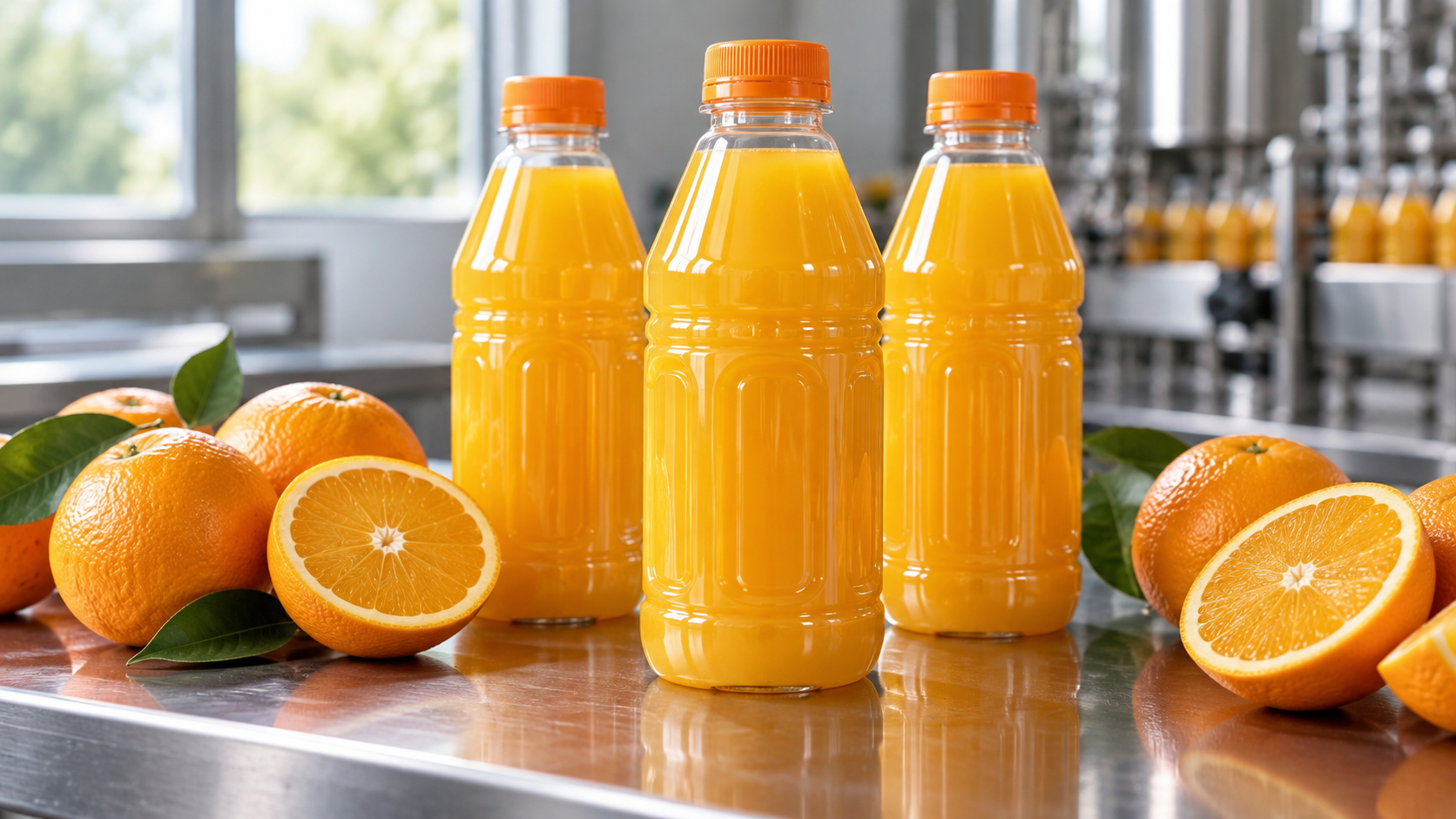
Standard PET is mostly amorphous after it is blown, and amorphous PET softens at a fairly low temperature, around its glass transition range. When hot liquid enters the bottle, the walls relax, the stretched structure shrinks back and the bottle distorts.
Blow moulding stretches PET in two directions, which aligns the polymer chains and gives strength and clarity. That orientation is only stable while the bottle stays below the temperature where the chains can move again. A bottle filled at hot-fill temperature crosses that line, so without extra treatment the shoulder, base and body can warp, shrink or lose capacity.
What is heat-set PET and how is it made?
Heat-set PET is a bottle that has been held against a heated mould during blowing, so the polymer crystallises more fully and the structure becomes stable at higher temperature. The result is a bottle that keeps its shape when hot product is filled.
Typical features of the process include:
- Heated blow mould: the mould is held at an elevated temperature so the stretched bottle can lock in its crystalline structure.
- Controlled crystallinity: more crystallinity improves heat stability but can reduce clarity, so the process balances shape retention against appearance.
- Thicker or redesigned neck and base: the neck finish usually needs extra treatment because it is not stretched during blowing and stays closer to the original preform.
Exact temperatures, times and resin grades belong to the bottle maker and should be requested in writing, not assumed.
What are vacuum panels, and why do hot-fill bottles have them?
Vacuum panels are flexible areas in the bottle wall that move inward as the product cools. When hot liquid cools inside a sealed bottle, it contracts and creates a partial vacuum, and the panels absorb that change instead of letting the whole bottle collapse.
The cooling contraction is physical and unavoidable. If the bottle has no way to give, the walls pull in at random, which looks poor and can weaken stacking. Panels let the bottle shrink in a planned way. They are the familiar ribbed or recessed areas on many juice and tea bottles.
Panelled versus panelless hot-fill bottles
Panelled bottles accommodate vacuum with visible indented panels. Panelless designs aim for a smoother, more premium shape by moving the vacuum accommodation into the base, using specially shaped bases or by limiting vacuum through the filling method.
| Feature | Panelled hot-fill bottle | Panelless hot-fill bottle |
|---|---|---|
| Vacuum accommodation | Flexing panels in the body wall | Base movement or reduced vacuum |
| Appearance | Visible panels, limited label area | Smooth body, larger label surface |
| Design freedom | Constrained by panel layout | Greater, but needs careful engineering |
| Typical risk | Label wrinkling over panels | Base stress, filling and capping sensitivity |
| Best matched to | Standard juice and tea launches | Premium positioning with controlled filling |
How does nitrogen dosing change the bottle?
Nitrogen dosing adds a small amount of liquid nitrogen to the headspace just before capping. As it vaporises it raises the internal pressure, which offsets the vacuum from cooling and lets the bottle keep a smoother, lighter shape.
This approach is sometimes used for lightweight or panelless designs. It adds equipment and control requirements at the filler: dosing accuracy, headspace consistency and cap fit all affect whether the pressure ends up where it should. It is more commonly associated with cold or aseptic filling of thin-walled bottles, so check with the filler whether nitrogen dosing is suitable for a hot-fill pack and what the supplier recommends for the specific bottle.
Can hot-fill bottles be lightweighted or made with rPET?
Lightweighting is possible but limited, because a bottle that must withstand heat, vacuum and stacking needs enough material to do so. Recycled PET (rPET) can be used in some hot-fill applications, but heat stability and clarity may be affected.
Points to raise with the supplier:
- Whether the bottle was designed for the intended filling temperature, not just for hot fill in general.
- What share of rPET the design has been validated with, and whether heat stability has been tested at that share.
- How colour or haze changes with rPET and heat-set processing.
- Whether the target market has rules on recycled content in food-contact plastic, which vary by country and need confirmation for the destination.
Which closures and labels work with hot-fill bottles?
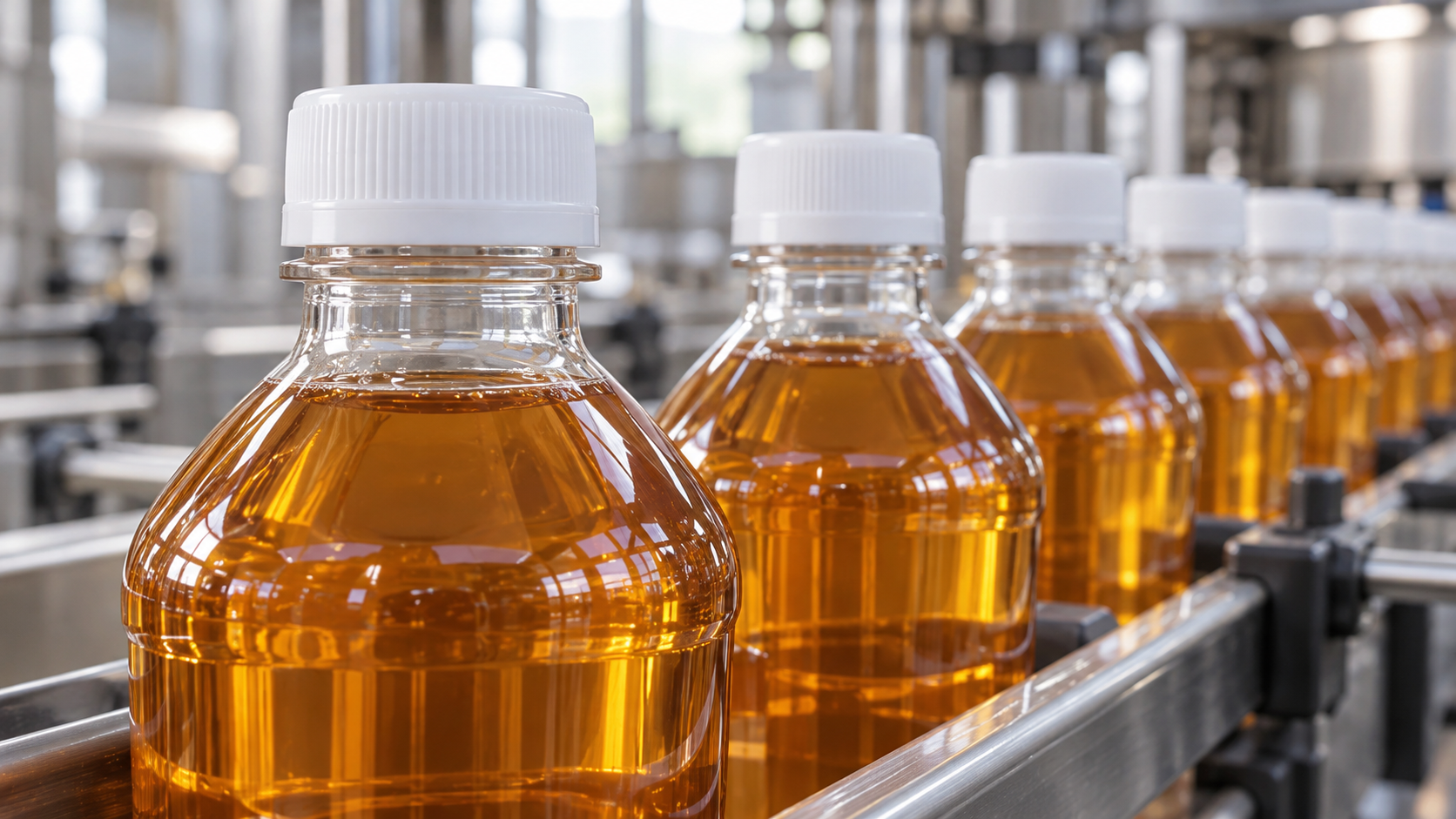
The closure must cope with the same heat as the bottle and still seal while the contents cool and contract. Labels must survive heat, moisture and the shrinkage or movement of panels without wrinkling.
Closure choice affects the seal and the neck finish. Tamper-evident bands, liner materials and thread design should match the bottle neck, and the cap supplier should confirm hot-fill performance. For labels, shrink sleeves, wrap-around labels and pressure-sensitive labels each behave differently over panels and curves, which is why label planning belongs in the same conversation as bottle selection.
Where does hot fill fit among other filling routes?
Hot fill suits acidic drinks that can be filled at high temperature and stored without refrigeration. It is a common alternative to aseptic fill for high-acid juices and teas, but it does not suit every drink.
- Good fit: high-acid juices, juice drinks and some teas where the product tolerates the filling temperature.
- Poor fit: low-acid drinks and heat-sensitive products where flavour or colour would suffer.
- Different tool: cold aseptic filling, retort or UHT for products outside hot fill’s range.
To see how acidity points to a filling method, see our article on choosing a filling technology by beverage pH, and for the wider packaging picture see beverage packaging options compared. Export projects add more constraints, covered in how to choose beverage packaging for export.
What should you ask the bottle supplier?
Ask for the filling temperature the bottle was designed and tested for, the vacuum capacity, the hold time at that temperature and the data behind each claim. A supplier should be able to give written specifications, not only a catalogue photograph.
- What filling temperature and hold time was the bottle validated at?
- How much vacuum can the panels or base absorb, and at what fill volume?
- Is the neck finish heat-treated, and which cap is recommended?
- What is the top-load and stacking performance after hot filling?
- Which share of rPET, if any, has been tested in this design?
- What label types have been proven on this bottle?
- Can a trial run on the actual filler be arranged before purchase?
How do hot-fill, aseptic and nitrogen-dosed packs compare on weight and cost?
Hot-fill bottles are usually heavier than cold or aseptic bottles of the same volume, because they must survive heat and vacuum. Aseptic and nitrogen-dosed packs can use lighter bottles, but they need more expensive filling equipment and validation.
The trade-off is therefore between packaging cost and filling cost. A brand with high volume may justify the cost of an aseptic line through lighter bottles and more design freedom. A smaller launch may prefer hot fill because the filling equipment is simpler and the process is familiar to many bottlers. These are general patterns, and a quotation for the actual bottle, line and volume is the only reliable comparison.
What goes wrong with hot-fill bottles in practice?
The common problems are panelling that distorts after cooling, shrinkage at the shoulder, weak closure seals and bottles that lean or fail when stacked. Most trace back to a mismatch between the bottle’s design temperature and the actual filling temperature.
- Overfilling or underfilling: fill height changes how much vacuum forms and how the panels move.
- Filling temperature above design: the bottle deforms even if it is heat-set.
- Delay before capping: the product cools in the open and the headspace and vacuum change.
- Warm stacking: bottles palletised before they have cooled can deform under load.
- Neck finish damage: poor treatment of the neck leads to leaking or loosening caps.
A trial run on the real filler, with measurements of bottle dimensions after cooling, catches most of these problems before the order is placed.
How should the packaging brief be written?
A packaging brief should state the product, its pH and fill temperature, volume and fill height, closure type, label type, shelf life target and destination. These facts let a bottle supplier recommend a design rather than offer a catalogue item.
Include the shipping method as well. Containers shipped by sea experience heat and humidity, and long stacking heights raise the load on the bottom layers. If the market has recycled-content or labelling rules for plastic, state them in the brief, because they affect resin and closure choices.
What does a trial run on the real filler show?
A trial run shows how the bottle behaves under the actual filling temperature, line speed, capping torque and cooling profile, which no drawing or catalogue can show. It is the cheapest way to find a mismatch before a full order of bottles is committed.
Measure at least the following after the bottles have cooled to room temperature and again after a day of storage: fill height, bottle height and diameter at several points, panel movement, cap torque retention and the presence of leaks. Compare the results with the supplier’s tolerances. Run the trial at the lowest and highest filling temperatures the line may use, because normal production drifts, and the bottle must tolerate the whole operating window rather than a single set-point.
Keep the retained bottles for the planned shelf-life period and recheck dimensions at intervals. Slow creep and top-load changes only appear with time, and they are better found in a retained sample than in a customer’s warehouse.
Frequently asked questions
Can I hot-fill a normal PET water bottle?
Usually not. Standard water bottles are designed for cold filling and lack the heat-set structure that keeps shape at hot-fill temperature. Using them can cause shrinking, warping or a failed seal.
Are hot-fill bottles recyclable?
Hot-fill bottles are PET, which is widely recycled, but heat-set processing and added features such as barriers or labels can affect how a recycler handles them. Recyclability depends on local collection and sorting systems, so check requirements for each destination market.
Do hot-fill bottles need a barrier layer?
Not always. Barrier layers are used for oxygen-sensitive products or long shelf life, and the need depends on the drink, the target shelf life and the container material. Include the oxygen sensitivity of the product in the brief.
Conclusion
Hot-fill PET works because the bottle is built for it: heat-set resin to resist shrinking, panels or another vacuum solution to absorb cooling, and a neck and closure that hold up under heat. Treat the bottle as part of the process, not a separate purchase.
Next step: send us your spec and target market, and we confirm the route, including whether hot fill, nitrogen-dosed or aseptic is the right pack for your drink.