


 Français
 Español
 العربية
 한국어
Commercial sterility testing checks whether a thermally processed drink is commercially sterile, meaning that no organisms able to grow under normal non-refrigerated storage remain in the sealed pack. It is the release step that supports UHT, retort and aseptic drinks, and it explains why a batch can be held after production before it ships.
This guide explains what commercial sterility means, how an incubation test is carried out, which temperatures and checks are used, how a failed result is read and what a buyer can ask to see in release records. It is written for sourcing and quality teams reviewing shelf-stable drink projects.
What does commercially sterile mean?
Commercially sterile means a food has been heated so that it is free of microorganisms capable of reproducing under normal non-refrigerated storage and distribution, and free of viable organisms of public health significance. It does not mean that every living cell has been destroyed, which is what absolute sterility would require.
The difference matters because a shelf-stable drink is judged by how it behaves during storage, not by whether a laboratory can find a single dormant spore. United States regulation defines the term in exactly this way for thermally processed foods. Products that meet the definition stay stable in a warehouse, while products that fail show growth, gas or a change in pH when they are kept at test temperatures.
How is a commercial sterility test carried out?
A commercial sterility test keeps sealed packs from a production run at set temperatures for a set time and then checks them for signs of growth. Packs that stay unchanged support release of the batch, while packs that swell, leak or change are investigated before anything ships.
- Sampling. Packs are taken at agreed intervals across the run, including the start, the end and after any stoppage.
- Labelling. Each sample carries a code that ties it to the batch, line and time of filling.
- Incubation. Sealed packs are kept in thermostatically controlled incubators, with different temperatures used to look for different groups of organisms.
- Observation. Packs are inspected for swelling, leakage, damage and odour at frequent intervals during incubation.
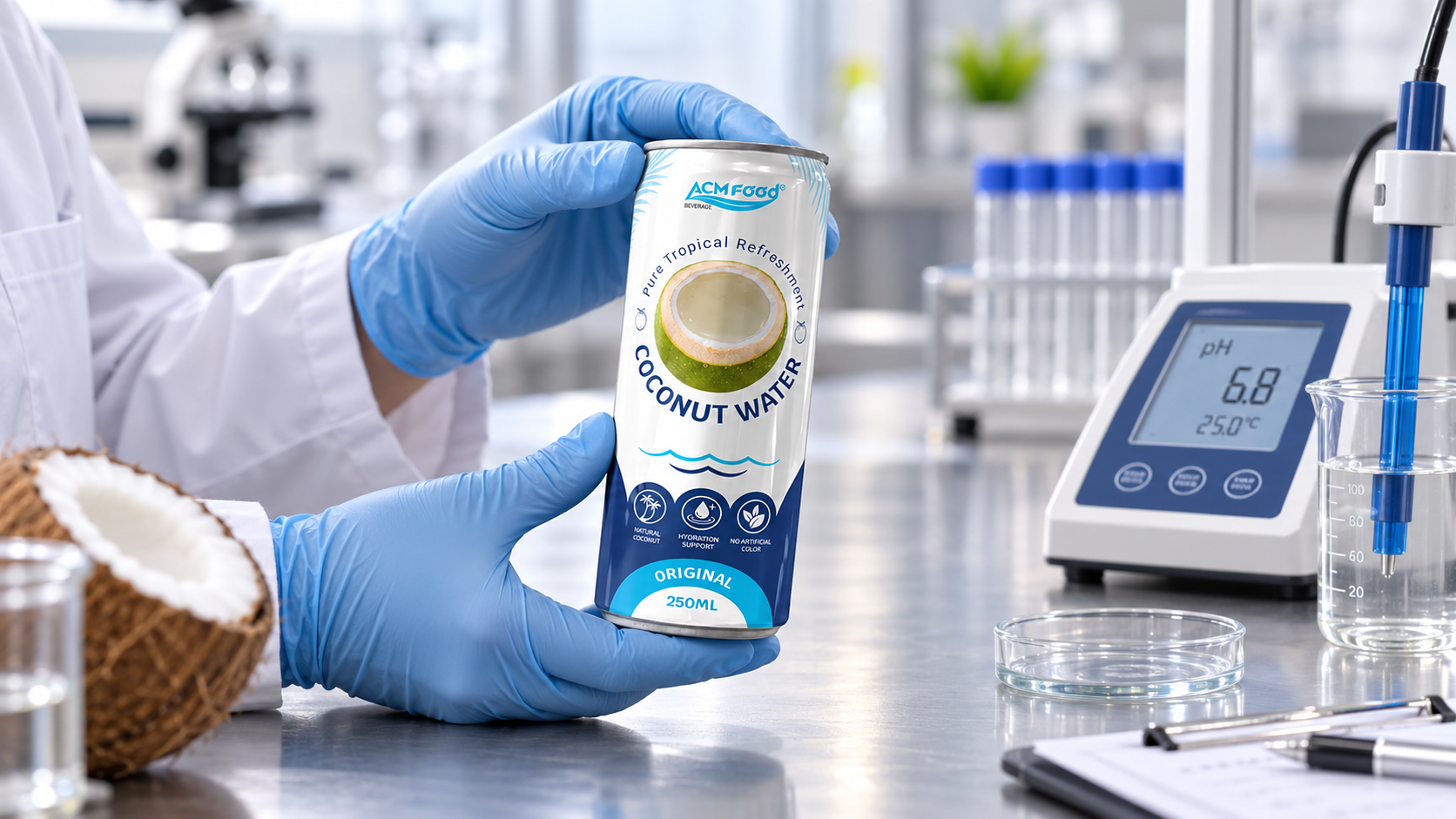
- Opening and checks. After incubation, selected packs are opened and checked for appearance, smell, taste where appropriate, and pH.
- Decision. The batch is released, held for further testing or rejected, and the decision is recorded.
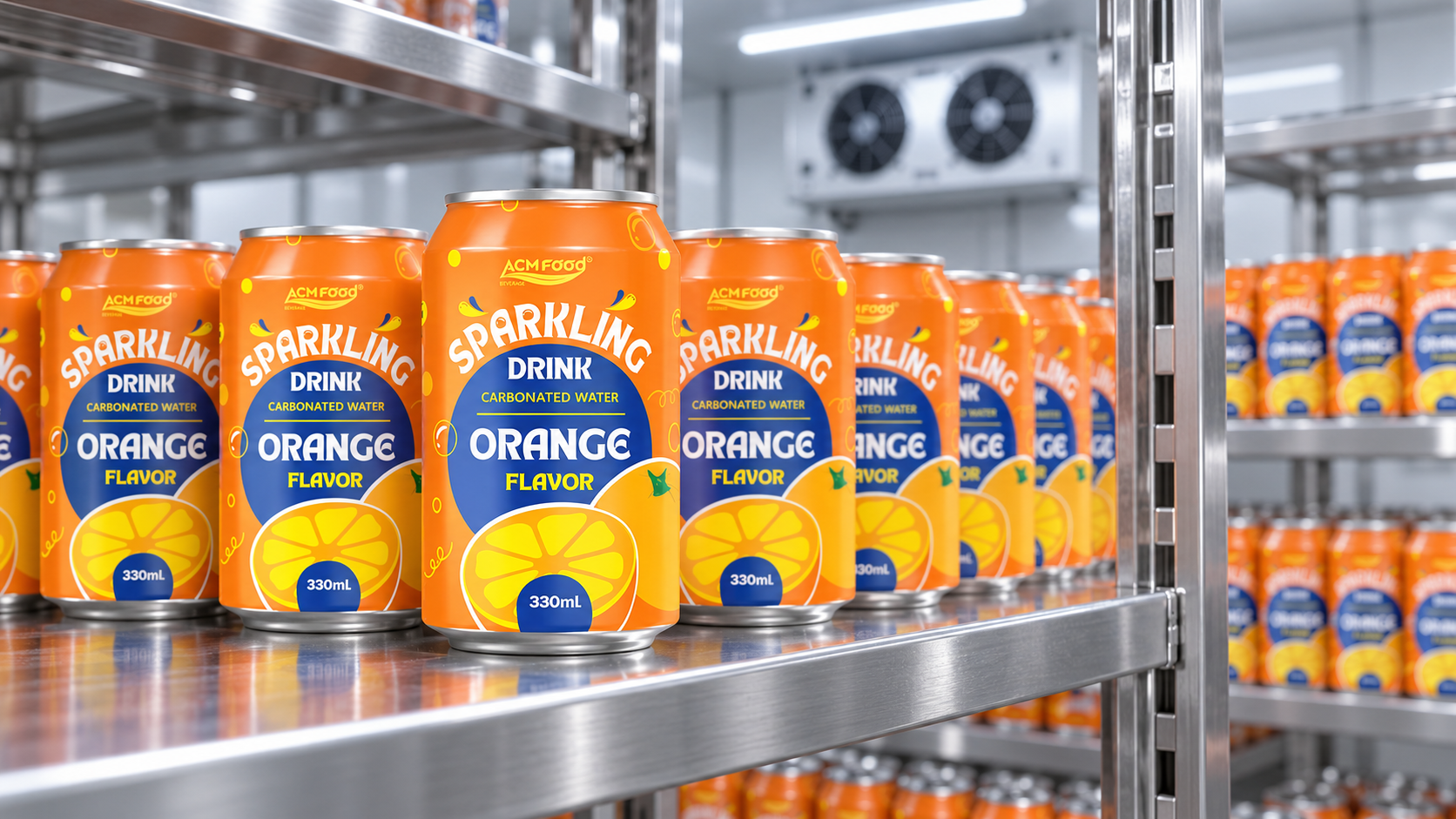
Many factories hold the batch until incubation results are complete, which is called hold-and-release. The length of the hold depends on the agreed programme, so it should be written into the supply agreement. For more on routine laboratory work, see the page about microbiological testing for beverages.
Which incubation temperatures and checks are used?
Guidance from the United States Food and Drug Administration for examining canned foods lists incubators controlled at 30, 35 and 55 degrees Celsius. Lower temperatures favour mesophilic organisms, while 55 degrees Celsius favours thermophilic organisms. Visual checks, pH and sensory evaluation are combined.
| Check | What it looks for | Why it matters |
|---|---|---|
| Incubation at about 30 to 35 degrees Celsius | Growth of mesophilic organisms | Detects spoilage that would appear in normal warm storage |
| Incubation at about 55 degrees Celsius | Growth of thermophilic organisms | Detects heat-loving spoilage that can occur in hot climates and containers |
| Visual and physical inspection | Swelling, leaks, damaged seams or closures | Gas production or loss of vacuum often signals growth or a seal defect |
| pH measurement | Change in pH against a normal control | Some spoilage, such as flat sour, lowers pH without any swelling |
| Odour and appearance | Off smell, cloudiness, sediment, colour change | Shows chemical or microbial change that instruments may not capture |
The same guidance describes containers that range from flat to hard swell, and notes that a suspect pack may be observed for a longer period. Beverage factories use the same logic for bottles and cartons, but the incubation programme is agreed with the process authority and the customer instead of being copied from a canned food example.
How are samples chosen, and when is a batch held?
Samples are chosen to represent the whole run, with extra packs taken after events that raise the risk, such as a line stop, a changeover or a cleaning cycle. A batch is held until incubation results are complete, or until a failed result has been investigated and the cause is understood.
- Start, middle and end of the run are all sampled, because conditions can change as equipment warms up or runs out of supply.
- After a stoppage, packs filled before and after the event are separated so that affected product can be isolated.
- Retained samples are kept for the shelf life, so that a complaint can be traced and compared with the original record.
- The number of packs per batch is set in the quality plan and should not be reduced because a line is busy.
Why can testing alone not prove a drink is sterile?
Testing alone cannot prove sterility because a sample is only a small part of the batch. If contamination is rare, a clean sample can come from a contaminated lot, so the validated process and its records carry the main evidence and incubation testing confirms that the process worked.
This is why release decisions rest on three pillars rather than one. The first is a scheduled process that was validated for the recipe and container. The second is complete records showing that every critical condition, such as temperature, flow, hold time or seal checks, stayed inside its limits during the run. The third is the incubation and inspection result, which catches problems that the first two did not predict. A batch with perfect incubation results but missing process records is still a weak batch, because the missing records leave no way to show that the run was under control.
What does a failed incubation test mean?
A failed incubation test means that at least one pack showed growth, leakage or a change that should not occur in a commercially sterile product. The batch is held while the cause is found, because the problem may lie in the process, the seal, the container or the product itself.
- Container defects. A faulty seam, closure or leaking container can let organisms in after processing, so seal inspection is one of the first steps.
- Process deviations. A drop in temperature or a shortened hold time during processing can leave organisms alive, and the records of the run are checked against the scheduled process.
- Raw material load. A higher than normal level of heat-resistant spores in an ingredient can exceed what the process was designed to handle.
- Environment and hygiene. In aseptic filling, a breach of the sterile zone or a contaminated line can introduce organisms into otherwise sterile product.
When a suspect pack is found, FDA guidance on examining canned foods describes opening it aseptically, examining the contents by microscope and culture, and checking whether an organism recovered from a normal-looking pack is only a laboratory contaminant. That check matters, because a wrongly blamed process can lead to unnecessary rejection of good product.
The outcome depends on the investigation. A confirmed process deviation usually leads to rejection or reprocessing of the affected lots, whereas an isolated container fault may allow the rest of the batch to be released after additional testing.
How does testing differ for UHT, retort and aseptic drinks?
The principle is the same for all three routes, but the failure points differ. UHT with aseptic filling depends on a sterile filling zone, retort depends on the sealed pack reaching the required temperature, and hot fill depends on temperature at the closure. Release testing is built around the point that is most likely to fail.
- In UHT with aseptic filling, post-sterilisation contamination is the main concern, so sterile zone controls and container sterilisation are checked together with the incubation results. The route is outlined in the page on choosing a filling technology by pH.
- In retort processing, temperature distribution inside the retort and the seal of every container are critical. The route is described on the page about retort processing for beverages.
- In hot fill, the focus falls on temperature at the closure and the hold time, since spoilage most often follows a cap that was never properly heated.
What should a buyer ask to see in release records?
A buyer should ask for the incubation programme, the batch results, the sampling plan, the pH and inspection records and the handling of any failed samples. These documents show whether release decisions follow a written system or are made informally by a single operator.
- The written incubation programme, including temperatures and observation intervals.
- Batch release results linked to batch codes on the pack.
- Sampling plan and the reasons for any extra sampling after line events.
- Records of pH, visual inspection and sensory checks.
- Procedure for failed or suspect samples and examples of past investigations.
- Retained sample policy and storage period.
- Certificates of the quality system, such as quality and food safety documentation held by the production site.
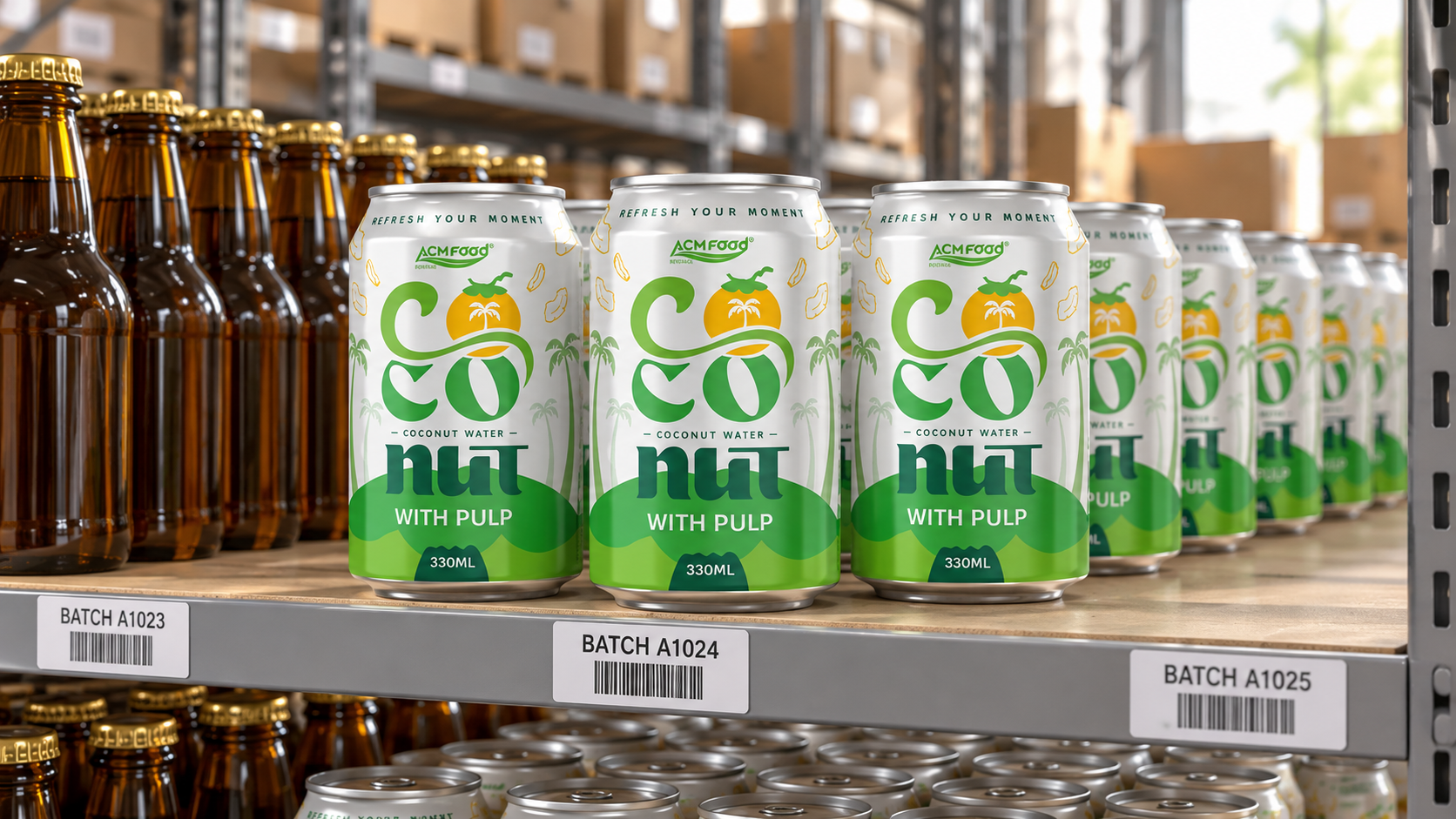
Records are most useful when they can be matched to the code printed on the pack. If a retailer reports a swollen unit months later, the batch code lets the factory find the filling time, the line, the incubation result and the retained sample for that run within minutes.
FAQ about commercial sterility testing
Is commercial sterility the same as sterile?
No. Commercially sterile products may contain dormant organisms that cannot grow under normal storage, whereas absolute sterility means that no viable organisms of any kind are present.
Why is a 55 degrees Celsius incubation used?
It looks for thermophilic organisms, which grow at higher temperatures. Products that travel through hot regions or containers can meet such conditions, so the test checks for them in advance.
Can a batch be released before incubation ends?
It depends on the agreed programme. Some customers accept release on other evidence, while others require the batch to be held until the incubation period is complete.
Does a pH change always mean spoilage?
Not always, but a change against a normal control is a warning sign. Flat sour spoilage lowers pH without swelling, so pH is checked together with appearance and smell.
Do bottled drinks use the same test as canned drinks?
The logic is the same, but the details differ. Packs that cannot swell as visibly as cans need extra attention to pH, appearance and closure checks.
Choosing a release programme
A reliable release programme matches the route, the pack and the destination market, and it is written down before production starts. Commercial sterility testing is only one part of the evidence, alongside process records and seal inspection.
Brands and importers can send a drink specification with the target market, and ACMFOOD will confirm which processing route fits the product, the pack and the shelf life requirement.
Sources
- Cornell Law School (Legal Information Institute) — 21 CFR 113.3, definition of commercial sterility
- U.S. Food and Drug Administration — Bacteriological Analytical Manual, Chapter 21A: Examination of Canned Foods