


 Français
 Español
 العربية
 한국어
Pink coconut water is coconut water that has developed a pale pink or rosy tint, usually after it has been extracted from the nut and exposed to air, light or time. In most cases the colour comes from natural compounds in the water reacting through enzyme activity and oxidation, not from spoilage. For buyers and brand owners, the question is when pink is acceptable and how to specify it.
This explainer covers what causes coconut water to turn pink, how processing and light affect it, whether pink signals a quality problem, and how specifications and quality control can handle colour. It closes with a list of what to request from your manufacturer. ACMFOOD produces coconut water from Vietnamese coconuts, and the notes below reflect how colour is handled in practice.
Why does coconut water turn pink?
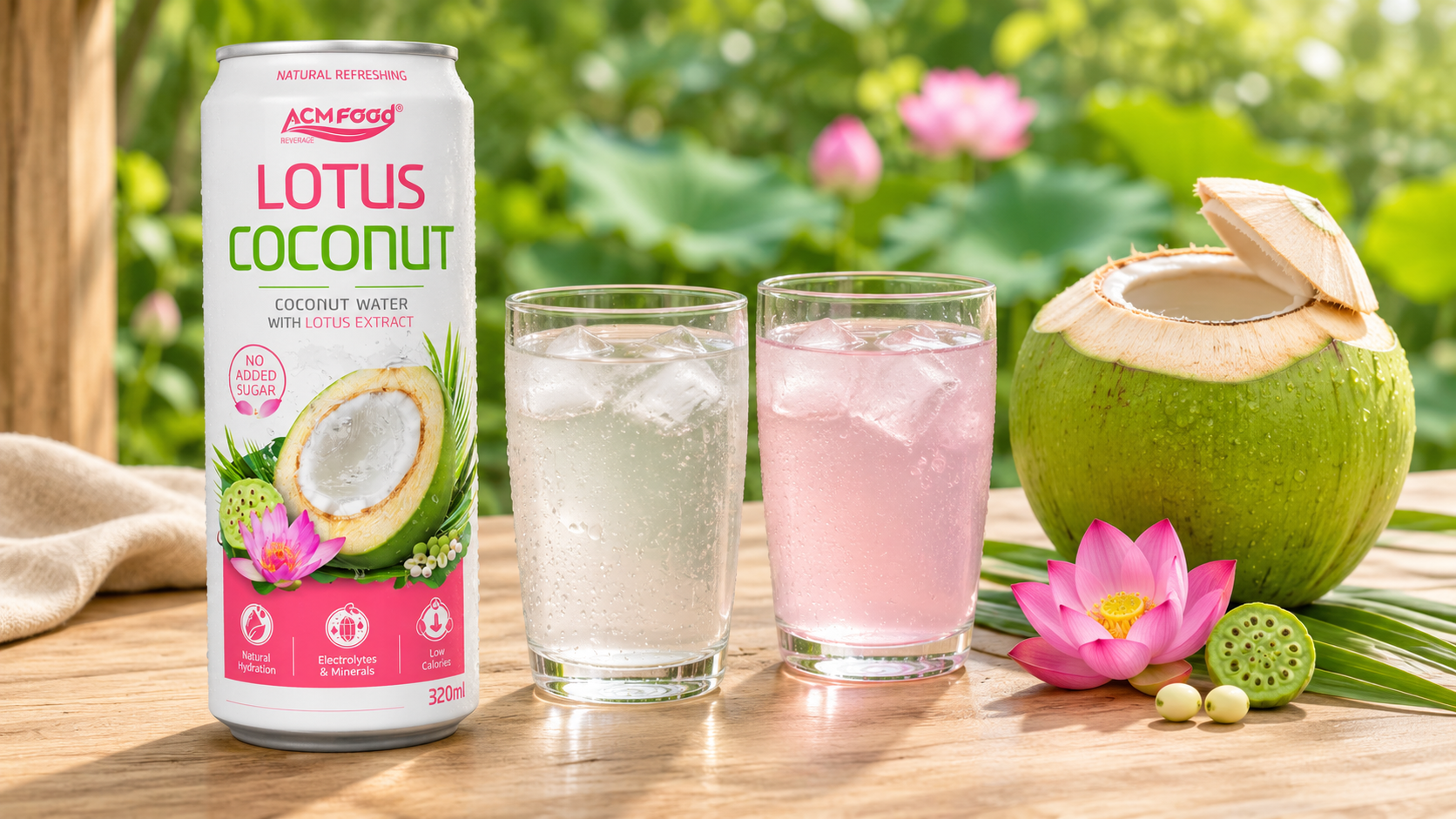
Coconut water turns pink mainly because natural phenolic compounds in the water oxidise, a reaction driven by enzymes such as polyphenol oxidase (PPO) and peroxidase (POD) and by contact with oxygen. Light and time can contribute. The resulting coloured compounds give a pink or rosy tint that varies with coconut variety, maturity and handling.
The process is similar in principle to a cut apple turning brown. When the nut is opened, the water comes into contact with air, and enzymes that were held in check inside the intact coconut start to act on phenolic compounds. In coconut water, the visible result is often pink rather than brown, because of the particular compounds involved.
Several factors influence how quickly and how strongly pinking appears:
- Coconut variety and maturity. Some varieties and harvest stages show more pinking than others.
- Time from opening to processing. Longer exposure to air gives enzymes more time to act.
- Temperature. Warm conditions speed up enzyme reactions.
- Oxygen contact. Splashing, open tanks and air in the headspace increase oxidation.
- Heat treatment. Whether, when and how strongly enzymes are inactivated.
- Light exposure. Light can play a part in colour change during storage.
What role do PPO and POD enzymes play?
Polyphenol oxidase and peroxidase are enzymes naturally present in coconut water that catalyse the oxidation of phenolic compounds. Once the water is extracted, they become active and drive the colour change. Inactivating them, usually with heat, is the main way to stop pinking from progressing.
Peroxidase is often regarded as more heat-resistant than polyphenol oxidase, which is why some processing approaches check both. If the heat treatment is too mild to inactivate the enzymes fully, colour can continue to change during storage, even if the product looked clear when it was packed. If the heat treatment is stronger, enzymes are inactivated but the fresh, delicate flavour of coconut water may suffer.
This is the core trade-off in coconut water processing: enough heat for safety and enzyme control, but not so much that the taste becomes cooked. Processing choices are explained in more detail on our page about coconut water manufacturing.
How do heat treatment and light affect pinking?
Heat treatment affects pinking by inactivating the enzymes that cause it: fast, adequate heating soon after extraction limits colour change. Light affects pinking during storage, particularly in transparent packs. Together, process and pack decide whether coconut water stays clear or turns pink on the shelf.
| Factor | Effect on colour | Practical control |
|---|---|---|
| Delay before processing | More time for enzyme action and pinking | Process quickly after extraction; keep water chilled |
| Mild heat treatment | Enzymes may remain partly active; colour can change later | Validate a process that inactivates PPO and POD |
| Strong heat treatment | Enzymes inactivated; flavour may become cooked | Balance heat with flavour targets |
| Oxygen exposure | Speeds oxidation | Closed handling, low headspace oxygen, nitrogen dosing in cans |
| Light exposure in storage | Can contribute to colour change in clear packs | Cans, sleeves or tinted bottles; store away from light |
Coconut water is naturally a low-acid product, with a pH above 4.6, which means that in markets such as the United States shelf-stable coconut water falls under specific rules for low-acid canned foods. The process must deliver commercial sterility, not only enzyme control. Our article on LACF process filing for beverages explains what this means for exporters.
Does pink coconut water mean it has gone bad?
Pink coconut water does not usually mean the product has spoiled. In most cases the colour is caused by natural enzymatic oxidation and is a cosmetic change. However, colour alone cannot prove safety: spoiled coconut water can also show off-odours, sour taste, gas, cloudiness or swollen packs, and those signs should never be ignored.
A simple way to separate the two cases:
- Likely cosmetic pinking: uniform pale pink tint, normal coconut aroma and taste, intact pack with no swelling, no gas or fizz in a still product.
- Possible spoilage: sour or fermented smell, unusual taste, bubbles in a still drink, bulging can or bottle, slimy texture or heavy sediment.
Some brands present pinking as a sign of minimal processing and natural ingredients, and print a short explanation on the pack. Others prefer a consistently clear product and design their process to avoid it. Both approaches are legitimate; what matters is that the colour is expected and explained.
If a brand decides to explain pinking, the wording should be short, factual and free of health promises. A line such as “Natural coconut water may turn slightly pink. This is normal and does not affect quality” answers the most common consumer question. Customer service teams and retail partners should receive the same explanation, so that a pink bottle in a store does not trigger an unnecessary recall request. Keeping photos of approved colour samples on file also helps the importer respond quickly to customer complaints.
What colour should buyers accept?
Buyers should accept the colour range that matches their brand positioning and that the manufacturer can deliver consistently. A premium “natural” brand may accept clear to pale pink; a mainstream brand may require clear to very slightly tinted. The key is to agree the range in writing, with reference samples, before production.
Questions that help define an acceptable range:
- Will consumers see the liquid through a clear bottle, or is it in a can?
- Does the brand story allow natural colour variation?
- Will the label explain that colour may vary?
- What colour is acceptable at the end of shelf life, not only at filling?
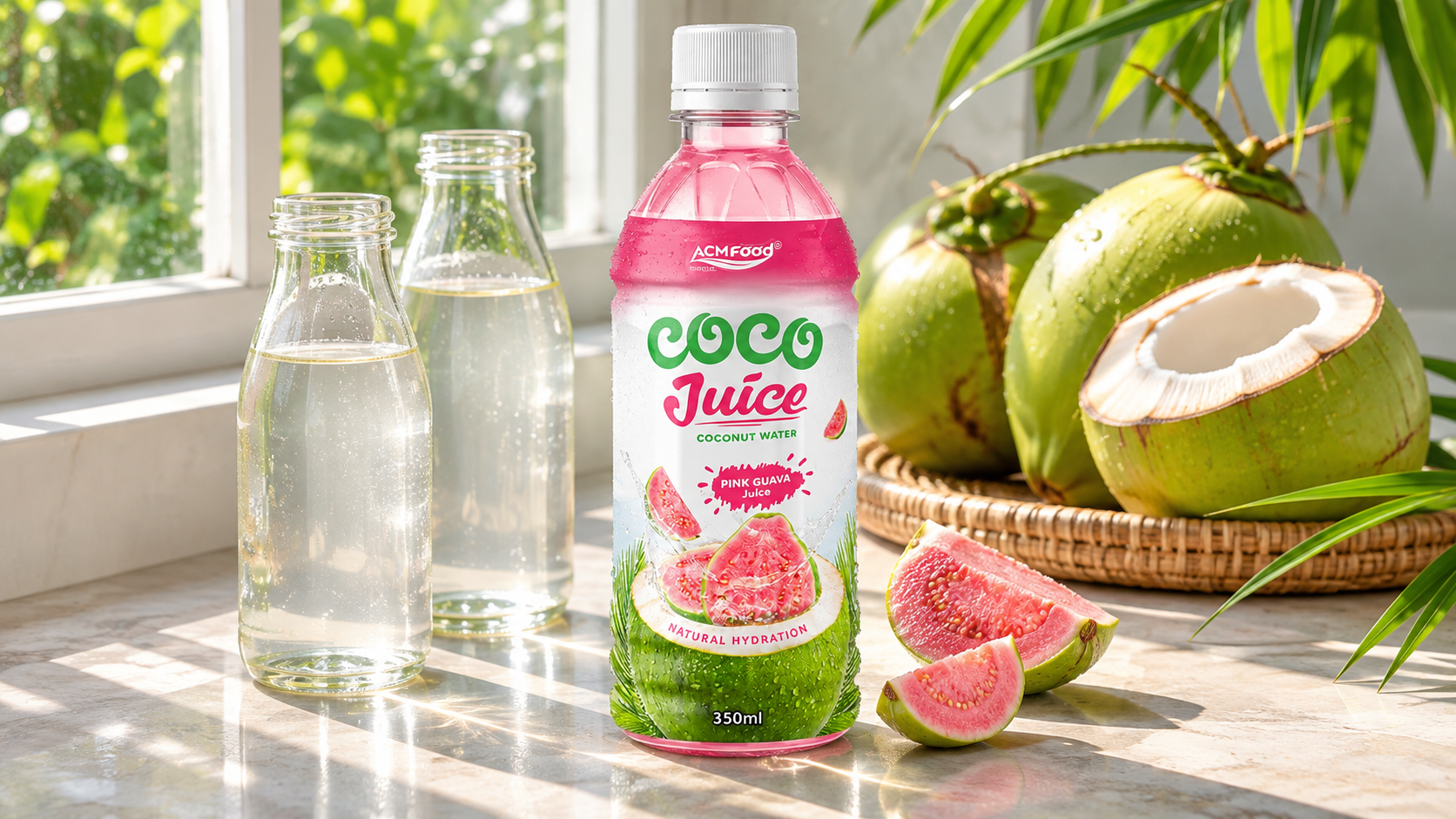
In cans, colour is hidden until the drink is poured into a glass, so a slight pink tint has less impact on shelf appeal. In clear PET or glass, colour is part of the first impression and deserves tighter control.
How do specifications and QC handle colour?
Specifications handle colour by defining an acceptable range, a method of assessment and reference samples. Quality control then checks each batch at production and monitors retained samples over shelf life. This turns a subjective impression, “too pink”, into a measurable and agreed criterion.
- Define the range. Use approved reference samples or a colour scale, for example clear, faint pink and pale pink, with the limit marked.
- Choose a method. Visual comparison under standard lighting is common; instrumental colour measurement adds objectivity.
- Check at production. Each batch is compared with the reference at filling.
- Monitor over time. Retained samples are reviewed at intervals to see how colour develops.
- Record results. Colour assessment can appear on the certificate of analysis alongside other parameters.
Because raw coconuts vary with season and variety, some batch-to-batch variation is normal. A realistic range avoids rejecting product that is safe and tastes right. It also helps to agree in advance what happens if a batch falls outside the range, for example re-inspection, a discount or replacement, so that both sides know the procedure before a shipment arrives.
How do coconut variety and origin influence pinking?
Coconut variety and origin influence pinking because phenolic content and enzyme activity differ between varieties and growing conditions. Buyers comparing coconut water from different origins or varieties may notice different tendencies to turn pink, even with similar processing.
Vietnamese coconut water, mainly from the Mekong Delta, is often compared with coconut water from Thailand and other origins. Our comparison of Vietnamese and Thai coconut water sourcing covers taste and supply differences. The age of the nut also matters: young green coconuts are typically used for drinking water, and our article on green coconut water explains why.
Brands launching a fresh coconut water under private label should therefore approve samples from the actual raw material and process that will be used for production, not from a different origin or a lab-scale batch.
What should buyers request from the manufacturer?
Buyers should request a written colour specification with reference samples, an explanation of the heat treatment and how it controls enzymes, shelf-life data that includes colour, and a clear statement of how pinking is distinguished from spoilage in quality checks. These documents prevent disputes when a shipment arrives slightly pink.
- Colour specification and reference samples at filling and at end of shelf life.
- Description of the process, including enzyme control and commercial sterility for shelf-stable products.
- Shelf-life study results showing colour, taste and microbiological stability.
- Packaging recommendation based on light sensitivity.
- A certificate of analysis for each batch.
- Suggested consumer wording if the brand chooses to explain natural colour variation.
ACMFOOD works with a minimum order of 500 cartons per SKU and a production lead time of 15–30 days after approval, under HACCP, ISO 22000 and FSSC 22000 systems, with cans, PET bottles and glass bottles available.
Frequently asked questions
Is pink coconut water safe to drink?
Pink colour on its own is usually caused by natural oxidation and is not a sign of spoilage. If the drink smells sour, fizzes or the pack is swollen, it should not be consumed.
Can manufacturers stop coconut water turning pink?
They can reduce it through fast processing, cool handling, oxygen control, heat treatment that inactivates enzymes and light-protective packs. Some natural variation may remain.
Why is canned coconut water less likely to look pink on shelf?
Cans block light and hide the liquid, so any slight tint is only seen when the drink is poured. Clear bottles show colour immediately.
Does pink coconut water taste different?
Usually the taste is similar. Strong colour change may come with slight flavour change, so taste should be checked alongside colour during shelf-life testing.
Setting a colour standard
Pink coconut water is usually the result of natural enzymes, oxygen and light acting on phenolic compounds, not of spoilage. Processing speed, heat treatment, oxygen control and pack choice decide how much pinking appears. The practical answer for buyers is to agree an acceptable colour range, with reference samples, and to separate cosmetic colour from true spoilage signs in quality checks.
To discuss coconut water colour standards for your brand, send ACMFOOD your market, pack and positioning, and we will provide samples and a draft specification.