


 Français
 Español
 العربية
 한국어
한국어Beverage certifications in Australia are the audit-based food safety and quality schemes importers use to evaluate overseas manufacturers, reduce risk, and meet Australian retail expectations. In practice, most buyers look for a recognised scheme such as BRCGS, FSSC 22000, or SQF in addition to a robust HACCP system, then verify documents against the product and site scope.
This guide explains which beverage certifications Australia importers typically prioritise, what each scheme covers, how to check validity, and the supporting documentation you should collect before purchase orders and label approvals. It is an informational overview for importers and brand owners; certifications support due diligence but do not replace legal responsibility to comply with the Australia New Zealand Food Standards Code.
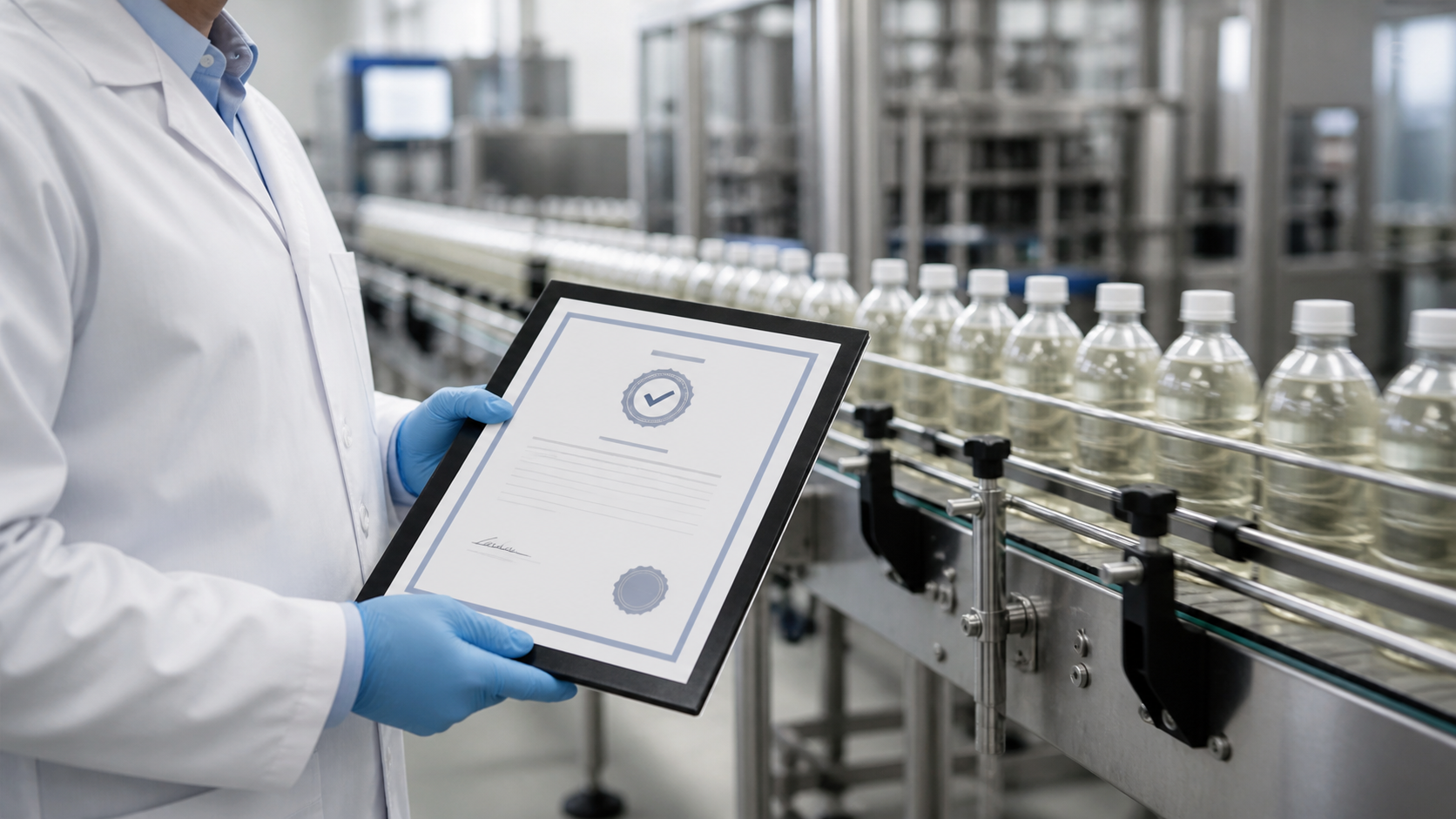
What are the main beverage certifications for Australia?
For most Australian retailers and distributors, there is no single legal certificate required across all beverages. However, buyers commonly expect a GFSI-recognised food safety certification from the beverage manufacturer, plus HACCP documentation tailored to the specific line and product. Widely used options include BRCGS, FSSC 22000, and SQF; ISO 22000 and standalone HACCP appear as baselines in some channels.
Below is a concise overview of the schemes you will encounter when sourcing juice, coconut water, RTD tea & coffee, flavoured drinks, sports or isotonic beverages, and similar categories:
- BRCGS (Brand Reputation through Compliance Global Standards): Site certification against a prescriptive standard emphasising product safety, quality, legality, and senior management commitment. Popular with major retailers globally.
- FSSC 22000: A scheme built on ISO 22000 plus prerequisite programs (e.g., ISO/TS 22002-1 for food manufacturing). Process-based and widely accepted by multinational buyers.
- SQF (Safe Quality Food): Tiered certification program with strong retailer adoption, particularly in North America; also recognised by many global customers.
- ISO 22000: International standard for food safety management systems. Sometimes requested as a foundation; acceptance depends on the customer and category.
- HACCP: Hazard Analysis and Critical Control Points plan addressing product- and process-specific hazards. Essential at beverage facilities; on its own, may be insufficient for some retail programs.
How do these certifications differ for beverages?
Each scheme takes a different approach to structure, audit style, and documentation. While all aim to control food safety risks, your retailer’s preference, the complexity of your beverage category, and the maturity of the manufacturer’s quality system will influence which path is best.
| Scheme | Scope focus | Typical beverage fit | Audit cadence | Positioning & notes |
|---|---|---|---|---|
| BRCGS | Prescriptive site standard covering safety, quality, and legality | RTD lines needing strong retailer acceptance | Regular third-party audits, on-site | Detailed clause requirements; grading often referenced by buyers |
| FSSC 22000 | Process-based FSMS (ISO 22000) plus prerequisite programs | Broad beverage categories; scalable for complex plants | Regular third-party audits, on-site | Widely accepted; aligns with ISO management system culture |
| SQF | Tiered certification program with food safety & quality modules | Brands supplying retailers with defined program preferences | Regular third-party audits, on-site | Program levels and scores can be used commercially |
| ISO 22000 | Food safety management system framework | Foundational system; acceptance varies by buyer | Independent certification audits | Sometimes paired with PRP standards; check customer policy |
| HACCP | Product/process hazard analysis & critical control points | All beverage sites; core prerequisite for risk control | Internal verification plus external review | Often required but rarely sufficient alone for major retailers |
Which certification should Australian importers prioritise?
Prioritise the scheme that your customer, retailer, or channel explicitly accepts for your product category. Many Australian retail programs recognise GFSI-benchmarked certificates such as BRCGS, FSSC 22000, or SQF. HACCP remains essential but is often considered a baseline rather than a complete solution. When in doubt, ask buyers which scheme and audit grade they require for new suppliers.
- First choice: A current GFSI-recognised certificate aligned to the exact manufacturing site and beverage scope.
- Acceptable alternatives: ISO 22000 paired with robust PRPs and a verified HACCP plan, if your customer confirms suitability.
- Upgrade path: Where only HACCP exists, schedule a certification roadmap with the manufacturer and align milestone dates to your launch plan.
Do Australian laws require a specific certificate?
No. Australian law does not mandate a specific certification scheme for all beverages. Importers are responsible for ensuring products comply with the Australia New Zealand Food Standards Code and other applicable requirements. Certifications can support due diligence, supplier selection, and ongoing verification, but they do not replace legal obligations or product testing where appropriate.
What does HACCP mean for a beverage supplier?
A HACCP beverage supplier implements a documented hazard analysis and control plan tailored to each formulation and line. In beverages, common considerations include microbial control for high-acid or low-acid products, heat treatment or validated equivalent processes, supplier approval for ingredients, and packaging integrity.
- Typical beverage hazards: Microbial growth, post-process contamination, chemical residues, foreign bodies, and allergen cross-contact for flavoured lines.
- Typical controls: Validated thermal processing where used, sanitation, environmental monitoring, filtration, metal detection or X-ray if applicable, and controlled filling/closure.
- Traceability: Ingredient-to-finished-good traceability, date/batch codes, retention samples, and mock recalls help verify readiness.
How do I confirm a manufacturer’s certificate is valid?
Verification protects your brand. Certificates should be current, authentic, and relevant to your product and site. Take the following steps before placing orders:
- Match the scope: The certificate must list the exact site address and include the beverage processes you will use (e.g., blending, pasteurisation, aseptic filling).
- Check dates: Confirm issue and expiry dates, surveillance or recertification timelines, and whether any extensions were granted.
- Verify the issuer: Look up the certification body and, where possible, confirm the site listing on their public directory.
- Request the summary: Ask for the latest audit report summary or nonconformity closure evidence relevant to your product.
- Cross-check documents: Ensure product specifications and HACCP flow diagrams align with the certified scope and the equipment actually installed.
- Beware of anomalies: Low-resolution scans, cropped pages, or inconsistent fonts can indicate editing; contact the certification body if unsure.

What documents should Australian importers collect besides certificates?
Even with strong certifications, document gaps can delay label sign-off or customs clearance. Build a complete technical file for each SKU and supplier.
- Full product specification: Ingredient list, composition, physical/chemical parameters (e.g., Brix for juices), storage and shelf life, and target organoleptic profile.
- HACCP plan & process flow: Flow diagram from raw materials to dispatch, hazard analysis, CCPs, monitoring records, and verification activities.
- Allergen statement: Presence or cross-contact risks for allergens relevant to your recipe and facility.
- Certificates of Analysis (CoA): Per batch or per shipment results for agreed parameters (e.g., microbiological, Brix, pH, packaging integrity checks).
- Packaging compliance: Food-contact declarations and migration statements from packaging suppliers where applicable.
- Label mock-up: Draft compliant to the Australia New Zealand Food Standards Code for ingredient naming, nutrition information, claims, and date marking.
- Recall & traceability: Written recall procedure, contact list, and a recent mock recall result covering at least one beverage line.
- Claim substantiation: If using claims (e.g., organic, Halal, Kosher, vegan), gather valid certificates and define how the claim will be presented on-pack.
If you are new to specifying commercial pack sizes and order thresholds, this resource explains the trade-offs: MOQ guide for Australian buyers.
How do Australian retailers view certifications?
Policies vary by banner, channel, and product risk. As a general pattern, private-label and major retail programs tend to require a GFSI-recognised certificate at the manufacturing site. Smaller channels may accept HACCP with strong supporting controls, especially for less complex beverages. Always confirm your customer’s written policy and whether a grade or score threshold applies.
- Retailer preference: Some name a specific scheme (e.g., BRCGS or SQF), others accept any GFSI-recognised certificate.
- Audit outcome: Grading or scoring may influence supplier approval or corrective action timelines.
- Category risk: Higher-risk processes or claims often prompt stricter evidence and testing plans.
Category add-ons: Halal, Kosher, organic, vegan, non-GMO
These designations are market-positioning tools, not blanket legal requirements. Acceptance depends on the customer, target consumer, and export/import arrangements. For imported goods sold as organic or carrying other marks, ensure you obtain valid certificates from recognised bodies and present claims in line with the label regulations of the market where the product is sold.
- Halal/Kosher: Request current certificates showing the approved site, process, and product list. Confirm annual renewal and logo usage rules on labels and cartons.
- Organic: Use certificates from recognised certification bodies and align your label claim with the applicable standard. Keep ingredient-level proof for composite beverages.
- Vegan/Non-GMO: Obtain supplier attestations and, where needed, third-party certifications for logo use; ensure traceability supports the claim.
Label and traceability expectations for beverages in Australia
Strong traceability and compliant labelling reduce risk at retail and during audits. While your label must meet the Australia New Zealand Food Standards Code, the evidence behind it sits in your technical file.
- Ingredient naming: Use accurate common names and declare allergens in line with the Code.
- Nutrition information: Provide a correctly formatted nutrition information panel reflecting the final recipe and serving size.
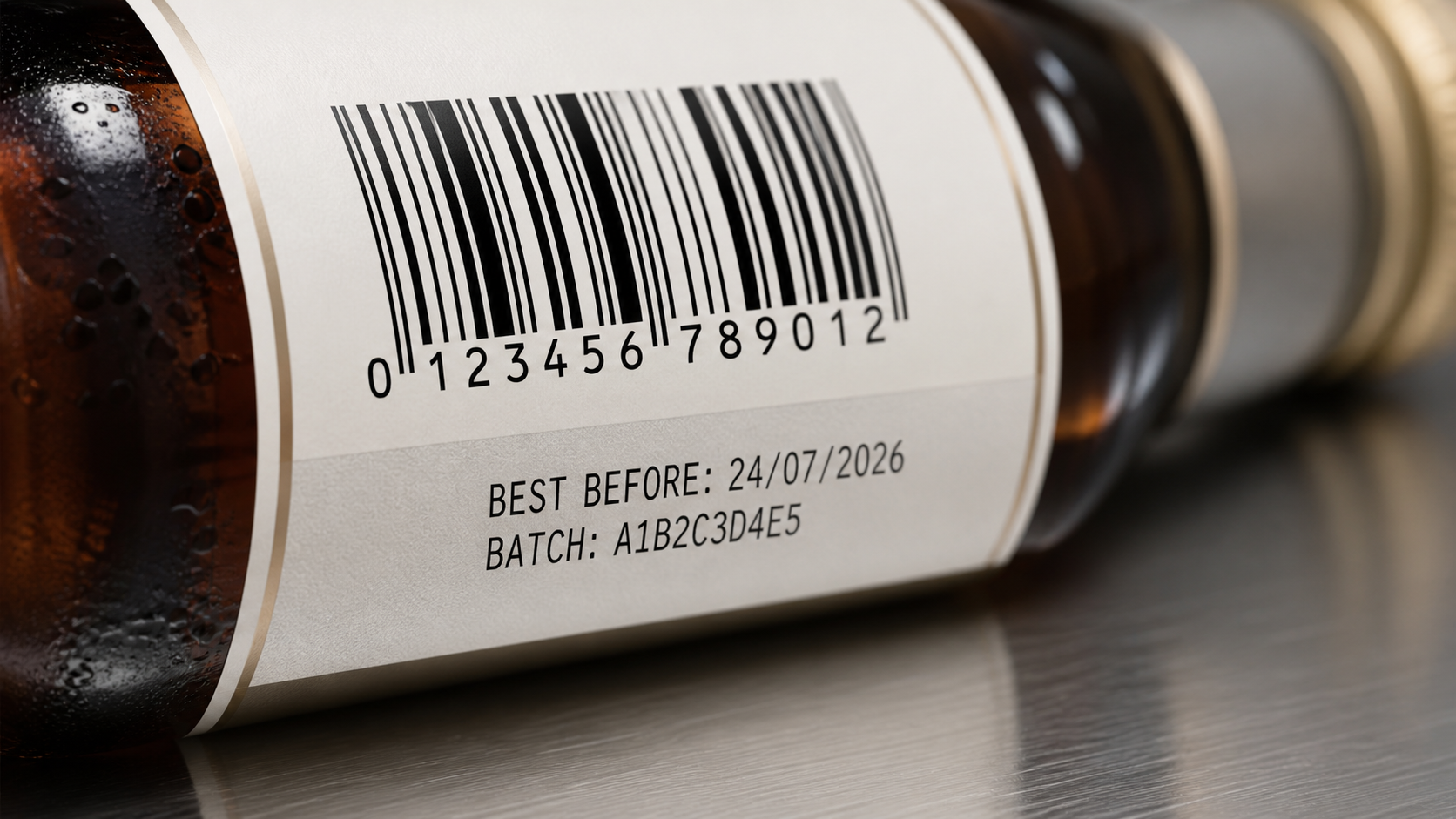
- Date & lot coding: Apply legible, consistent codes on primary and, where appropriate, secondary packaging to enable swift recall.
- Country of origin statement: Ensure your origin statement follows the current requirements for imported foods.
- Claims discipline: Keep substantiation for nutrient content, natural, organic, or other marketing claims used on the label.
Practical workflow to onboard a new beverage manufacturer
Robust onboarding keeps projects on schedule and builds retailer confidence. Use this high-level sequence and adapt per category risk and buyer policy.
- Pre-screen: Share your product brief and ask for current BRCGS, FSSC 22000, or SQF certificates, plus HACCP coverage for the beverage process.
- Technical pack: Collect specifications, CoAs, allergen statement, process flow, packaging declarations, and draft labels.
- Trial & samples: Evaluate pilot or line samples against your sensory and analytical criteria; document deviations and corrective actions.
- Audit alignment: If required, schedule a remote site review or third-party audit window to satisfy your customer’s approval steps.
- Label review: Confirm the label against the Australia New Zealand Food Standards Code. Align claims with proof on file.
- Logistics readiness: Validate pallet configuration, carton labelling, and shipping documents. Agree on batch code format and traceability data exchange.
- First PO readiness: Freeze the spec, set the CoA template, and confirm hold-and-release testing if needed for the first shipment.
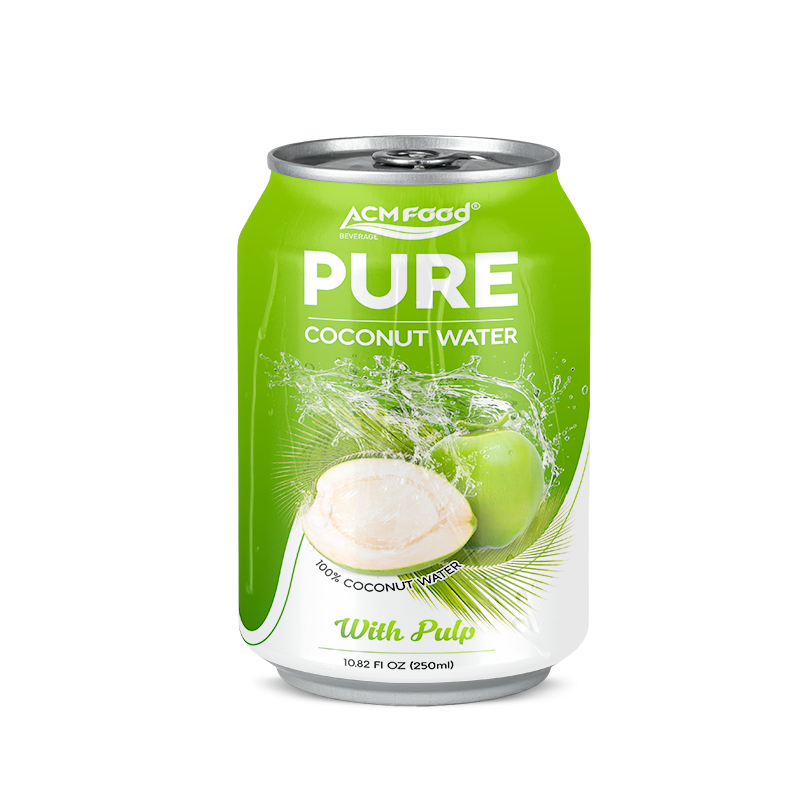
For process and partner considerations specific to local brands, see beverage manufacturing for Australian brands and how to select a beverage manufacturer for Australian brands. If you’re exploring product ideas, these concept articles can help frame specifications, for example coconut water with pulp value ideas.
Cost and lead-time: how certifications influence projects
Food safety certification at the beverage manufacturer can affect cost structures and timelines. Plan these realities into your launch critical path and margin model.
- Overheads: Facilities maintaining BRCGS, FSSC 22000, or SQF generally invest more in systems, training, and audits, which can reflect in pricing.
- Document velocity: Certified plants often have defined change-control processes; specification updates may take longer but are more controlled.
- Testing plans: Buyer-required testing (e.g., micro, shelf-life verification) adds cost and may extend release timings for first shipments.
- Audit windowing: Align your own site visits or remote reviews with the manufacturer’s audit calendar to avoid bottlenecks.
Common red flags and what to do next
Most variances are solvable if raised early and handled transparently. Escalate risks that affect consumer safety or legal compliance.
- Expired or nearly expired certificate: Request the upcoming audit schedule and contingency plan; consider interim controls.
- Scope mismatch: If the certificate excludes your actual beverage process, ask for scope extension timing or identify an alternate line/site.
- Edited-looking documents: Verify authenticity with the certification body and request native PDFs or direct confirmations.
- HACCP gaps: Probe CCP validation records, verification frequencies, and training logs before approval.
- Reluctance to share basics: If a supplier withholds standard documents (e.g., spec, allergen statement), pause and reassess.
Information for beverage brands and importers
Certification choice should match your product, channel, and risk appetite. For example, an ambient coconut water or juice drink may fit hot-fill or aseptic routines, whereas a sparkling botanical soda may emphasise carbonation controls and seam integrity. Regardless of the path, ensure the certified scope and HACCP plan explicitly cover your formula and line.
- Define the brief: Brix, acidity (pH), colour, flavour profile, sweetener system, and packaging (PET, glass, can) all affect controls.
- Map the process: Identify where hazards can be introduced post-heat treatment (e.g., filler hygiene, closures, rework handling).
- Stability & shelf life: Agree on accelerated and real-time studies with acceptance criteria and data ownership.
- Change control: Lock change protocols for ingredients, packaging, and co-packers to protect label and certification status.
For order planning and capacity conversations that often run in parallel with technical onboarding, this page outlines trade-offs and timelines: MOQ guide for Australian buyers. If you are scouting flavour platforms, a simple functional-leaning profile such as a ginger lemongrass drink concept can be a useful brief template for trials, sensory targets, and shelf-life studies.
FAQs: beverage certifications for Australian importers
The questions below summarise common decision points and how many buyers approach them. Always align with your customer’s written policy.
Is a GFSI-recognised certificate mandatory for Australia?
No. It is not a universal legal requirement. However, many Australian retailers and private-label programs expect a GFSI-recognised certificate for the manufacturing site. Confirm the accepted schemes and any minimum grade with your customer.
Does FSSC 22000 cover beverages adequately?
Yes, FSSC 22000 is widely used across beverage categories when the certified scope and prerequisite programs match the actual processes (e.g., blending, thermal treatment, aseptic filling). Verify that your exact site and product types appear on the certificate.
Which is better for a beverage manufacturer: BRCGS, SQF, or FSSC 22000?
All three can be suitable. The “best” choice depends on customer preference, site maturity, and category complexity. If your buyer names a scheme, choose that one. Otherwise, select the program that the manufacturer can sustain effectively and that your target channels accept.
Is HACCP enough for a beverage supplier?
HACCP is essential, but major retailers often require a full certification such as BRCGS, FSSC 22000, or SQF. For smaller channels and lower-risk products, HACCP supported by strong PRPs may be accepted case by case.
How often are certification audits performed?
These schemes generally involve regular third-party audits at defined intervals. The exact cadence depends on the program, risk, and performance history. Check the certificate and audit schedule with the manufacturer.
Can ISO 9001 replace a food safety certification?
ISO 9001 addresses quality management in general and does not replace a food safety scheme. Buyers typically look for food safety certifications (BRCGS, FSSC 22000, SQF) plus HACCP for beverage manufacturing.
Conclusion: choosing the right certification path
For most beverage certifications Australia importers consider, the practical priority is clear: secure a GFSI-recognised certificate that matches the exact site and beverage process, and verify a robust HACCP plan with traceability and label compliance. Certifications enhance retailer acceptance and reduce risk, but they do not replace your duty to ensure the finished product meets the Australia New Zealand Food Standards Code.
If you are mapping project timelines or comparing production options, explore these practical guides on selecting partners and planning capacity: beverage manufacturing for Australian brands and beverage manufacturer for Australian brands. Align the certification roadmap with your launch window so commercial, technical, and compliance workstreams move together.
Manufacturing for Australian brands
If you are sourcing for the Australian market, start with contract beverage production for how a manufacturing programme is set up, certifications and food safety systems for the evidence importers and retailers require, and export and logistics for shipping terms and documentation. To price a programme, request a quote.
Sources
HACCP originates in the Codex Alimentarius code of practice on food hygiene. The certification schemes built on top of it are owned and published by the bodies below.
- Codex Alimentarius (FAO/WHO) — Codes of Practice, including the General Principles of Food Hygiene and its HACCP annex
- Foundation FSSC — FSSC 22000 certification scheme
- Global Food Safety Initiative (GFSI)