


 Français
 Español
 العربية
 한국어
한국어Beverage MOQ for U.S. private label projects refers to the minimum order quantity a manufacturer, co-packer, or OEM supplier will accept to run your product. While many buyers ask for a single number, beverage moq usa depends on packaging format, decoration method, production line constraints, and logistics from plant to the U.S. market.
This guide helps U.S. brand owners, importers, and distributors understand how MOQs are set, what levers can raise or lower them, and practical ways to align your brief, packaging, and supply plan so the MOQ fits your commercial goals without compromising quality or compliance.
What does beverage MOQ mean for U.S. private label buyers?
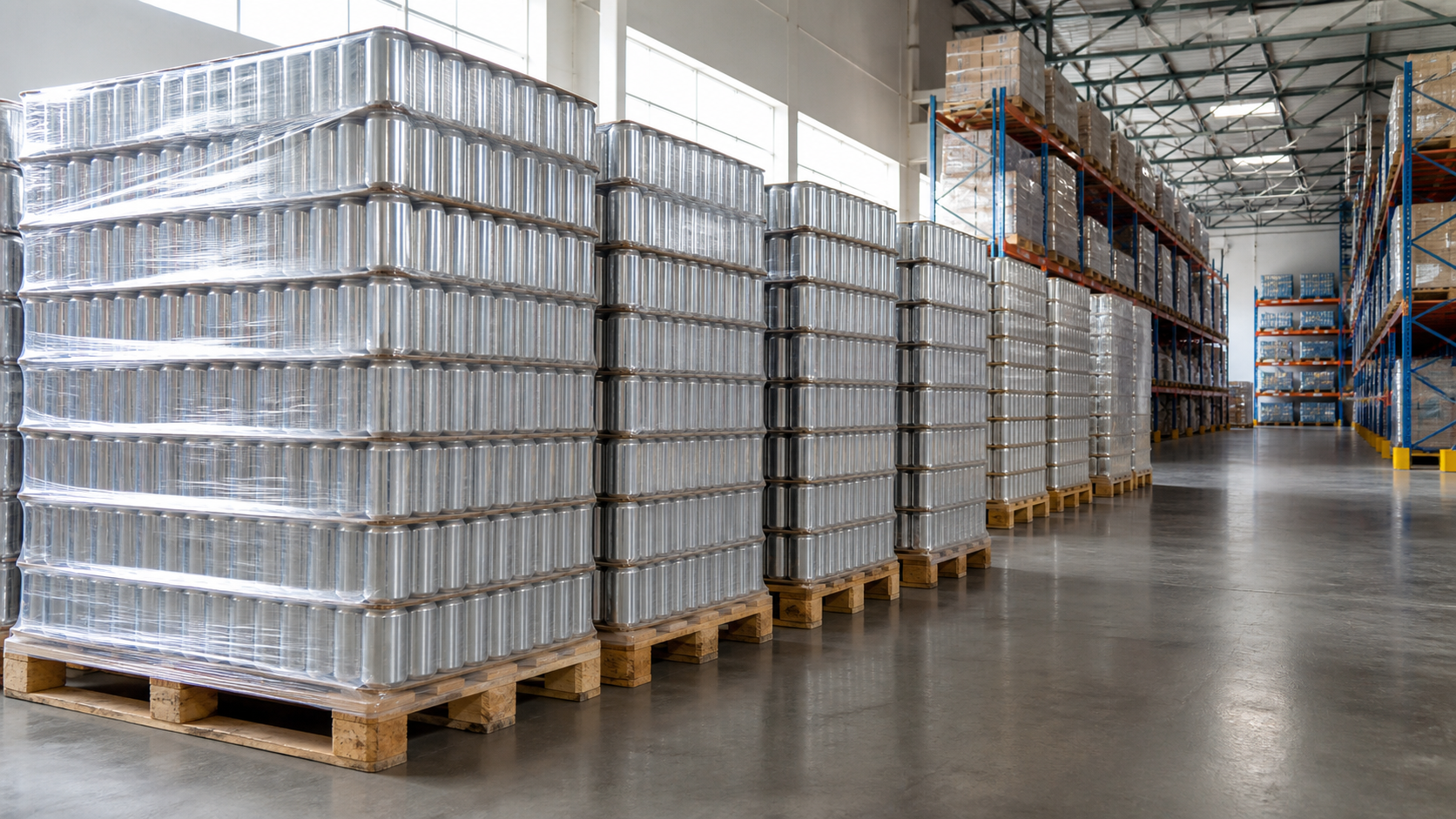
MOQ is the smallest production and purchase commitment a supplier will accept for your SKU or order. It reflects manufacturing efficiency, packaging material constraints, and logistics considerations rather than an arbitrary policy, and it can be negotiated when you adjust variables like packaging, decoration, or flavor assortment.
In practice, MOQ can be defined per SKU, per flavor, per container load, or per purchase order, and suppliers may allow combined-MOQ across a family of SKUs if key components are shared.
What drives MOQ in beverage manufacturing and importing?
Several interlocking factors set private label beverage MOQ. Understanding them clarifies which levers you can pull without risking quality or timelines.
- Primary packaging constraints: Printed cans, labeled bottles, aseptic cartons, or pouches each carry different supply MOQs and set-up considerations.
- Decoration method: Direct-printed vs. sleeved/labelled packaging changes component MOQs, line changeover time, and waste tolerance.
- Filling technology & line efficiency: Hot-fill, cold-fill with tunnel pasteurization, or aseptic lines have distinct run-length economics.
- Ingredient & concentrate purchasing: Some inputs have bulk purchase minimums or shelf-life constraints once opened.
- Carton and secondary packaging: Printed cartons or film usually have separate MOQs, ink/color limits, and plate fees.
- Palletization & containerization: Units per carton, cartons per pallet, and pallets per container influence shipping economics and practical minimums.
- Quality & compliance: U.S. labeling, traceability, and coding requirements affect whether you can share components across SKUs.
- Seasonality & capacity: Peak seasons drive longer runs, higher combined MOQs, or fewer changeovers.
How should you define MOQ in your brief?
Before requesting quotes, decide which definition of MOQ fits your launch and replenishment model. Clear definitions avoid surprises later.
- Per SKU vs. combined MOQ: Clarify whether supplier MOQs apply to each flavor/size or can be combined across a range.
- Per order vs. annual volume: Some co-packers quote a per-run MOQ and a separate annual volume expectation to ensure line utilization.
- Decoration-dependent MOQ: State whether you prefer direct print, sleeves, or labels, and ask for MOQ by scenario.
- Logistics-led MOQ: If importing, you may define MOQ by a full-container load rather than a per-SKU figure.
- Trial or pilot runs: If you need smaller pilot volumes, request a pilot MOQ and pricing terms separate from commercial runs.
If you are still finalizing format and filling method, see the overview of U.S.-focused processes in Beverage Manufacturing for U.S. Brands and the packaging implications in Beverage Packaging for U.S. Brands.
MOQ by packaging format: what changes and why?
Each format concentrates MOQ pressure in different places—either in printed component purchases, line time, or post-fill logistics. The matrix below summarizes common patterns so you can choose where to place your flexibility.
| Format | Key MOQ drivers | Decoration options | Flexibility to mix flavors | Positioning & notes |
|---|---|---|---|---|
| Aluminum cans | Can body supply, ends, line time, pasteurization needs | Direct print, shrink sleeve, pressure-sensitive label | Higher with sleeves/labels; lower with direct print | Highly scalable; strong for RTD, energy, seltzers |
| PET bottles | Preform or bottle supply, label or sleeve, cap color | Wrap label, sleeve, printed shrink film multipacks | Often good if label is generic and flavor printed in small runs | Lightweight, shelf-stable options vary by fill method |
| Glass bottles | Bottle purchase, weight-based freight, breakage controls | Paper labels, sleeves; direct print is less common | Usually good with standard bottles and generic labels | Premium cues, but heavier for export |
| Aseptic cartons | Printed carton webs, sterility validation, long line runs | Pre-printed cartons; limited post-printed options | Lower flexibility due to printed substrate MOQs | Ambient storage; strong for juice, dairy-alternatives |
| Pouches | Laminated film print runs, spout/cap supply | Pre-printed film; labels possible but less elegant | Moderate; depends on film strategy | Lightweight, kid-focused, or outdoor use-cases |
Printed vs. labeled packaging: how it shifts MOQ
Decoration method can be the single largest lever on MOQ, because it dictates both component purchasing and changeover time. Direct-printed components concentrate volume into one SKU, while sleeves or labels allow shared base packaging across multiple SKUs.
- Direct-printed cans/cartons: Efficient at scale; tends to push MOQs higher per design since packaging is SKU-specific.
- Shrink sleeves or pressure-sensitive labels: Lower per-SKU minimums by using common bodies; may increase unit packaging cost but preserve agility.
- Hybrid approach: Use printed multipack film or generic cartons while individual units carry sleeves/labels.
- Color management & revisions: Printed substrates require proofing and reprint cycles; sleeves/labels can be revised with less stranded inventory.
Domestic U.S. co-packing vs. overseas OEM: MOQ implications
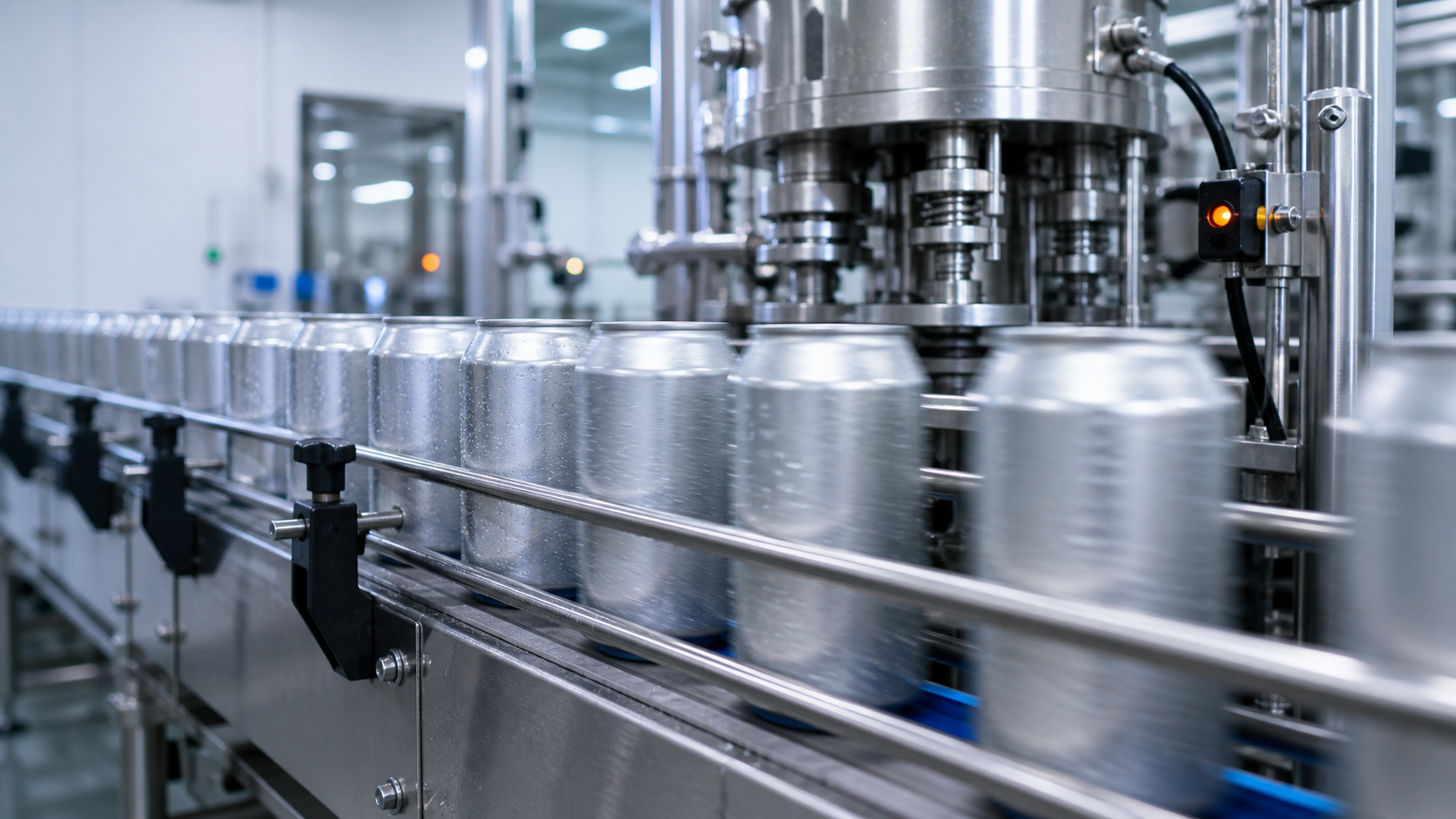
Domestic co-packing and overseas OEM supply differ in how MOQs are set and where the constraints appear. Neither model is inherently higher or lower; the right choice depends on your decoration method, logistics strategy, and retail timeline.
- Domestic co-pack: Often defined by line time and changeovers, with easier access to labels/sleeves and shorter transit. Component lead times still apply, but replenishment batches can be more frequent.
- Overseas OEM: MOQs may align to printed component runs and container economics. Consolidating SKUs to fill a container can be efficient when you share base packaging and vary labels or sleeves.
- Lead-time stack-up: Ingredient approvals, packaging procurement, trial fills, and freight stacking determine feasible first-run size and timing, impacting MOQ selection.
- Quality & compliance: Ensure U.S. labeling, coding, and documentation are locked before printing large packaging lots.
If you plan to import at scale, coordinate early with a capable U.S.-focused partner. See supplier selection considerations in Beverage Supplier for U.S. Importers and Distributors.
Container quantity beverages: estimating logistics-led MOQ
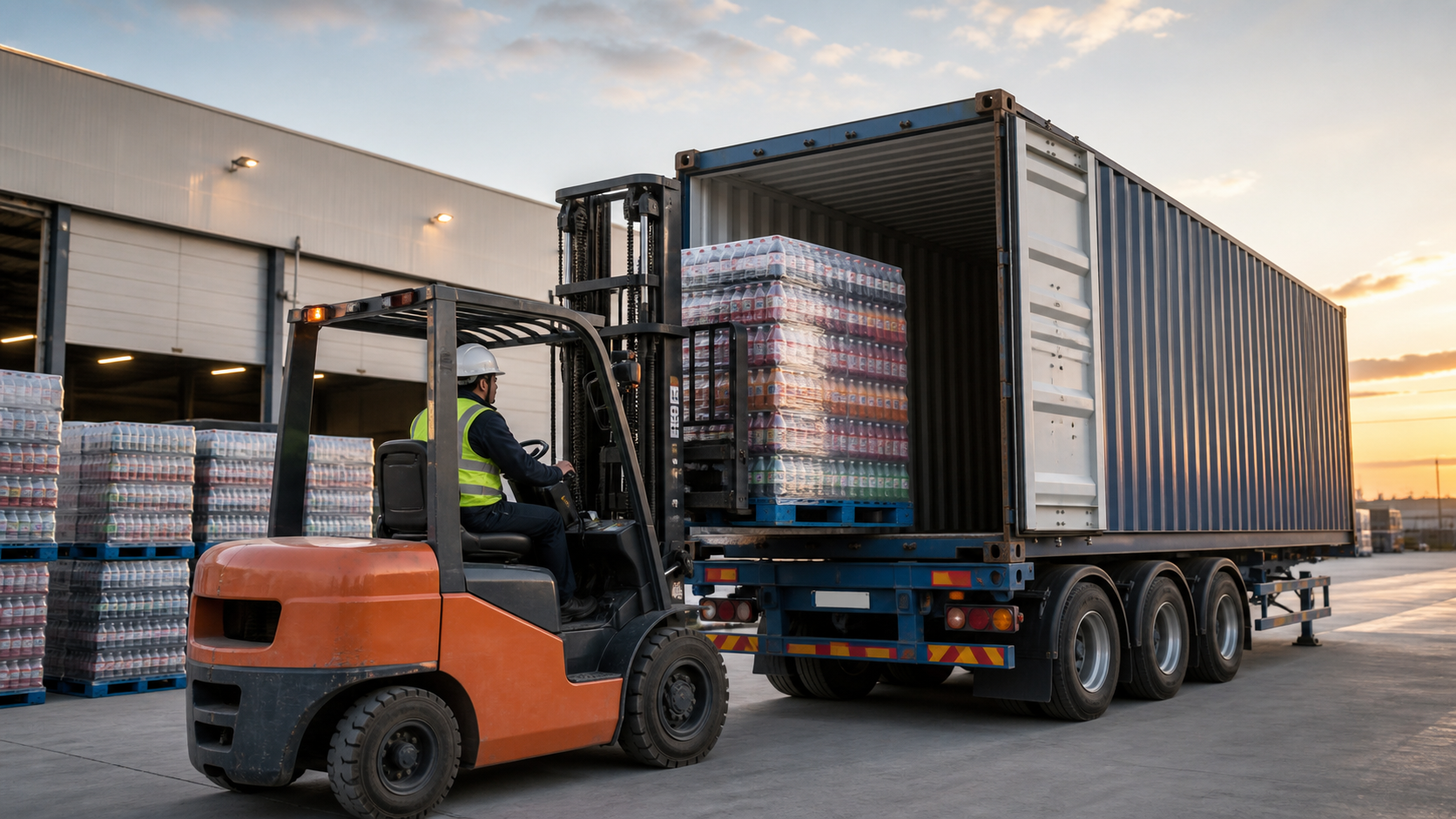
When importing finished beverages, it is useful to think in container terms rather than just per-SKU counts. A logistics-led MOQ aims to balance product protection, cost per unit, and inventory turns.
- Define your unit configuration: Units per master carton, protective dividers, and orientation all influence pallet patterns.
- Confirm pallet specification: Pallet size, stack height, and whether you use slip sheets or corner boards can change container fit.
- Select container type: Standard, high-cube, or refrigerated containers determine usable internal dimensions and handling requirements.
- Weight vs. cubic limits: Heavy glass may reach weight limits before volume; light cans may cube out first.
- Mixed-SKU rules: Align with warehouse receiving and retailer requirements on mixed pallets or mixed cartons.
| Planning step | What to confirm | Why it affects MOQ |
|---|---|---|
| Unit-to-carton | Exact units per carton and protective fit | Determines carton count per pallet and damage risk |
| Carton-to-pallet | Pallet footprint, layers, and max height | Sets pallets per container and stability |
| Container choice | Standard vs. high cube vs. reefer | Changes internal space and handling needs |
| Weight & compliance | Load weight, axle limits, and labeling | Prevents overweight fees and delays |
| Mixed-SKU policy | Allowed mixing rules per pallet or container | Impacts per-SKU MOQ flexibility |
| Warehouse receiving | Barcoding, carton marks, pallet tags | Ensures fast intake and fewer reworks |
Beverage can MOQ: bodies, ends, and decoration
For cans, MOQ is not just about the filled unit. The can body, the end (lid), the tab, and decoration all interact with the filler’s capabilities and your brand plan.
- Body supply: Direct-printed bodies can centralize MOQ on a single SKU; generic bodies with sleeves/labels spread volume across flavors.
- Ends & tabs: Color and end specifications can add component complexity; standardizing options usually adds flexibility.
- Line changeovers: Flavor changeovers, carbonation levels, and pasteurization profiles influence feasible run lengths.
- Multipack strategy: Printed shrink film or cartons may add separate MOQs; generic outers preserve agility.
OEM drink minimum order vs. private label MOQ: what to confirm in RFQs
To compare suppliers fairly, ensure each RFQ documents MOQ definitions and assumptions the same way. Misaligned terms create avoidable surprises later.
- State whether MOQ is per SKU, per flavor, per size, per order, or per container load.
- Request MOQ under multiple decoration scenarios: direct print; sleeve; label.
- Clarify whether you can mix flavors within a production run or container.
- Ask for component lead times and whether any are driving MOQ decisions.
- Confirm if a pilot run MOQ is available and how pricing differs.
- Document pallet specs, carton dimensions, and any mixed-SKU restrictions.
- List all required U.S. label elements and coding so printed components are correct the first time.
Strategies to reduce effective MOQ without compromising quality
You can often keep the same quality target and reduce commercial risk by adjusting packaging and planning rather than the beverage formula itself.
- Use common base packaging: One bottle or can body across several SKUs, then vary with sleeves or labels.
- Standardize components: Shared caps, ends, or carton styles simplify supply and mixing flexibility.
- Consolidate runs: Group seasonal or limited flavors into the same production window when shared components allow it.
- Stage-decorate: Start with sleeves/labels for agility; move to direct print when velocity proves out.
- Align with logistics: Build orders around stable pallet and container plans to avoid small-lot surcharges.
- Plan realistic replenishment: Slightly larger, less frequent runs can be more efficient than many micro-runs if warehouse capacity and cash flow allow.
Cost, cash flow, and inventory implications of MOQ
MOQ selection is also a financial decision. Beyond unit cost and price ladders, consider how much working capital and storage you will carry, and the operational effort required for frequent changeovers or many micro-batches.
- Component write-offs: SKU-specific printed materials tie capital to one design; flexible decoration lowers stranded inventory risk.
- Warehousing: Heavier or fragile formats increase handling and rack requirements; align volumes with your DC network.
- Shelf life and coding: Ensure the code format and life claims match your distribution cadence.
- Retail commitments: Tie MOQ planning to confirmed planograms or promotion windows rather than speculative forecasts where possible.
Compliance and labeling for the U.S. market that may affect MOQ
U.S. labeling and regulatory requirements influence how you print and how much you are comfortable printing in advance. When packaging is SKU-specific, label changes can cascade into reprints and revised MOQs.
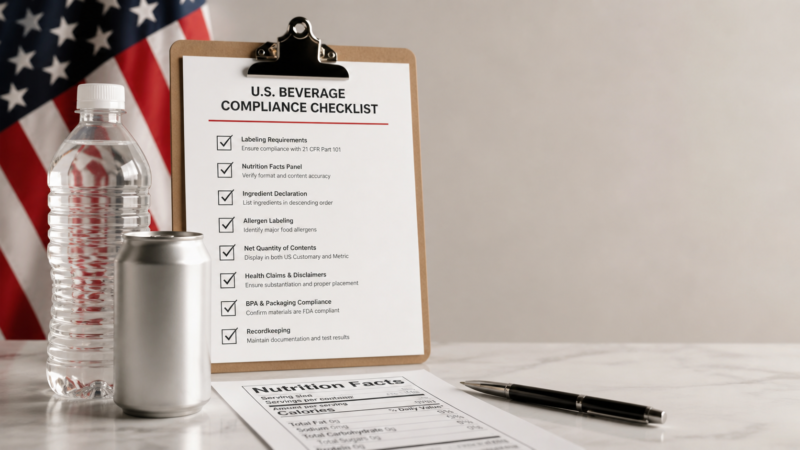
- Mandatory label content: Ensure your Nutrition Facts, ingredient list, allergens, net contents, and statement of identity are finalized before large print orders.
- Product codes and dates: Confirm code location and format on the primary pack and any multipacks or trays.
- Imported goods: Coordinate country-of-origin marking, carton marks, and required documentation before committing to large packaging MOQs.
Work closely with your packaging approach as outlined in Beverage Packaging for U.S. Brands so compliance is built in, not retrofitted.
Information for U.S. importers and distributors
For routes-to-market that depend on import cycles, match MOQ to your sales velocity and DC network. Align combined-MOQ rules with receiving preferences, and decide early whether to prioritize fast replenishment or container-level efficiency. For broader sourcing and partner fit topics, review Beverage Supplier for U.S. Importers and Distributors.
FAQ: Beverage MOQ for U.S. private label projects
What is a realistic MOQ for beverage cans in the U.S.?
There is no single realistic figure because decoration method, component sourcing, line capability, and logistics strategy all influence the minimum. Ask suppliers to quote different scenarios (direct print vs. sleeves/labels, domestic vs. OEM) so you can compare apples to apples.
Can I mix flavors within an MOQ or a container?
Often yes—if you share a common base package and use sleeves or labels. Suppliers may set rules for flavor changeovers on the line and for how SKUs can be mixed on pallets or within a container. Define your mixing needs clearly in the RFQ.
Are pilot runs available with lower minimums?
Many co-packers and OEM suppliers offer pilot or trial runs at smaller minimums, typically with different pricing and scheduling rules. Use pilots to validate process, shelf life, and packaging before committing to larger printed components.
Does choosing sleeves or labels reduce MOQ?
It can. Using generic bodies with sleeves or labels spreads base packaging across multiple SKUs and reduces stranded packaging risk, though it may raise unit packaging costs compared to direct print at scale.
Is LCL practical for beverages?
Less-than-container-load can be used, but beverages favor full-container shipments for protection, cost, and control. If you must ship LCL, align packaging and pallet specs closely with your 3PL to minimize handling risks.
Do different can sizes change MOQ materially?
Size changes can affect component availability and line setup, which may shift MOQ. Standardizing on widely used sizes and ends typically creates more flexibility than niche formats.
How long are MOQ terms valid?
MOQ terms often depend on current component availability and line schedules. Ask suppliers to document the validity window for any quotation and the conditions that could change it.
Conclusion
There is no universal beverage moq usa number—MOQ is a function of packaging choices, decoration strategy, manufacturing constraints, and logistics. By defining MOQ precisely in your brief, comparing scenarios across decoration methods, and aligning production with container and warehouse plans, you can secure volumes that protect quality and cash flow. When you are ready to scope formats and filling approaches for U.S. launches, start with Beverage Manufacturing for U.S. Brands and packaging trade-offs in Beverage Packaging for U.S. Brands, then align supplier fit via Beverage Supplier for U.S. Importers and Distributors.
Manufacturing for U.S. brands
If you are sourcing for the U.S. market, three pages cover what buyers ask first. Manufacturing to your own specification explains what the production side covers; certifications and food safety systems covers the documents customs and retailers will ask you to produce; export and logistics covers shipping terms and the document pack. To price a programme, request a quote.
Request a quoteWhere to go next
Sourcing for the U.S. market? The United States beverage market page covers the full OEM and private label programme for U.S. brands and importers: MOQ 500 cartons per SKU, 15-30 day production, HACCP / ISO 22000 / FSSC 22000, and shipping from Ho Chi Minh City. Request a quote and we reply within 24 hours.