


 Français
 Español
 العربية
 한국어
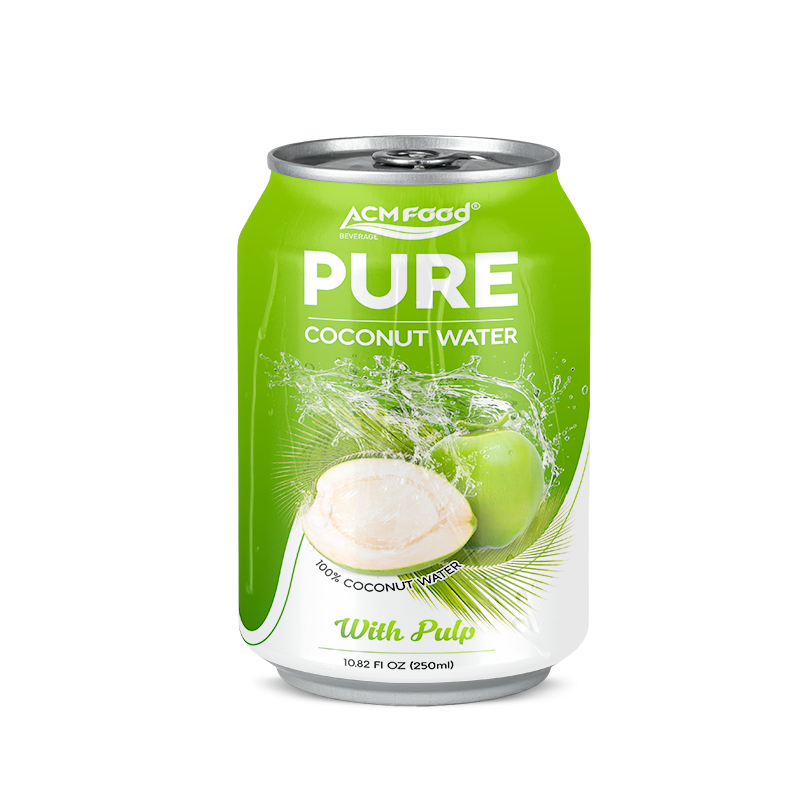
한국어Coconut water with pulp is not plain coconut water with something added — it is a different product to sell, with different shoppers, different handling and a different production problem. This page covers what changes once there are solids in the can, so you can decide whether it belongs in your range. For specifications of individual packs, go to the product pages.
For how pulp sits alongside the other coconut water types, see canned coconut water compared. For the sparkling lineup, see sparkling coconut water flavours.
What the pulp actually is
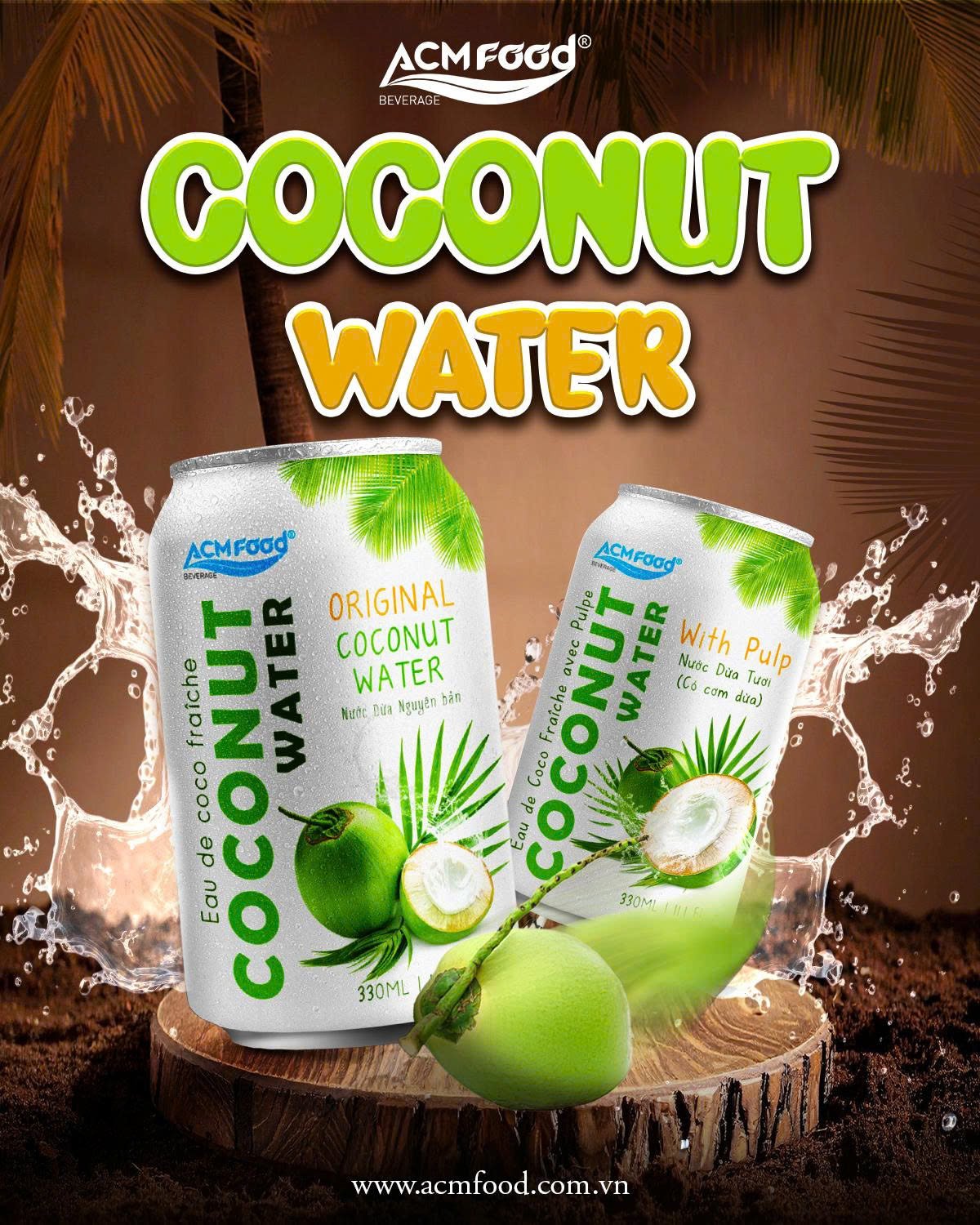
The pulp is soft young coconut meat, cut and suspended in the water rather than blended into it. That single fact drives everything else: the product has to be filled with solid pieces intact, the pieces have to stay evenly distributed rather than settling into a plug, and they have to survive the thermal process without turning to mush.
Two specification points follow, and both belong in a contract annex rather than a conversation:
- Pulp content and piece size. How much pulp, cut to what dimension. Too little and the product reads as plain coconut water that someone made cloudy; too much and it drinks like a dessert.
- Suspension behaviour. Whether pieces stay distributed through shelf life, and what “shake before opening” wording the pack needs.
Who buys it, and who does not
The texture is the whole proposition, and it splits shoppers rather than broadening appeal.
It wins where texture reads as authenticity — shoppers who associate pulp with a nut opened fresh rather than a factory line. It performs in Asian grocery, in food service, and with buyers who find plain coconut water thin or boring. It also justifies a higher shelf price more easily than plain coconut water, because the difference is visible through the pour.
It loses with shoppers who want a clean hydration drink and find solids unpleasant, and in channels where drinking through a straw or on the move is the occasion. It is a poor choice as the single SKU in a first launch — it works as the second or third product, after plain coconut water has established the price reference.
What the solids do to your operation
- Pack format is more constrained. Pieces need an opening they will actually pass through. Cans and wide-neck bottles work; narrow-neck formats fight the product.
- Filling is slower and more demanding. A line handling solids runs differently from one filling clear liquid, which is part of why minimums and pricing differ from plain coconut water.
- Sensory checks need a texture criterion. “Tastes right” is not enough — piece integrity and distribution have to be assessed too, at production and again late in shelf life.
- Damage and settling show more. Ask what the product looks like after transit, not just at filling. Aluminium hides colour change but not a settled plug.
How to evaluate samples properly
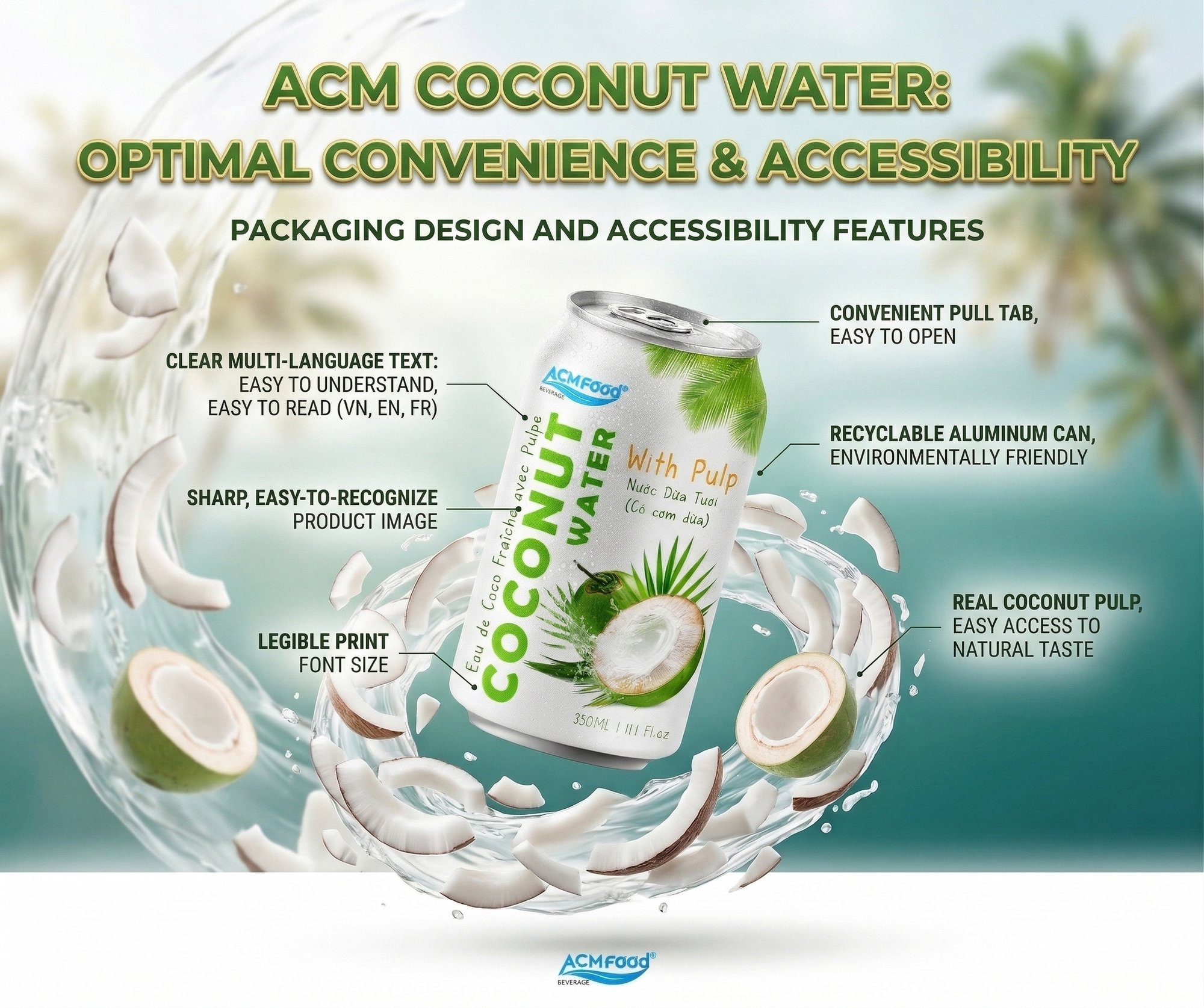
Tasting one chilled can tells you almost nothing about a pulp product. Three checks are worth insisting on:
Pour it out. Judge piece size, quantity and consistency in a glass, not from the can. This is also how your customer will see it in food service.
Take samples from different production dates. Pulp quantity is harder to hold consistent than a liquid specification, so consistency across runs is the thing you are actually buying.
Re-taste late in shelf life. Hold cans at ambient temperature and open them well into the declared life. Piece integrity and distribution at month ten matter more than at the filler, because that is when your customer opens it.
Fixing the specification
- Pulp content and piece size, with tolerances.
- Brix and pH bands for the liquid phase.
- Whether the base is coconut water alone or includes added sugar or juice — it changes the declaration.
- Fill volume and pack format, chosen so the pieces pass the opening.
- Declared shelf life, with the sensory criteria that define end of life including texture.
- Change control, so pulp level cannot drift without your written approval.
Sourcing it
ACMFOOD produces coconut water with pulp in cans and PET across several fill volumes, on stock, adapted and full private label bases. Because pulp specification is where this product succeeds or fails, it is worth settling piece size and content in writing before samples rather than after.
See the individual product pages for pack specifications, or the coconut water supply programme for MOQs, lead times and terms.
Related capability pages
Pulp is one texture option among several. For the full product range and processing routes, see our beverage product capabilities; for the pack formats that suit solids, see packaging options. To specify a pulp product, request a quote.
Request a quotePositioning the Product Commercially
The above covers the buying decision — specification, packaging and evaluation. For the market case (why pulp adds perceived value, channel fit, and private label angles), see how coconut water with pulp creates added value for beverage brands.