


 Français
 Español
 العربية
 한국어
한국어Fruit juice percentage describes how much of a beverage comes from fruit juice or fruit puree, expressed as a percent at single-strength. It is the core difference between 100% juice, fruit nectar, and juice drinks, and it affects taste, sweetness, cost, and what the label can say.
This guide explains how categories are defined, how fruit content is calculated and labeled across markets, where to find the percentage on pack, and what these choices mean for product development. Exact rules vary by country, so treat this as general guidance and verify details against local regulations.
What does fruit juice percentage mean?
Fruit juice percentage is the portion of a beverage that comes from fruit juice or fruit puree once concentrates are reconstituted to their natural “single-strength.” Water, added sweeteners, and non-fruit ingredients do not count toward the percentage.
In practice, the percentage reflects how much of the finished drink volume is equivalent to juice or puree from fruit sources. For blends, the total is the sum of all included fruits (apple + orange + mango, etc.) at single-strength equivalents.
- Single-strength equivalent: The natural concentration of a juice as it exists in the fruit. Concentrates are converted back to this level when calculating percent juice.
- Juice vs. puree: Both contribute to fruit content. Puree contains more pulp and fiber-like material than clarified juices.
- Non-fruit additions: Water, sweeteners, acids, flavors, and functional ingredients do not increase the fruit percentage.
How are 100% juice, nectar, and juice drink defined?
Broadly, 100% juice is made entirely from fruit juice and/or puree (from concentrate or not-from-concentrate), fruit nectar is a juice-and-water beverage with specified minimum fruit content set by local rules, and a juice drink is a broader category where fruit content can be lower and sweeteners or flavors are commonly used within regulatory limits.
Because regulations vary, always check the target market. The following is a general, non-legal overview:
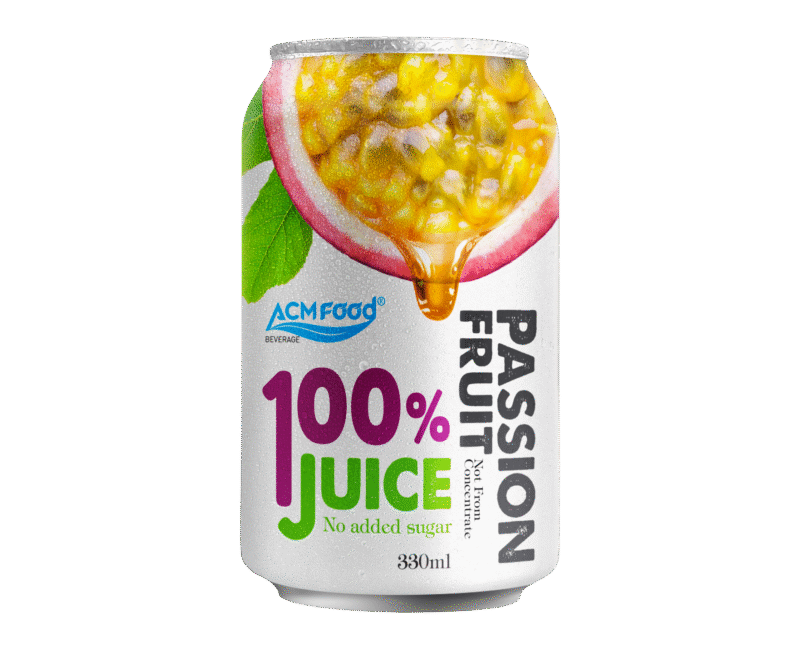
- 100% juice: Contains only fruit juice and/or puree, including water used to reconstitute concentrates back to single-strength. Many markets do not allow added sugars in products labeled as 100% juice. Vegetable juices can be included if relevant to the product name.
- Fruit nectar: A diluted juice-and/or-puree beverage. Local regulations usually set minimum fruit content and allow specific sweeteners and acids. Fruit content requirements can differ by fruit type.
- Juice drink / juice beverage: A beverage containing some fruit juice or puree, often combined with water, sweeteners, and permitted flavors. Fruit content is flexible and typically lower than nectar, subject to labeling and naming rules.
| Category | What it means | Typical fruit content | Sweeteners allowed | Label cues | Sensory notes | Positioning & notes |
|---|---|---|---|---|---|---|
| 100% juice | Only juice/puree, from concentrate or NFC; reconstituted to single-strength | Always 100% fruit | Often not allowed; check local rules | “100% juice,” “not from concentrate” or “from concentrate” | Closest to fresh fruit taste; higher natural sweetness/acidity | Premium, simple-ingredient positioning; labeling rules are strict |
| Fruit nectar | Juice/puree plus water; regulated minimum fruit content by market | Set by local standards; typically moderate | Commonly permitted within limits | “Nectar” in the name; may state fruit percent | Softer texture than juice; balanced sweetness | Mid-tier price; enables bolder flavors or smoother textures |
| Juice drink | Juice/puree with water; wide formulation flexibility | Varies widely; can be low | Often permitted within limits | “Drink,” “beverage,” or “flavored”; percent may be disclosed | Lighter, more refreshing; may lean on flavor systems | Value or mainstream; strong room for innovation |
For brand strategy across these formats, see a broader discussion in 100% juice vs nectar vs juice drink for your brand.
How do regulations affect fruit content labeling?
Requirements differ by jurisdiction. Some markets dictate category names, minimum fruit content for nectar, and exactly how to declare percent juice. Others focus on how names and claims are presented to avoid misleading consumers. Always consult the latest rules for your destination market.
- United States (general principles): Products labeled “100% juice” must be entirely juice/puree at single-strength. Beverages with less than 100% typically must declare their percent juice. Names like “juice drink” or “beverage” are used for diluted products.
- European markets (general principles): Clear distinctions exist between “fruit juice,” “from concentrate,” “not from concentrate,” and “fruit nectar.” Nectar has defined minimum fruit content that varies by fruit type. Added sugars are not permitted in products named “fruit juice” in many EU contexts.
- UK and other regions: Approaches are similar to the above, often referencing local standards or Codex-based definitions. Terminology and disclosure formats may differ, especially for sweeteners and the presentation of percentage statements.
Because the exact wording, thresholds, and rounding rules vary, align early with regulatory guidance for your market. If your product will be exported, confirm how naming conventions translate across destinations to prevent relabeling.
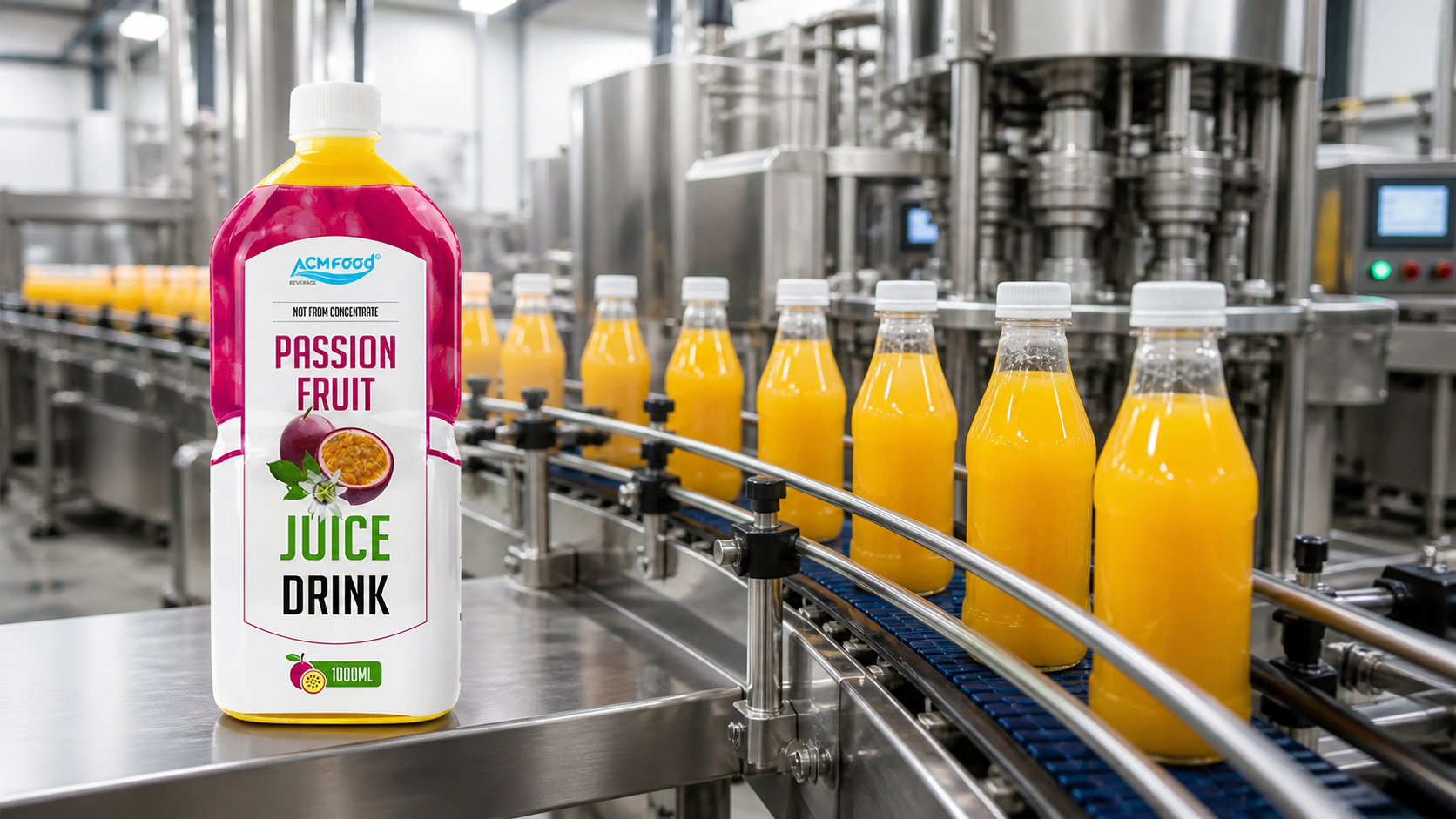
How is fruit juice percentage calculated in reconstituted products?
Manufacturers calculate percent juice using single-strength equivalents derived from reference standards. Concentrates and purees are converted back to their natural strength, summed across all fruits, and then compared to the total beverage volume to determine the percentage.
At a high level, the process follows these steps:
- List fruit inputs: Identify every fruit ingredient (juice, concentrate, puree, NFC, aromas as permitted).
- Convert to single-strength: Use recognized reference points to reconstitute concentrates/purees to their natural level (commonly guided by industry or regulatory references).
- Sum fruit content: Add all single-strength fruit volumes contributed by each ingredient.
- Divide by final volume: Compare the total single-strength fruit volume to the finished beverage volume to yield percent fruit.
- Apply local rules: Follow jurisdiction-specific rounding and disclosure requirements.
The conversion is closely related to soluble solids (Brix). A higher Brix concentrate yields more single-strength equivalent per unit than a weaker concentrate. For a deeper primer on Brix and why it matters for juice development, see Fruit Juice Brix Explained for Beverage Buyers.
For blends, each fruit’s single-strength equivalent is calculated separately and then combined. For example, an apple–mango beverage would sum the single-strength equivalents of apple and mango before dividing by the total beverage volume to determine overall percent juice.
Reading labels: where do you find the percentage of juice?
Look near the ingredient list or nutrition panel. Many markets require a clear statement of percent juice for beverages below 100%, while 100% juices may highlight “not from concentrate” or “from concentrate” near the front-of-pack. The exact placement and phrasing differ by country and package format.
- Common cues on pack: “100% juice,” “fruit nectar,” “juice drink” or “flavored beverage,” “from concentrate,” “not from concentrate.”
- Percent statement: Where required, it often appears close to the principal display panel or near the nutrition information.
- Ingredient order: Ingredients typically appear in descending order by weight, but this alone does not reveal the exact percent juice without a formal percent statement.
Remember: label conventions evolve. If you reformulate (e.g., raising fruit content or adopting sweeteners permitted locally), you may need to update naming, claims, and declarations to stay compliant.
Fruit content, sweetness, and sensory: how do they relate?
Higher fruit content generally delivers a more authentic fruit character because more of the drink is made from the fruit itself. As fruit content rises, natural sugars and acids from the fruit increase proportionally, which influences perceived sweetness and tartness.
- 100% juice: Usually the most intense fruit profile, with sweetness and acidity coming naturally from the fruit matrix.
- Nectar: Balanced and approachable; fruit-forward but smoother due to added water and, where permitted, sweeteners.
- Juice drink: Refreshing and lighter, with more room for flavor systems to shape the profile.
If you are exploring lower sugar targets without sacrificing fruit character, consider approaches in No Added Sugar vs Reduced Sugar Fruit Juice Formulations and revisit the role of Brix in sweetness–acidity balance via Fruit Juice Brix Explained for Beverage Buyers.
What does fruit juice percentage mean for beverage brands?
Fruit content is a strategic lever. It drives positioning, ingredient cost, sensory experience, and compliance. Decide on your target percentage early—before you brief a manufacturer—so formulation, processing, packaging, and claims can align to that choice.
- Positioning & price point: 100% juice often signals premium simplicity; nectar balances value and indulgence; juice drinks can prioritize refreshment and cost efficiency.
- Compliance & claims: Category naming (e.g., “100% juice,” “nectar,” “drink”), percent statements, and sweetener use are regulated. Confirm rules in every destination market.
- Flavor development: Higher fruit content leans on varietal choice and processing; lower fruit content often relies more on flavor systems and mouthfeel tools.
- Sugar targets & taxes: Natural sugars scale with fruit content. Explore recipe architecture to meet local sugar thresholds and labeling requirements.
- Supply & seasonality: Fruit content multiplies your exposure to raw material availability, concentrate specs, and cost volatility. Contracting and buffer strategies matter.
- Brief essentials: Define target fruit percentage, fruit mix, single-strength specs, Brix range, acidity, color, sensory targets, sweetener policy, and labeling intent from the outset.
If you are weighing category trade-offs beyond fruit content, see 100% Juice vs Nectar vs Juice Drink: Which Is Best for Your Brand? For manufacturer alignment and development workflow, review how to choose a fruit juice manufacturer.
FAQs about fruit content and labeling
Does 100% juice ever include added sugar?
In many markets, products labeled as 100% juice cannot include added sugars. However, rules and definitions vary by country, so always verify local requirements for your target market.
Can water be added to 100% juice?
Yes, when a product is made from concentrate, water is used to return the juice to its natural single-strength level. Diluting beyond single-strength typically changes the category and labeling requirements.
Does fruit puree count toward the percentage of juice?
Yes. Fruit puree is considered a fruit ingredient and contributes to the overall fruit content when calculating the percentage at single-strength.
Do juice drinks contain real fruit?
They usually contain some amount of juice or puree, but the percentage can vary widely and is often lower than nectar. Check the label for the percent juice statement where required.
Why do nectar minimums differ by fruit?
Different fruits have different natural textures, acids, and solids. Many standards set fruit-specific minimums to reflect these differences and deliver an expected sensory profile.
Key takeaways and next steps
Fruit juice percentage tells you how much of a beverage truly comes from fruit at single-strength—and it underpins category naming, sensory experience, cost, and claims. 100% juice is entirely fruit-derived; nectar is juice-and-water with regulated minimums; juice drinks offer the most flexibility. Because regulations and disclosure rules vary globally, confirm specifics in each target market.
If you are developing a new beverage, decide early on your target fruit content, sweetness approach, and labeling objectives, then align your brief and supplier discussions accordingly. To structure your development plan, explore how to choose a fruit juice manufacturer for your brand and revisit Brix and sugar strategies via this Brix guide and reduced- vs no-added-sugar options.
Turning this into a product
For the formats, ingredients and processing routes the factory actually runs, see beverage product capabilities. What the factory takes on is described in our OEM manufacturing programme; for launching under your own label, see private label beverages. To discuss a specification, request a quote.
Sources
The distinction between juice, nectar and juice drink, and the minimum Brix values behind it, come from the Codex general standard for fruit juices and nectars (CXS 247-2005). Individual markets set their own labelling rules on top of it.
- Codex Alimentarius (FAO/WHO) — Standards, including CXS 247-2005 General Standard for Fruit Juices and Nectars
- U.S. Food and Drug Administration — Guidance for Industry: Food Labeling Guide
- Food Standards Australia New Zealand — Australia New Zealand Food Standards Code
Setting juice content on a product you are having made
For a brand owner, juice content is not a label detail discovered at the end — it is a specification agreed at the start, because it drives raw material cost, the claim you may print, and the category your drink sits in on arrival. The percentage, the brix and the sugar declaration are decided together, then verified lot by lot.
- Setting juice content, brix and sugar targets — where the number is fixed and why it moves.
- How each batch is verified before release — the checks behind the declared figure.
- Label and pack format decisions — how the declaration appears on can, PET and glass.