


 Français
 Español
 العربية
 한국어
한국어OEM beverage manufacturing for Australian buyers is the practice of developing and producing drinks through third-party facilities to your brand’s specifications, then importing or distributing them in Australia. It covers product design, formulation, packaging, processing, quality, compliance, logistics, and commercialization.
This guide focuses on oem beverage australia: how the model works, where demand is trending, what regulations and labeling require, and how to brief and select the right beverage co-packer australia for your project. You’ll find practical checklists, packaging options, and development notes you can use immediately in your product brief.
What does OEM beverage manufacturing involve for Australian buyers?
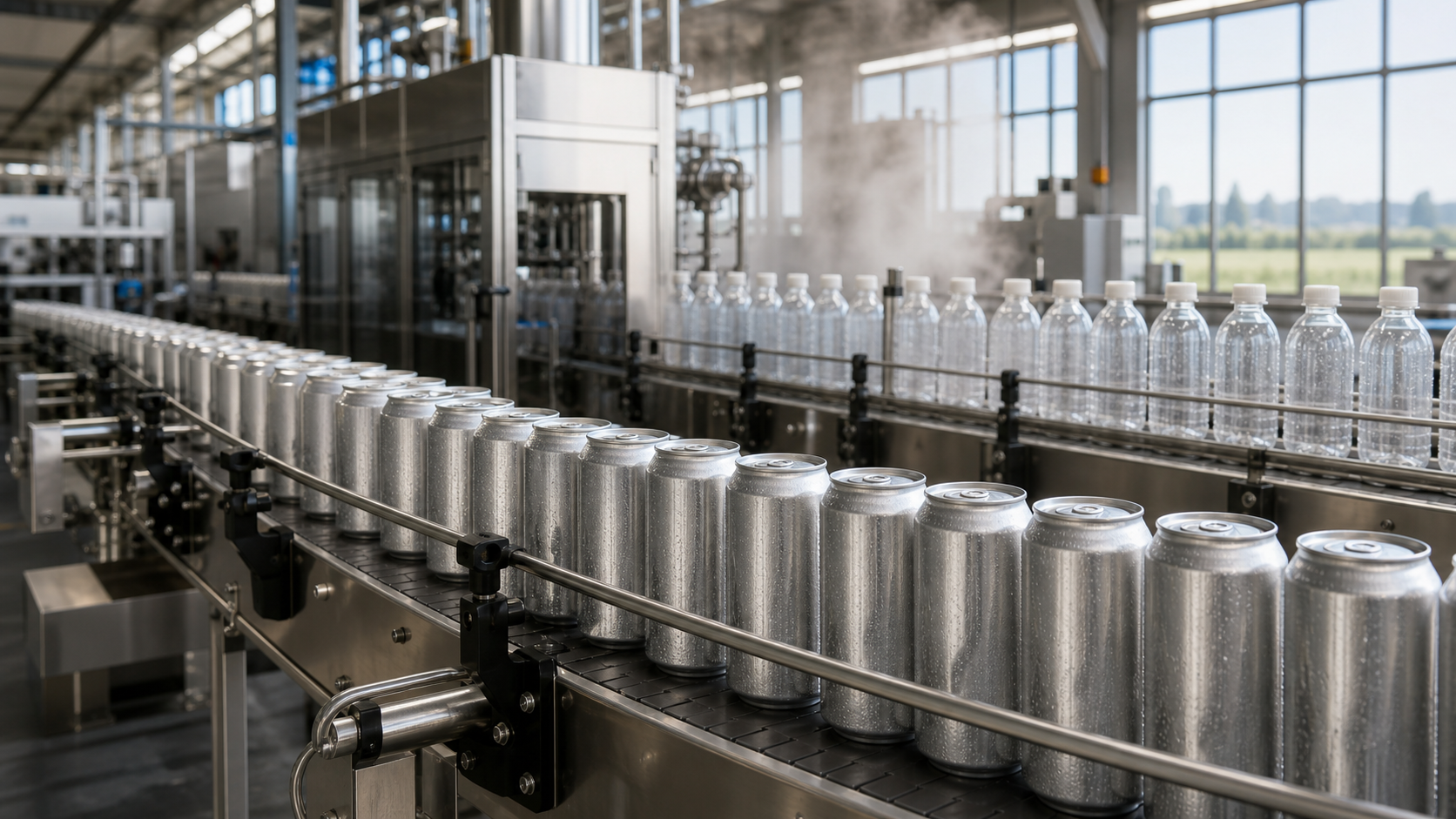
OEM beverage manufacturing means a specialist producer makes your drink to a defined formula, sensory profile, and pack format while you own the brand and go-to-market strategy. In Australia, that often includes overseas production with importation or local co-packing, provided the product and label comply with the Food Standards Code and other applicable rules.
Typical stages include:
- Concept & positioning: Define the value proposition, target shopper, use occasion, competitive set, and expected retail price tier.
- Brief & feasibility: Translate the concept into a short, specific brief covering ingredients, sweetness direction, color, flavor intensity, pack formats, and shelf-life target. The OEM confirms feasibility and risks.
- R&D and samples: Iterative lab samples toward a signed specification (Brix, acidity/TA, pH range, color target, pulp level, carbonation, caffeine if any).
- Stability & shelf-life pathway: Choose processing (e.g., hot-fill, tunnel pasteurization, UHT/aseptic, or HPP where suitable) aligned with product and pack.
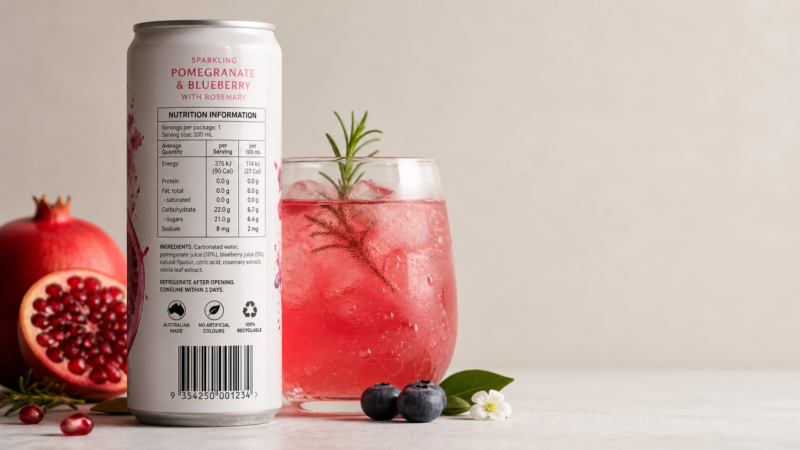
- Regulatory & labeling: Build the ingredient list, Nutrition Information Panel (NIP), advisory statements, and claims strategy consistent with Australian requirements.
- Pre-production & trials: Pilot or line trial to verify runnability, fill volumes, closures, seam integrity, and sensory robustness.
- Commercial run & QC: Scale-up with in-process QC, micro testing as applicable, retention samples, Certificate of Analysis, and batch records.
- Logistics & import: Palletization, container loading, Incoterms, documentation, biosecurity and customs clearance, and national distribution.
Which beverage categories are growing in Australia?
Demand continues to shift toward lower sugar, natural ingredients, functionality that fits everyday consumption, and convenient RTD formats. Within that, several categories show robust momentum for private label, ODM, and OEM drinks australia projects:
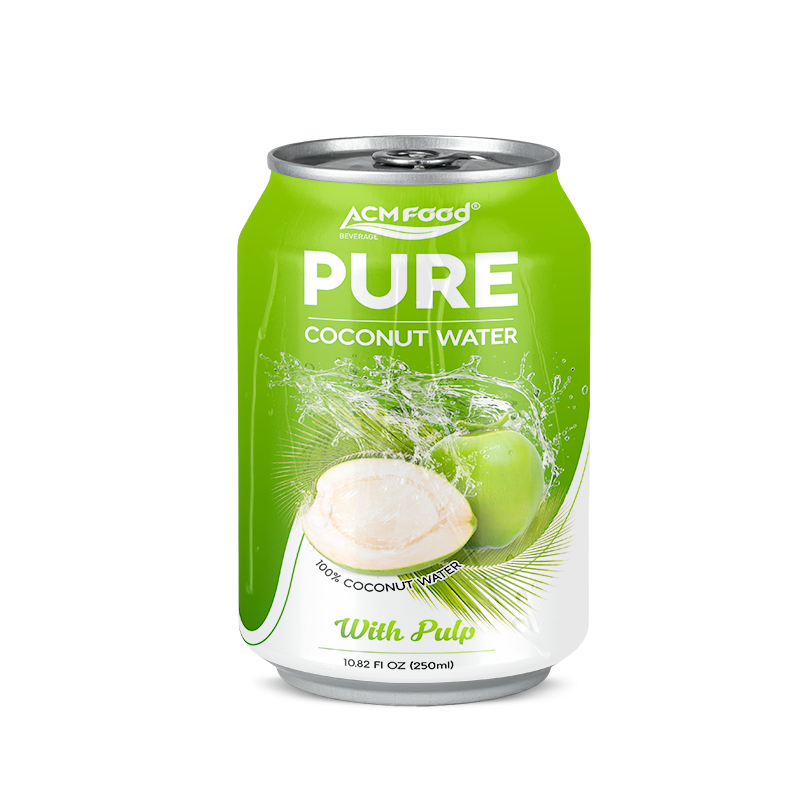
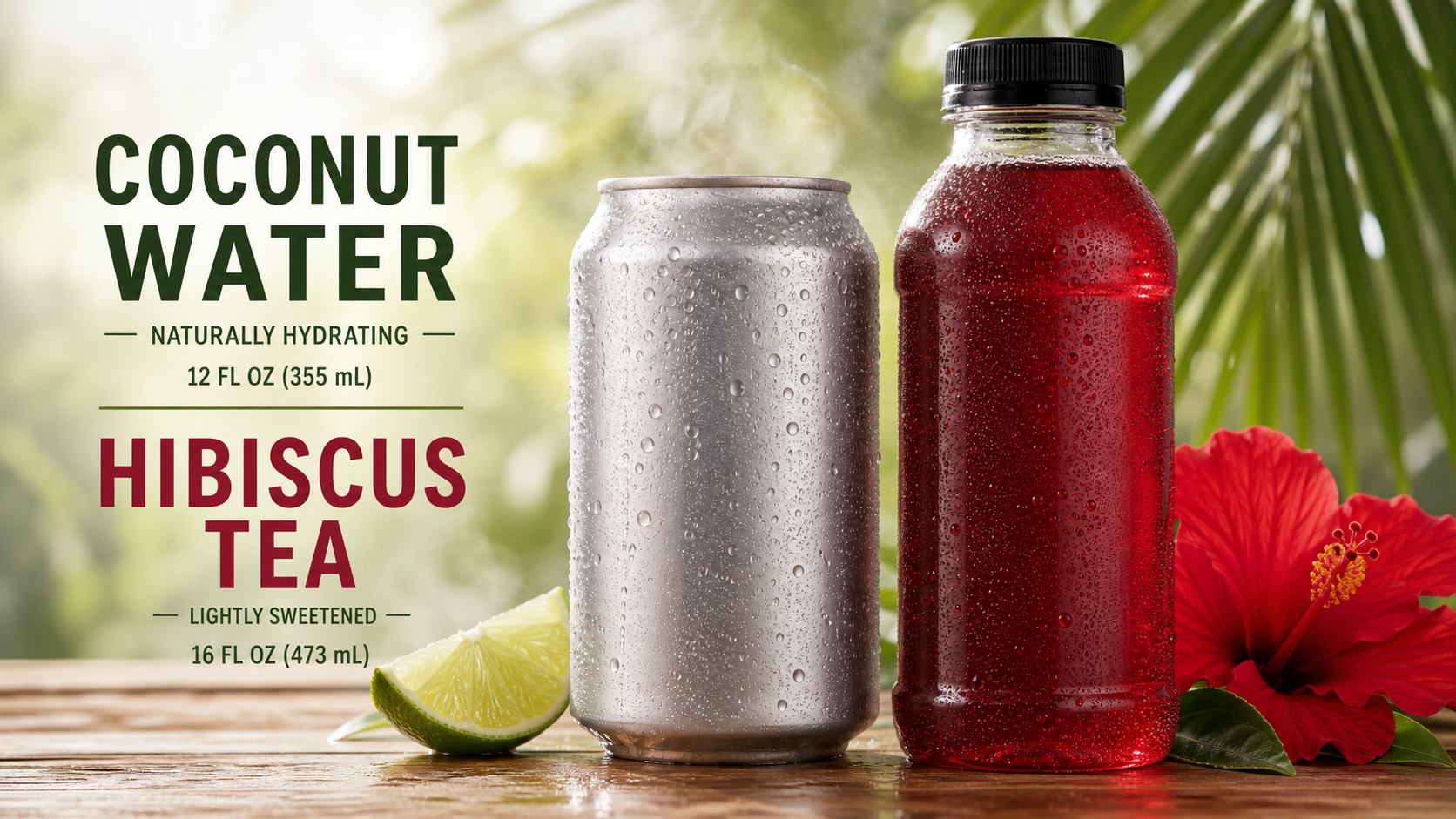
- Coconut water & blends: Still or sparkling, with or without pulp, often paired with tropical fruit or botanical notes. See ideas in our overview of coconut water cans in bulk solutions.
- Botanical & herbal RTD teas: Lightly sweetened or unsweetened black/green tea, hibiscus, roselle, and fruit-herb infusions. Explore the RTD hibiscus tea potential.
- Juice-based refreshers: Lower-Brix, high-juice positionings, or nectar-style formats with clear fruit cues. See category notes in strawberry juice OEM trends for 2026.
- Functional hydration: Electrolyte-forward beverages, fruit-infused waters, or light botanicals with a clean label direction.
- Emerging functional fusions: Concepts such as sea moss coconut water and fruit-pulp textures; review our analysis of the sea moss coconut water trend and how coconut water with pulp creates added value.
- Low- and no-sugar carbonated: Sparkling waters with natural flavors or botanicals, suitable for daytime consumption.
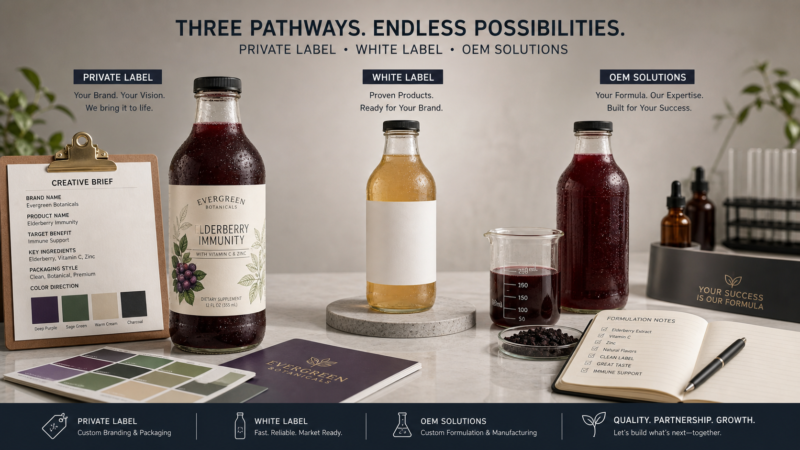
OEM, ODM, private label and co-packer: what’s the difference?
Clarifying these models helps you choose the right scope and timeline.
| Model | Who owns formula? | Speed to market | Customization | Typical use case |
|---|---|---|---|---|
| OEM (custom manufacturing) | Brand | Moderate | High (from ingredients to spec) | Unique concept or formula control |
| ODM (turnkey development) | Usually manufacturer (licensable) | Faster | Medium (variants of base) | Proven base with light customization |
| Private label (ready recipes) | Manufacturer | Fastest | Low (brand & label only) | Speed and cost-sensitive launches |
| Co-packer (filling service) | Brand | Varies | High (brand provides formula & inputs) | When you own R&D and source ingredients |
How to brief your beverage OEM partner effectively
A precise, concise brief reduces iteration and risk. Include:
- Positioning: Category, target consumer, occasions, competitive set, flavor direction, sweetness level, calorie direction.
- Benchmarks: 2–3 reference products (for intensity, mouthfeel, carbonation), specifying what to copy vs. avoid.
- Ingredients: Juice percentage target, fruit varieties if important, botanical extracts, natural colors/flavors, sweetener boundaries.
- Technical targets: Brix range, acidity/TA range, pH boundary, pulp % or cloud, carbonation volumes, caffeine direction if used.
- Processing & shelf life: Preferred pathway (e.g., hot-fill, tunnel pasteurization, UHT/aseptic), ambient vs. chilled distribution.
- Packaging: Format(s) to quote, closure type, sleeves/labels, carton configuration, pallet specs.
- Regulatory: Claims you intend to pursue (e.g., “no added sugar”), allergen risks, country of sale (Australia) and any export plans.
- Commercial: Target ex-factory brackets, initial volumes, forecast cadence, lead-time expectations (indicative), Incoterms.
What Australian regulations and labelling should brands consider?
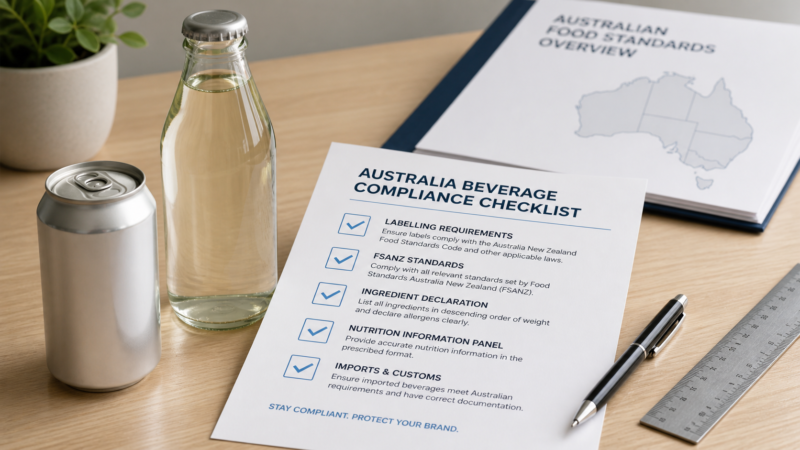
While this guide does not provide legal advice, most beverage projects for Australia must align to the FSANZ Food Standards Code and related requirements. Work with your OEM and qualified advisors to confirm the exact pathway for your product.
- Ingredients & standards: Check any relevant product standards and permissions for additives, colors, sweeteners, and caffeine.
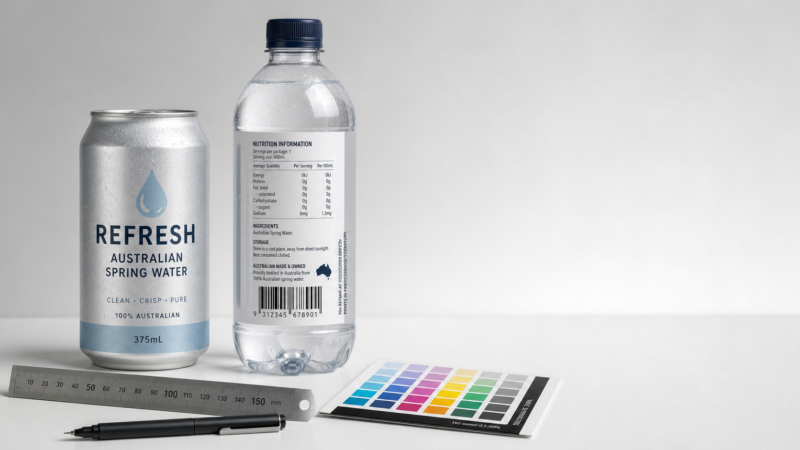
- Nutrition Information Panel (NIP): Use the correct per-serve and per-100 mL format, rounding, and mandatory nutrients as required for your category.
- Ingredient list & allergens: Use prescribed names and emphasize allergens where required.
- Claims: Nutrition content and health-related statements must meet conditions. Keep claims consistent with the formula, serving size, and the Code.
- Advisory statements: Certain ingredients (e.g., caffeine) or usage contexts may trigger advisory or warning statements.
- Country of Origin & CDS marks: Ensure any required origin statements and Container Deposit Scheme marks appear as applicable by state/territory.
- Date marking: Best before/use by format, storage directions after opening if relevant.
- Therapeutic claims: Avoid therapeutic positioning unless you have the pathway and approvals required for therapeutic goods.
Product formulation and quality: from Brix to stability
Australian buyers often request bright flavor, balanced sweetness, and a clean finish. Translating that into technical targets helps your OEM deliver reproducible results:
- Brix & sweetness curve: Define total solids/sugars and how sweetness should present (front, mid, or finish).
- Acid structure: Specify acid type(s) and target titratable acidity to balance fruit notes without harshness.
- pH boundary: Align pH to the chosen process for microbial stability and color retention.
- Color & clarity: State if you prefer clear, cloudy, or with defined pulp/cloud levels.
- Flavor intensity: Provide a 1–5 scale for top note, body, and aftertaste; reference benchmarks.
- Carbonation: If sparkling, specify target volumes and bubble profile (fine vs. coarse).
- Micro & sensory stability: Define shelf-life goal, storage condition (ambient/chilled), and test plan (e.g., accelerated and real-time).
Processing and shelf-life options for OEM drinks
The best process depends on ingredients, pH, package, and desired shelf life:
- Hot-fill (PET or glass): Suitable for many acidic beverages. Often paired with panel-resistant PET if needed.
- Tunnel pasteurization (cans, glass, some PET): In-pack pasteurization to a target lethality without overcooking flavors when validated correctly.
- UHT/aseptic (cartons, some PET): Ultra-short heat exposure with sterile filling for long ambient life.
- HPP (mainly chilled): High pressure, minimal heat; preserves fresh-like notes but typically requires cold chain.
- Nitrogen dosing/deoxygenation: Useful for still beverages in cans and to manage headspace oxygen.
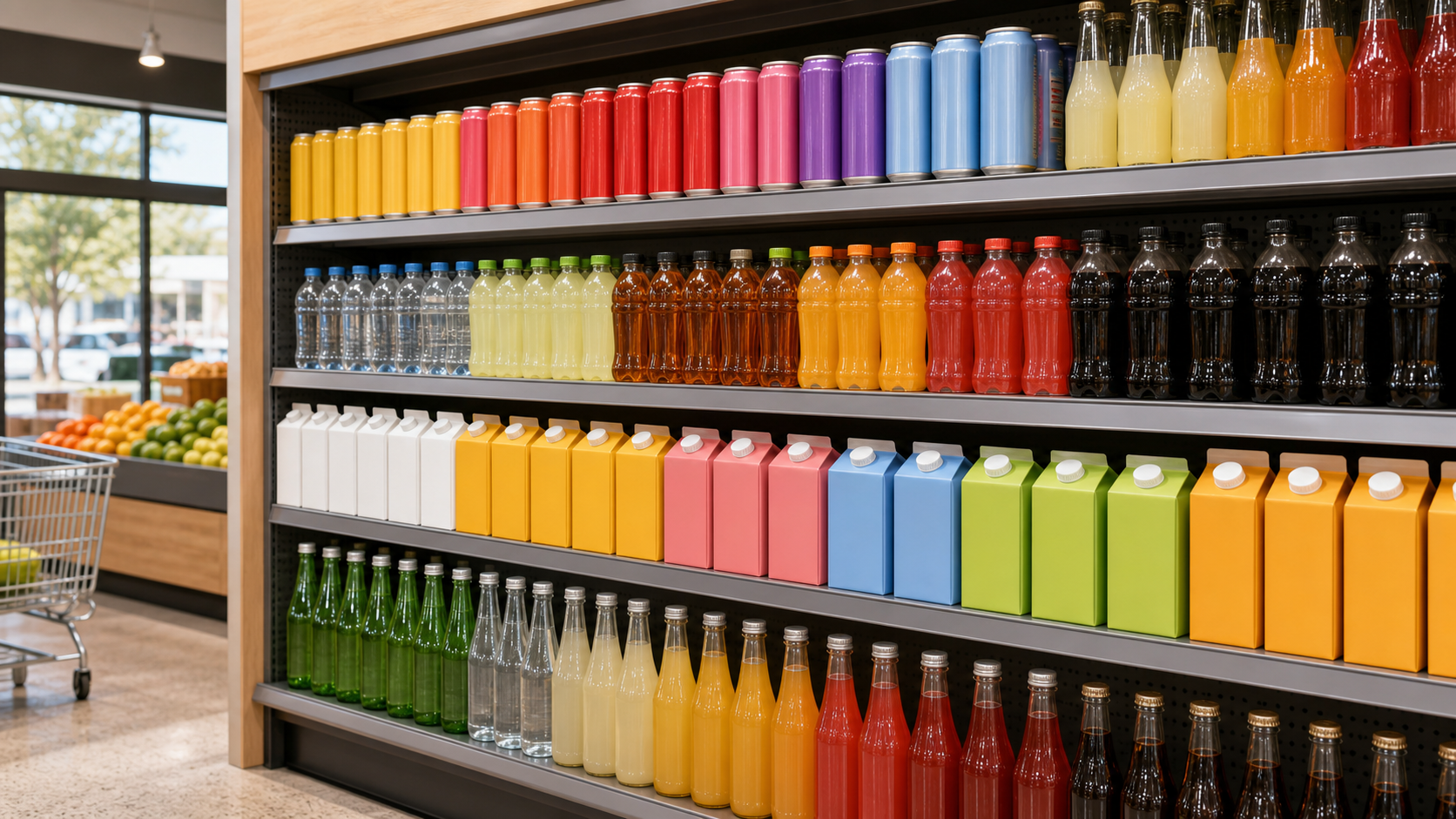
Packaging formats for Australia: cans, PET, glass, and beyond
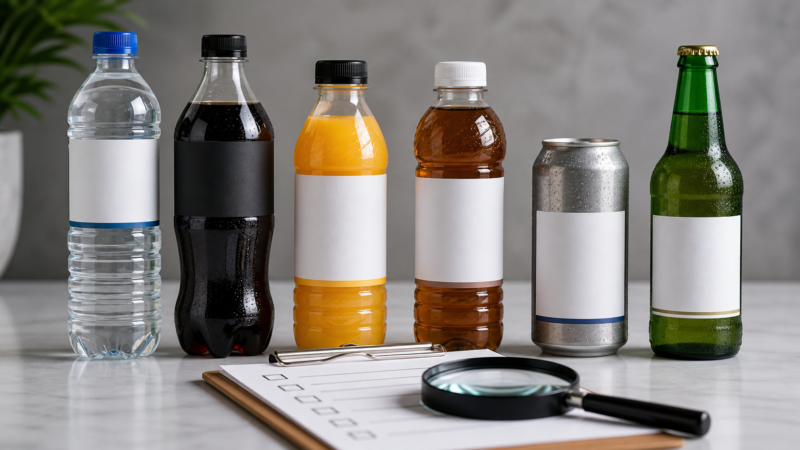
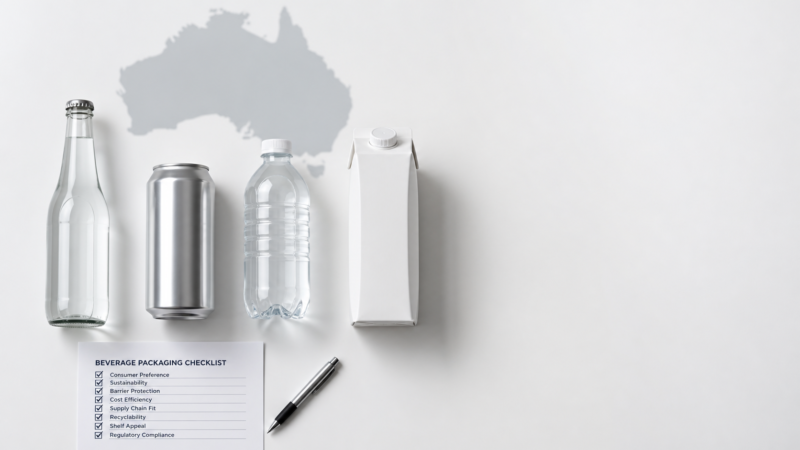
Choose packaging based on use occasion, processing route, sustainability expectations, and retail channel. A quick comparison:
| Format | Typical use | Pros | Watchouts | Positioning & notes |
|---|---|---|---|---|
| Aluminum cans | Carbonated and still beverages | Lightweight, fast-chilling, strong on-the-go appeal | Seam integrity, lining compatibility, light-sensitive ingredients | Great for sparkling water, flavored seltzer, coconut water |
| PET bottles | Still and some carbonated drinks | Impact resistant, clear product view, cost-effective | Heat/shape under hot-fill, paneling, barrier needs | Juices, isotonic drinks, functional waters |
| Glass bottles | Premium teas, juices, kombucha-style | Premium look, oxygen barrier, heat tolerant | Breakage, weight for freight | Specialty retail and foodservice |
| Cartons | UHT juices, still beverages | Ambient life, light barrier | Requires aseptic capability, cap selection | Family-size or portion packs |
Supply chain, Incoterms and inbound logistics to Australia
Agree the commercial terms early and design your pack for a smooth inbound journey:
- Incoterms: Align responsibilities (FOB/CIF/DDP or others) with your freight strategy, insurance, and customs broker arrangements.
- Palletization: Confirm carton orientation, layer count, and stability for sea freight; request photos of pallet builds and loading.
- Temperature & time: Choose processing, pack, and shelf life that can tolerate ocean transit and warehousing conditions.
- Documentation: Ensure a consistent set of documents supports clearance and traceability (see checklist below).
- Distribution fit: Consider ambient vs. chilled networks, state-based distribution, and retailer DC requirements.
Cost drivers and margin structure
Understanding cost structure helps you set price and margin targets:
- Ingredients: Juice content, botanicals, sweeteners, and functional actives drive cost complexity.
- Processing: Hot-fill vs. tunnel vs. UHT vs. HPP impacts energy, validation, and line time.
- Packaging: Can/bottle type, closures, labels/sleeves, cartons, and pallet materials are significant levers.
- Volume & MOQ: Line efficiency and minimum order volumes affect unit economics; batch sizes should match forecast.
- Quality & testing: Micro, shelf-life studies, and third-party testing add essential, planable costs.
- Freight & duties: Inbound logistics, warehousing, and last-mile distribution complete the landed cost picture.
How to evaluate a beverage OEM manufacturer
Use a structured scorecard when shortlisting a beverage OEM manufacturer. Consider:
- Technical fit: Proven capability in your process (e.g., hot-fill, tunnel pasteurization, aseptic) and your chosen pack.
- Formulation scope: Whether they offer R&D, sensory panels, and pilot runs aligned to your category.
- Quality systems: Documented HACCP-based programs, traceability, allergen controls, and strong batch documentation.
- Regulatory support: Experience preparing Australian-compliant ingredient lists, NIP format, and advisory statements.
- Commercial flexibility: MOQs, changeover times, cost transparency, and lead times that match your scale-up.
- Communication: Clear project management, sampling cadence, and escalation paths.
For a category-specific lens on vendor fit, see how to choose the right peach juice OEM manufacturer; the selection logic also applies to other fruit-based SKUs.
Concept ideas tailored to Australian shoppers
Translate category trends into brief-ready ideas:
- Coconut water + fruit: A light tropical blend with clear fruit cues and a restrained sweetness curve. Consider variants with gentle carbonation in cans or classic still in PET. Explore sourcing in coconut water cans in bulk solutions.
- Hibiscus & citrus tea: A ruby-toned RTD tea with citrus lift and low sweetness; see our take on RTD hibiscus tea potential.
- Strawberry refresher: A fruit-forward, low-Brix strawberry drink for summer; read strawberry juice OEM trends for 2026 for angles and claims considerations.
- Coconut water with pulp: Texture signals naturalness and can lift perceived value; learn how coconut water with pulp creates added value.
- Light botanical seltzer: Zero- or low-sugar sparkling water with botanical top notes; a great fit for cans and social occasions.
Documentation & compliance checklist for imports
Documentation expectations vary by product and route to market. This indicative checklist helps organize your files and responsibilities with your beverage co-packer australia and logistics partners.
| Document | Prepared by | Purpose | Notes |
|---|---|---|---|
| Commercial invoice & packing list | Manufacturer/exporter | Valuation, contents, and shipment details | Align with Incoterms and HS codes |
| Bill of lading/air waybill | Carrier/forwarder | Transport contract and title | Match pallets/cartons to invoice |
| Certificate of Analysis (CoA) | Manufacturer or lab | Batch specs and micro results | Align to signed product spec |
| Ingredient & allergen statements | Manufacturer | Label accuracy and risk review | Support NIP and claims verification |
| Label artwork & proofs | Brand/manufacturer | Compliance and print sign-off | Check NIP, statements, origin, CDS |
| Shelf-life & stability data | Manufacturer/brand | Distribution and storage planning | Include real-time and accelerated if used |
Project timeline and risk management
Build contingency into each stage to protect your launch window:
- Samples & approvals: Set clear acceptance criteria and a maximum number of iterations before locking the spec.
- Pilot & pre-production: Use trials to de-risk scale-up, confirm label application, and check shippers/pallets.
- Dual-sourcing criticals: Where possible, approve alternates for caps, labels, or ingredients to manage supply swings.
- Change control: Any post-approval changes to ingredients, pack, or processing should trigger documented re-approval.
Retail and channel considerations in Australia
Let channel strategy inform your pack and formula:
- Grocery & mass: Price-pack architecture matters; multipacks and common shelf footprints help.
- Petrol & convenience: Cold availability, small-footprint facings, and impulse-friendly cans or 500 mL PET.
- Online: Shipper durability and returns-resistant closures are critical.
- Foodservice: Larger formats, portion-control packs, or kegs (for specific categories) may be relevant.
FAQ
Can I use an overseas OEM and still sell compliantly in Australia?
Yes—if your product, labeling, and claims comply with Australian requirements and you complete the correct import, biosecurity, and customs processes. Many brands source internationally while meeting local rules. Work with your OEM, regulatory advisors, and logistics partners to validate the pathway.
Do I need the Health Star Rating (HSR) system on my label?
HSR is a voluntary front-of-pack system. Some retailers may prefer it for certain categories, but it is not mandatory for all beverages. Decide based on retailer expectations, category norms, and your positioning strategy.
How should I approach “no added sugar” or “low sugar” statements?
Ensure the formula, serving size, and label meet the conditions in the Food Standards Code for any nutrition content statements you intend to make. Your OEM and regulatory consultant can help verify wording and thresholds before artwork finalization.
Which is better for my launch: cans or PET?
It depends on your product’s processing, sensory goals, and channel. Cans suit sparkling and some still beverages, while PET offers clarity and impact resistance for many still drinks. Choose the format that aligns with stability, cost, and brand cues.
What testing do I need before shipping?
Plan in-process QC and batch-level verification such as micro tests, fill/seam checks (cans), closure torque (bottles), and stability observations. Align testing with your signed specification and shelf-life target; keep retention samples to support any investigations.
How do I protect flavor during ocean freight?
Validate the processing pathway, headspace oxygen control, and pack barrier performance. Ensure cartons and pallets are specified for the journey, and avoid unnecessary heat exposure where possible. Confirm best-before coding and storage directions.
Conclusion
Australian beverage launches succeed when product-market fit, process choice, labeling, and logistics work together. Start with a tight brief, select an OEM partner with the right category and process capability, validate labeling against the Food Standards Code, and plan your inbound supply chain. Keep claims conservative and formula-backed, and pilot early to avoid surprises.
If oem beverage australia is your next step, assemble your brief, short-list suitable co-packers or OEM partners, align on processing and pack, and request feasibility plus indicative commercials. With a clear plan and disciplined checkpoints, you can move from idea to shelf with confidence.
Manufacturing for Australian brands
If you are sourcing for the Australian market, start with OEM beverage manufacturing services for how contract production is run, certifications and food safety systems for the evidence importers and retailers require, and export and logistics for shipping terms and documentation. To price a programme, request a quote.
Request a quoteWhere to go next
Planning an Australian launch? The Australia beverage market page covers the full OEM and private label programme for Australian brands and importers: MOQ 500 cartons per SKU, 15-30 day production, HACCP / ISO 22000 / FSSC 22000, and shipping from Ho Chi Minh City. Request a quote and we reply within 24 hours.