


 Français
 Español
 العربية
 한국어
한국어Private label fruit juice MOQ refers to the minimum production quantity a manufacturer will accept for a single SKU and packaging configuration. It is shaped by line efficiency, packaging component procurement, printing methods, logistics, quality plans, and commercial risk—not a single fixed number. Understanding these drivers helps buyers plan feasible briefs, avoid costly changes, and negotiate options that protect margin and supply continuity.
This guide explains what determines private label fruit juice MOQ, how packaging, formulation, and compliance choices influence it, and which practical levers can reduce commitments without undermining quality. It also outlines how to brief suppliers, evaluate trade-offs, and set realistic expectations across different export markets.
What is private label fruit juice MOQ?
MOQ is the minimum volume a co-packer or OEM filler is willing to produce per SKU, per run, under a defined specification and packaging format. It consolidates equipment set-up time, component ordering requirements, yield expectations, and commercial risk into a threshold that keeps the run viable for the manufacturer while maintaining quality and cost consistency.
In practice, fruit juice MOQ is not only about the beverage itself. Bottles, closures, labels, cartons, and pallet patterns all impose their own minimums. Label print methods, flavor count, and artwork variants also push quantities up or down. The most workable MOQ balances operational efficiency, material MOQs, shipping format (FCL/LCL), and the buyer’s commercial plan.
Which factors have the biggest impact on MOQ?
MOQ is shaped by a few dominant levers: packaging component minimums, line set-up complexity, label printing choices, shipping format, and the number of SKUs/flavors. Buyers can influence each through smart specification and scheduling, often reducing risk without materially inflating unit cost.
Key factor groups:
- Product & formulation: 100% juice vs. nectar vs. juice drink; Brix targets; use of concentrates or purées; added ingredients like fiber or botanical extracts; allergen handling and changeover needs.
- Packaging architecture: Glass vs. PET vs. can vs. aseptic carton vs. pouch; closure type; fill volume; shrink sleeves vs. pressure-sensitive labels; case packing and palletization rules.
- Manufacturing set-up: Clean-in-place (CIP) cycles, changeover time between flavors, hot-fill vs. tunnel pasteurization vs. cold-fill with HPP or aseptic; filtration and deaeration steps.
- Supply chain & seasonality: Availability windows for certain fruits; concentrate vs. NFC (not-from-concentrate) sourcing; component lead times; forecasting horizon and call-off flexibility.
- Compliance & documentation: Markets requiring different labels, language versions, or nutrition formats increase artwork variants and therefore MOQs for printed items.
- Commercial & risk allocation: Payment terms, liability for obsolescence, rework options, and tolerance for over/under fill of POs influence how tightly a supplier can cap MOQ.
| Decision factor | How it affects MOQ | Buyer levers |
|---|---|---|
| Packaging format | Each format has distinct component MOQs and line speeds | Select standard bottle/cap, consider formats with accessible component supply |
| Label print method | Conventional printing often requires higher print runs | Use digital labels for pilot/seasonal SKUs; consolidate artwork |
| Flavor count | More flavors multiply changeovers and components | Start with fewer SKUs; share common packaging across flavors |
| Processing method | Set-up/CIP and heat profile changes add start-up waste | Group similar products; align runs to reduce changeovers |
| Shipping plan | FCL vs. LCL and pallet patterns drive practical batch sizes | Target full pallets/containers; align PO cycles with production windows |
| Regulatory labels | Multiple label versions fragment volumes | Design one multi-market artwork when possible |
How does packaging choice change fruit juice MOQ?
Packaging drives component MOQs and line constraints. Some formats have highly standardized supply chains with accessible component runs; others rely on custom tooling or longer lead times, raising the practical MOQ for a new SKU.
| Format | MOQ impact | Positioning & notes |
|---|---|---|
| Glass bottle (hot-fill/tunnel) | Often higher due to bottle variety and weight | Premium look; careful on breakage, transport, and carton strength |
| PET bottle (hot-fill/cold-fill with secondary) | Moderate; many stock options can lower thresholds | Mass-market friendly; good availability of standard preforms |
| Aluminum can | Can bodies and ends may require larger print runs | Trendy; strong for sparkling juice drinks and RTDs |
| Aseptic carton | Printed carton rolls can push higher minimums | Ambient distribution; family-size packs; long shelf-life |
| Spouted pouch | Film/fitment combinations influence minimums | Convenience; kids’ packs; lightweight shipping |
Early packaging choice is the single most powerful dial on MOQ. Stock components, shared closures across flavors, and fewer carton sizes help unlock smaller starting volumes.
Do 100% juice, nectar, and juice drink have different MOQ expectations?
Yes. Ingredient sourcing, processing requirements, and label claims differ across these categories, which can shift MOQ realities even under the same packaging.
Definitions vary by market, but typically:
- 100% juice: Formulated solely from juice (from concentrate or NFC), without non-juice sweeteners. May require specific Brix targets and sourcing discipline.
- Nectar: Juice blended with water and sometimes sweeteners, with minimum juice content set by local regulations. Often easier to balance Brix and cost inputs.
- Juice drink: Lower juice content with broader room for flavors, sweeteners, and acidulants; may simplify sourcing and line scheduling.
Because these formats drive different ingredient combinations and processing steps, they influence run size, start-up waste, and artwork claims. If you are deciding between development pathways, see a structural comparison in private label vs white label vs OEM to align brand goals with operational realities.
What MOQ do fillers require for labels and cartons?
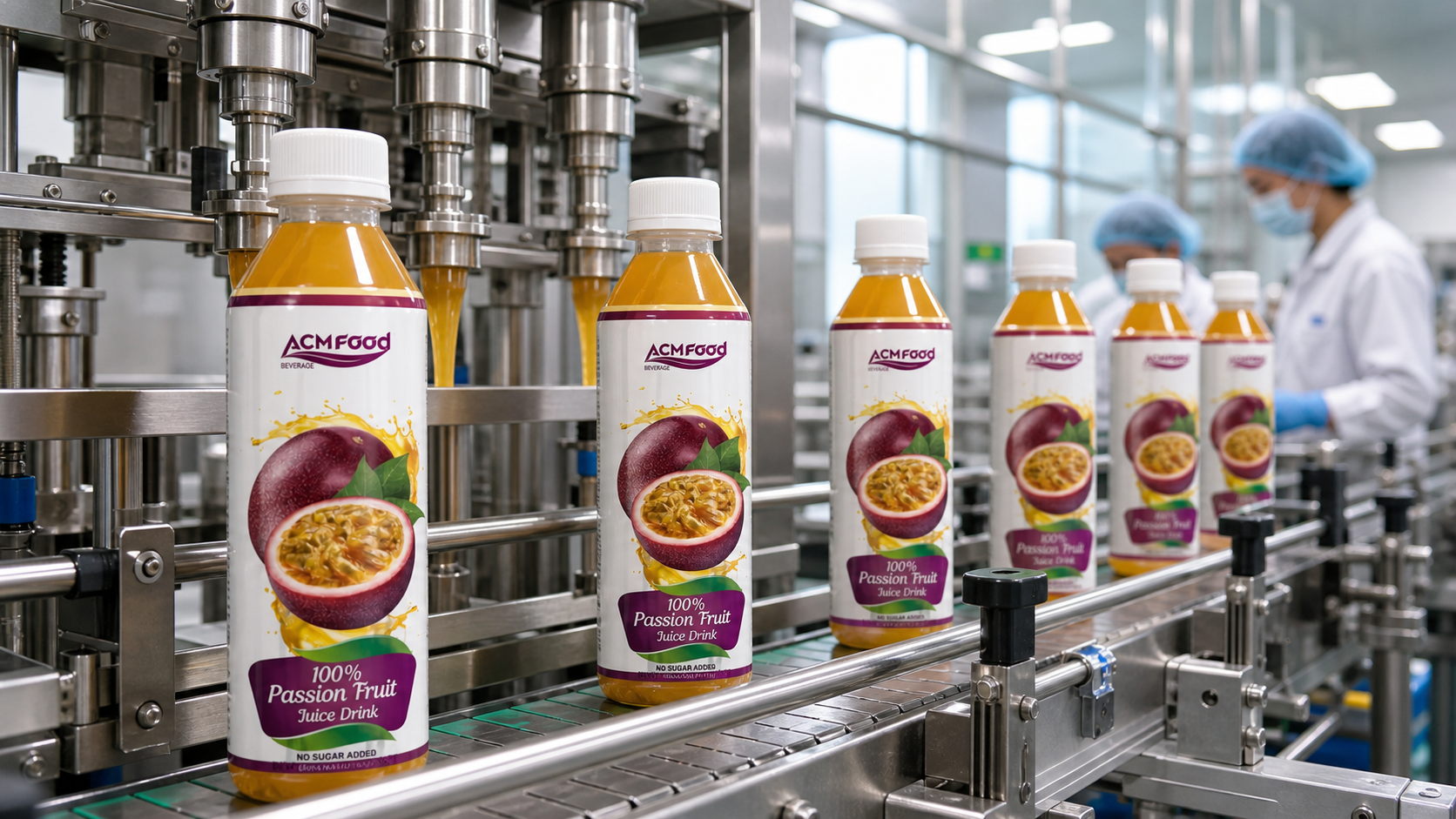
Printed materials are often the hidden constraint behind fruit juice MOQ. Conventional printing for labels and cartons generally prefers larger runs for efficiency, while digital printing can support smaller batches at higher unit cost.
Key dynamics to consider:
- Printing process: Flexo/offset typically favors bigger volumes per artwork; digital allows multi-SKU runs with lower set-up friction.
- Artwork versioning: Each language, claim, or SKU variant can multiply the effective MOQ for printed items.
- Die-lines & finishing: Custom die-cuts, metallic foils, and special varnishes add complexity and may require higher print commitments.
- Carton strength and inserts: Heavier glass may need stronger board grades or partitions, impacting supplier minimums.
When exporting to the U.S., ensure your artwork is compatible with compliance from the start. See guidance on Nutrition Facts label for beverages and the U.S. food label checklist to reduce reprints and avoid stranded inventory.
How to estimate a working MOQ before briefing suppliers?
Build a bottom-up picture from components to logistics. Even without final quotes, a structured approach gives you a realistic planning band and prevents optimistic underestimates.
- Lock provisional packaging: Choose a practical format and size. Favor stock molds and common closures to anchor component availability.
- Simplify the SKU plan: Start with one or two core flavors and a single language artwork if possible.
- Align compliance upfront: Draft label content that works across target markets to avoid multiple prints and fragmented MOQs.
- Map palletization: Request indicative case count per pallet and typical pallet heights for your format to target full-pallet multiples.
- Target shipping format: Decide between FCL and LCL; align batch sizes to avoid half-empty pallets or multiple partial shipments.
- Consider shelf-life: Ensure the first order matches your sell-through velocity, distributor intake, and promotional calendar.
- Add a learning buffer: Factor initial run variances and artwork corrections into your first PO assumptions.
Which levers can reduce MOQ without hurting unit cost too much?
Several pragmatic levers can bring MOQ down while keeping COGS manageable and the supplier relationship healthy.
- Use standard components: Pick stock bottles, common caps, and widely-available case sizes to avoid custom part minimums.
- Choose digital labels early: Accept slightly higher label unit cost to unlock smaller, multi-artwork runs for pilots or seasonal SKUs.
- Consolidate artwork: Design one multi-market label where feasible instead of multiple language-specific versions.
- Limit first-wave flavors: Launch with 1–2 SKUs. Add variants once sell-through, feedback, and distribution stabilize.
- Batch similar products: Group runs by process (e.g., same heat profile) to reduce changeovers and start-up waste.
- Accept flexible delivery: Split shipment dates from one production run if storage or cash-flow allows.
- Share components across SKUs: Same bottle/closure and case size minimize fragmentation of materials.
- Time launches to supply windows: Align with fruit availability or component lead times to secure smoother scheduling.
How to brief suppliers on MOQ for private label juice
A crisp, complete brief reduces back-and-forth and helps your co-packer propose realistic MOQs and cost options.
- Product definition: Category (100% juice/nectar/juice drink), target flavor(s), any inclusions (pulp), and target sweetness/acidity direction.
- Processing preference: Hot-fill, tunnel pasteurization, aseptic, or other; temperature sensitivity if any.
- Packaging: Format, volume, closure, label type (PSL/sleeve), carton configuration, pallet requirements.
- Labeling & compliance: Target markets and label templates. If shipping to the U.S., pre-align with the U.S. food label checklist.
- Quality expectations: Sensory targets, micro specs (as applicable), shelf-life expectations, and retain samples plan.
- Commercial plan: Launch date, forecast horizon, delivery location(s), shipping format (FCL/LCL), and inventory strategy.
- Artwork workflow: Who owns dielines, proof cycles, and color standards; tolerance for version changes.
- MOQ & alternatives: Indicate desired MOQ, acceptance of digital labels, and willingness to consolidate SKUs.
For structural options in development pathways, compare private label, white label and OEM beverages to decide which route best aligns with speed, MOQ, and differentiation goals.
What should buyers check in contracts and quality plans?
Contracts and quality documentation determine how MOQ plays out in real life—especially around over/under supply, component ownership, and nonconformance handling.
- Over/under tolerance: Allowable variance from PO quantity and pricing treatment for extras.
- Component liability: Who owns leftover labels/cartons or proprietary molds if demand changes.
- Shelf-life start point: Define whether it starts at fill date, ex-factory, or on arrival to DC.
- Change control: Artwork, formula, or supplier changes and how they affect existing components.
- Claims & rework: Process for quality deviations, segregation, rework, or destruction, and associated costs.
- Testing & retains: Micro testing plan, retain sample storage, and release criteria.
- Force majeure & delays: Scheduling flexibility and priority for backlogged runs.
If you need a sense of manufacturing guardrails, review a process-oriented perspective in production process & QC systems for beverage co-packing contexts.
How does export destination affect MOQ?
Destination markets shape label versions, documentation, and distribution temperature profiles—each can fragment volume or demand buffer stock.
- Label language & layout: Multiple markets can mean multiple SKUs unless you plan a unified label compliant with all.
- Regulatory elements: Nutrition panel formats, allergen statements, and claims policies differ by country.
- Distribution conditions: Ambient vs. chilled distribution and expected handling impact packaging choices and carton strength.
- Retailer onboarding: Private standards and certifications may affect lead times and batch planning.
For the United States, see private label beverages for U.S. brands to align artwork and launch steps with local expectations. If you target Australia, the page on private label beverages for Australian brands can help you anticipate labeling and route-to-market nuances.
Cost vs. MOQ: how to model the trade-offs
Think of total cost as a mix of fixed and variable components. MOQ largely reflects the fixed elements that must be amortized across the batch: line set-up, cleaning, changeover time, start-up waste, and print make-ready. The more units you can allocate across these, the lower the per-unit burden—until you hit demand or storage limits.
- Fixed elements: Set-up labor, CIP, thermal profile validation, print make-ready, and inbound QC for components.
- Variable elements: Juice, water, sweeteners/acids, bottle/closure/label/carton, energy per unit, and freight per case.
- Inventory costs: Warehousing, working capital, and potential expiry risk if batch size exceeds sell-through.
Model scenarios using your realistic monthly sell-through, distributor MOQs, and promotion calendars. Target MOQ that balances cost efficiency with acceptable stock turn and cash exposure. Where feasible, accept slightly higher unit cost initially (e.g., digital labels or stock bottles) to test the market and then scale into more efficient components later.
Common pitfalls to avoid with juice MOQ
Many MOQ challenges are avoidable with upstream planning and tight artwork control.
- Over-specifying packaging too early: Custom molds or special finishes before validation lock you into higher MOQs.
- Fragmenting SKUs with minor differences: Multiple near-identical flavors or country variants multiply print and component MOQs.
- Late compliance changes: Revising nutrition panels or claims shortly before production strands printed labels and cartons.
- Ignoring palletization: Ordering non-pallet-multiple quantities creates partial pallets and shipping inefficiency.
- No plan for over/under tolerance: Disputes over extra units or shortfalls can delay shipments and sour relationships.
- Poor demand signaling: Irregular call-offs force small, inefficient runs and raise effective MOQs over time.
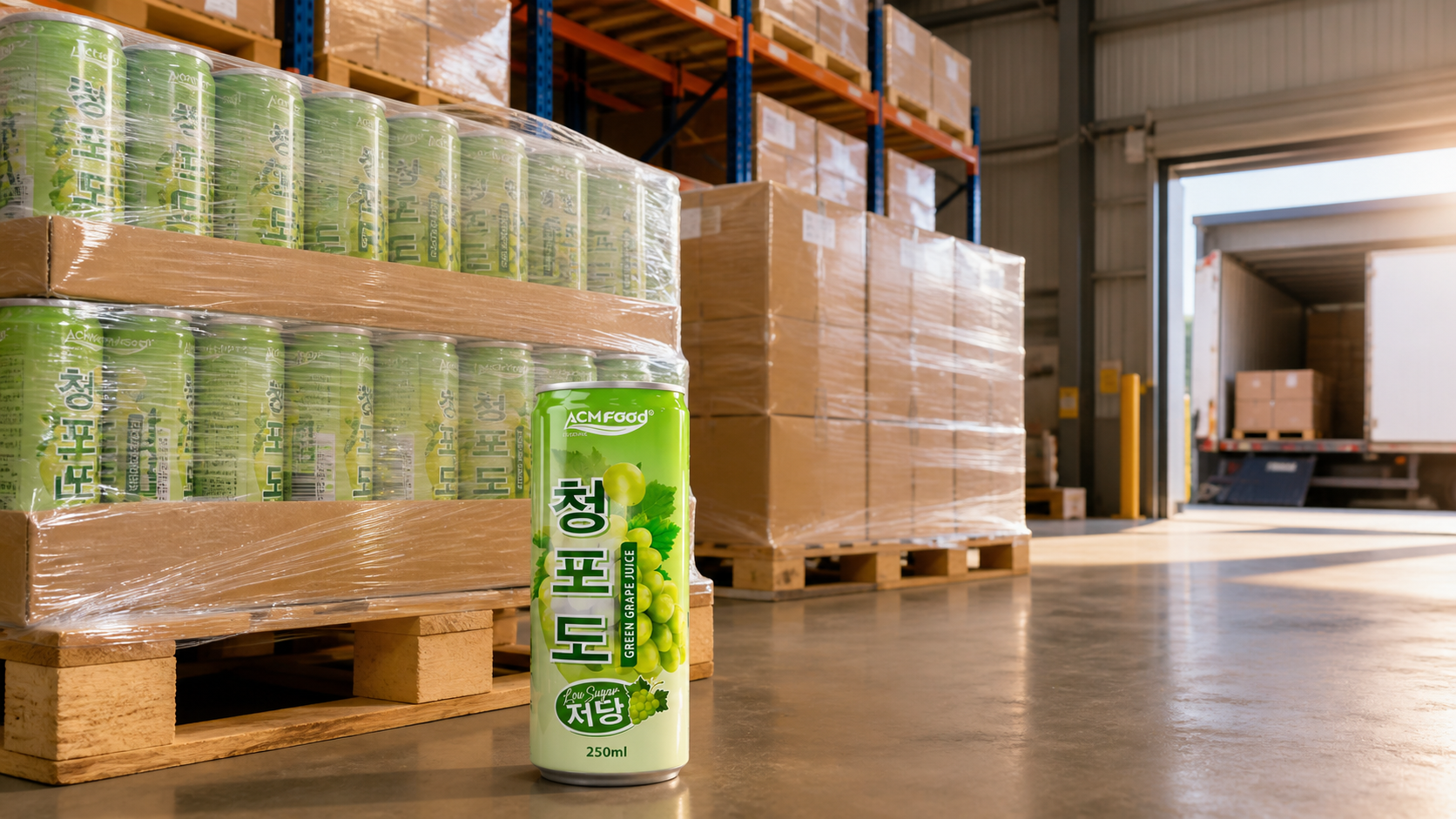
For how minimums work in one specific export market, see the beverage MOQ guide for Korean buyers.
FAQ: private label fruit juice MOQ
Sometimes. If flavors use the same bottle, cap, label substrate, and carton—and if labels can be digitally printed together—co-packers may combine volumes in one run or back-to-back runs. Process steps must be compatible to avoid extra changeovers.
Does changing label size or material affect MOQ?
Yes. Even a small change can trigger new dielines, print set-ups, or supplier MOQs. Lock the label substrate and size early, and use a single dieline across SKUs whenever possible.
Are pilot runs possible below standard MOQ?
Often, with trade-offs. You may accept digital labels, stock bottles, and flexible scheduling. Expect a higher unit cost and limited slot availability while you validate market fit.
Do white label products have lower MOQ?
They can. Using an existing specification and component set reduces development friction and component MOQs. Still, labels and cartons will carry their own print constraints.
How do seasonal fruits impact MOQ?
Seasonal sourcing can compress production windows, encouraging larger batches to secure supply. Align forecast and purchase plans to these windows or consider concentrates to extend availability.
What if I need multiple country labels?
Either design one compliant multi-market label or accept separate label versions—and their cumulative MOQs. Multi-market artwork often pays off at launch.
Will aseptic processing change MOQ?
Aseptic lines have distinct validation and cleaning cycles that can increase minimum practical run sizes. The trade-off is longer ambient shelf-life and wider logistics options.
How early should I finalize the Nutrition Facts?
Before label printing. For U.S.-bound products, align with the Nutrition Facts label for beverages guide and secure regulatory sign-off to avoid reprints.
Conclusion
Private label fruit juice MOQ is the result of packaging decisions, processing constraints, printed component realities, logistics choices, and commercial risk sharing. By prioritizing stock components, consolidating artwork, sequencing compatible flavors, and aligning shipments to pallet/container patterns, brands can lower initial commitments without undermining quality.
Start with a tight brief, validate labels early, and model scenarios that balance cost and inventory risk. If the U.S. or Australia is in scope, align labeling requirements from day one using the resources on private label beverages for U.S. brands and private label beverages for Australian brands. With these foundations, negotiating a supplier-friendly private label fruit juice MOQ becomes a structured, data-backed exercise rather than a guessing game.