


 Français
 Español
 العربية
 한국어
한국어A certificate of origin in Vietnam is an official document that states where a product is considered to originate for customs purposes. For beverage exports, it helps importers determine if a shipment qualifies for tariff preferences under a trade agreement or meets non-preferential origin requirements.
This guide explains how the certificate of origin (C/O) works for Vietnamese beverage shipments, when you need it, which forms apply (including Form D and Form E), how origin is determined, what documents to prepare, and what importers should verify to avoid delays.
What is a certificate of origin in Vietnam exports?
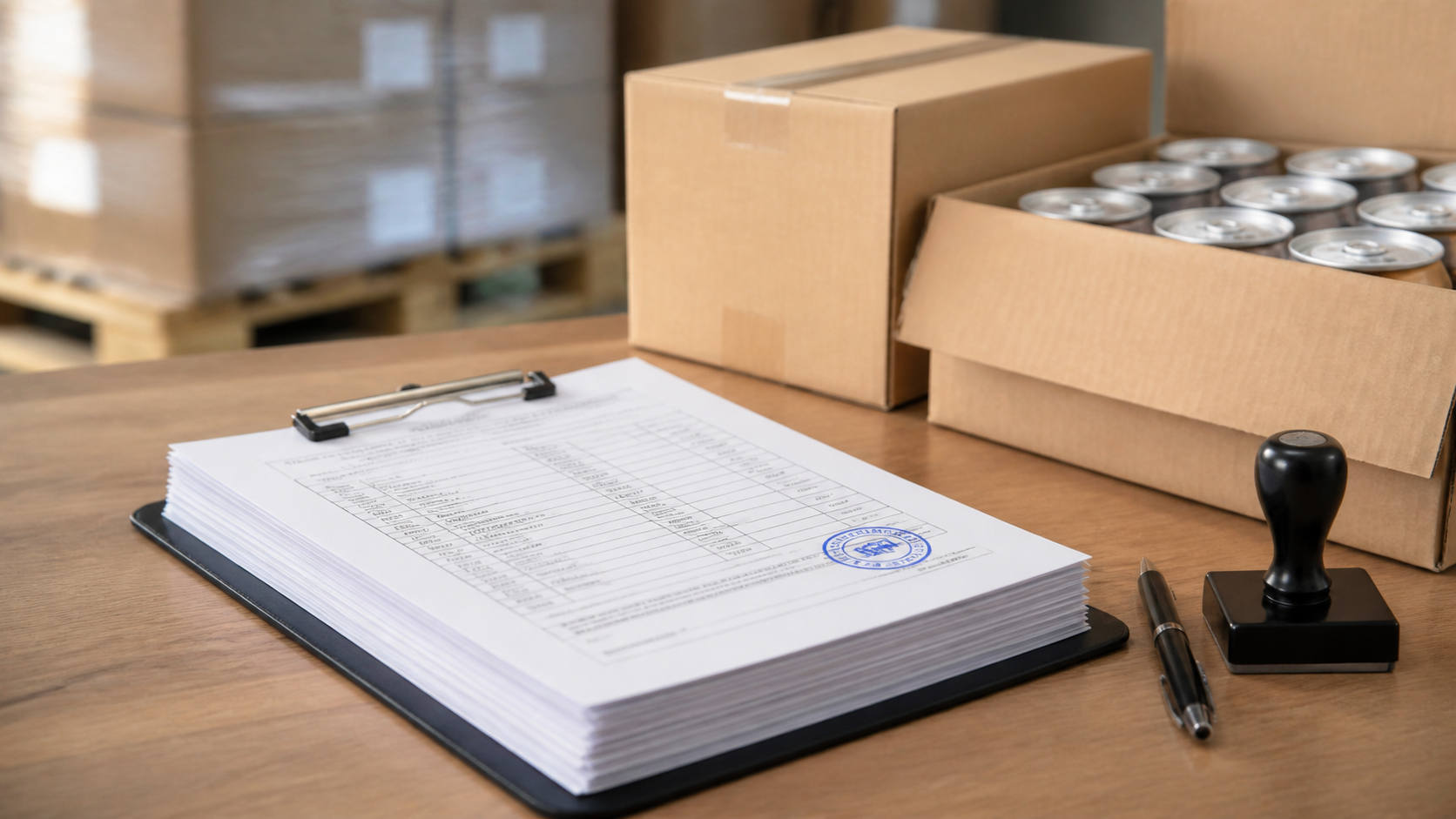
A Vietnam certificate of origin is an official proof of a product’s country of origin, issued by competent authorities authorized by Vietnam’s Ministry of Industry and Trade. It can be non-preferential (for general origin proof) or preferential (to claim lower duties under a trade agreement).
In beverage trade, importers and customs use the C/O to check both the declared origin and eligibility for reduced tariffs. The format, data fields and conditions depend on whether the shipment is under an FTA scheme or requires a general origin statement.
When do beverage shipments need a C/O?
You typically need a C/O when your buyer or the destination customs authority requests formal proof of origin, or when you want to claim preferential tariffs under an FTA. Some markets and customers accept other documents, but many require the official C/O on arrival.
Confirm C/O requirements early in contracting. Destination, HS code, product type (100% juice, nectar, juice drink, coconut water, ready-to-drink tea, etc.), and your customer’s customs broker all influence whether a C/O is mandatory, which form is accepted, and how it must be presented.
Preferential vs non-preferential origin for beverages
Non-preferential origin is used to state where goods come from without claiming an FTA benefit. Preferential origin is used when you want to claim reduced or zero tariffs under a specific agreement, provided the goods meet that agreement’s product-specific origin rules.
For beverages made in Vietnam, qualifying for preferential origin typically depends on ingredient sourcing and processing. Products using imported concentrates, flavors or sweeteners may still qualify if they meet the relevant transformation or value criteria of the destination agreement.
Which C/O forms apply to Vietnam?
Vietnam participates in multiple trade agreements. The exact proof-of-origin form depends on the agreement used for your shipment. Common examples include Form D under the ASEAN Trade in Goods Agreement (ATIGA) and Form E under the ASEAN–China FTA. Other agreements have their own formats or certification methods.
| Agreement / Route | Typical proof-of-origin document | Where commonly used for beverages | Positioning & notes |
|---|---|---|---|
| General trade (no FTA claim) | Non-preferential C/O (often called Form B) | When buyer or authority needs origin proof without tariff preference | States origin but does not grant preferential duty |
| ATIGA (intra-ASEAN) | Form D | Exports from Vietnam to ASEAN members | Preferential duty if product meets ATIGA rules |
| ASEAN–China FTA | Form E | Exports from Vietnam to China | Preferential duty if product meets ACFTA rules |
| RCEP (regional) | RCEP Certificate of Origin or accepted statement | Where both Vietnam and destination are RCEP parties | Check product-specific rules and local acceptance |
| CPTPP (regional) | Origin certification as provided under CPTPP | Shipments to CPTPP markets | Uses agreement-specific certification requirements |
Always confirm with the buyer and customs broker in the destination market which agreement and proof-of-origin format is applicable to your HS code and product type.

How to obtain a Vietnam C/O for beverages
The process centers on demonstrating that your product meets the origin rules and that shipment details match commercial and shipping documents. While procedures can vary by agreement and issuing authority, most beverage exporters follow steps like these:
- Confirm the HS code and FTA path. Verify the correct HS code for your beverage (e.g., fruit juices vs. other non-alcoholic drinks) and determine whether an FTA route is feasible and beneficial for your buyer.
- Check the product-specific rule of origin. Identify the rule that applies to your HS code under the chosen agreement (e.g., change in tariff classification, regional value content, or specific processing).
- Prepare origin evidence. Compile bills of materials, supplier declarations, ingredient invoices, production records, and cost breakdowns supporting the rule of origin.
- Align shipment documents. Ensure the commercial invoice, packing list, bill of lading/air waybill, and export declaration are consistent with the C/O application (names, addresses, quantities, weights, description, and HS code).
- Apply with an authorized body. Submit the C/O application to a Vietnam issuing body authorized by the Ministry of Industry and Trade, following the required format for the selected agreement.
- Obtain the C/O and share with buyer. After issuance, provide the original or electronic C/O as required by the destination authority and buyer for customs clearance.
If your beverage is produced by a contract manufacturer, ensure your supplier can share the necessary origin evidence confidentially. A thorough beverage factory audit in Vietnam helps confirm documentation readiness before you rely on preferences for pricing.
Key documents and information to prepare
While each authority and agreement has its own format, beverage exporters commonly prepare:
- Commercial documents: Commercial invoice, packing list, purchase order/contract, and, if available, a pro forma used for pre-approval.
- Shipping documents: Bill of lading or air waybill, and Vietnam export declaration details.
- Product & classification: Accurate HS code, product name and description matching labels and invoice lines.
- Origin support: Bill of materials, ingredient origin statements, production records, processing flow, and costed summaries aligned to the origin rule.
- Company registration: Exporter registration data and any prior approvals required by the issuing authority.
- Consistency checks: Names, addresses, weights, quantities, and dates must align across all documents and the C/O application.
If you manage end-to-end shipments, coordinate document timing with your forwarder. For broader planning around freight and paperwork, see our overview of export and logistics for beverages.
Origin calculation methods used in FTAs
Most agreements use one or a combination of origin tests. Your beverage can qualify under any rule that the product-specific note allows. Common methods include:
- Change in tariff classification (CTC): The finished product must fall in a different tariff heading or subheading than certain non-originating inputs.
- Regional value content (RVC): The value added in originating countries must reach at least a specified threshold. Calculations require consistent cost data and exchange-rate handling as defined by the agreement.
- Specific processing: Some rules require certain manufacturing or processing operations within the region.
- De minimis tolerances: Limited non-originating content may be ignored if it stays within the agreement’s tolerance, subject to exclusions.
Which test applies, and how it is calculated, depends entirely on the agreement and the product-specific rule for your HS code. For beverages, ingredients like fruit concentrates, coconut water, sweeteners, flavors and packaging often drive the analysis.
Common mistakes and how to avoid rejections
Many C/O issues are preventable with careful alignment. Frequent pitfalls include:
- Inconsistent descriptions: Product names or HS codes differ between invoice, packing list, and C/O.
- Mismatched quantities or weights: Figures do not align across shipping documents and the C/O.
- Insufficient origin evidence: Bills of materials or supplier declarations do not fully support the claimed origin rule.
- Wrong agreement or form: Applying for a C/O under an agreement that does not match the destination or buyer’s customs approach.
- Late or missing originals/e-docs: Buyer’s customs cannot validate the proof in time for clearance.
- Typographical errors: Incorrect exporter/importer names, addresses, or dates that reduce confidence in the document.
Build a pre-shipment checklist with your manufacturer and forwarder. Clarify who is responsible for application, review, handover, and any post-issuance corrections if needed.
What importers should verify on a Vietnam C/O
Importers can speed clearance by validating the C/O before arrival. Key items to check:
- Correct form and agreement: Ensure the form (e.g., Form D or Form E) matches the negotiated tariff program and destination rules.
- Exporter & consignee details: Names, addresses, and tax IDs match the commercial invoice and entry documents.
- Product lines: Descriptions and HS codes are consistent across C/O, invoice and packing list.
- Quantities & weights: Totals align with the bill of lading/air waybill.
- Signatures, stamps, dates: The C/O is executed properly and valid for the import window.
- Corrections or re-issuance: Any amendments comply with the destination’s acceptance rules.
Remember, the C/O interacts with labelling obligations in the destination market. For guidance on origin labeling requirements, see country-of-origin marking for beverages in the U.S. and country of origin labelling for beverages in Australia.
Product & supply-chain considerations that affect origin
Decisions made during product development can determine whether a beverage qualifies for preferences later. Consider:
- Ingredient sourcing: Choice of fruit concentrates, coconut water, sweeteners, acids, and flavors can influence whether the origin rule is satisfied.
- Processing flow: Filtration, blending, thermal processing, and packaging steps may or may not satisfy a specific processing rule.
- Packaging origin: For some rules, containers and closures are counted; for others, they may be treated differently. Check the applicable note.
- Documentation systems: Maintain traceable records from inbound materials through finished goods to support origin claims.
If you are developing a new SKU with a Vietnam partner, align on origin strategy at brief stage. Our page on OEM beverage manufacturing outlines how to translate formula choices into viable commercial specifications.
Positioning C/O in pricing, lead time and Incoterms
Because tariff treatment can affect landed cost, the C/O path should be priced and scheduled into your deal structure. Agree on who applies for the C/O, who holds responsibility for accuracy, and how originals or e-docs will be delivered according to Incoterms. Add buffers for reviews and, when necessary, corrections or re-issuance.
For an end-to-end view of documents, cargo booking and handover, consult the overview of export and logistics and align your forwarder’s cutoffs with your manufacturer’s document cycle.
How C/O interacts with HS codes for beverages
Different beverage categories can sit in different HS chapters or headings (for example, certain fruit juices vs. other non-alcoholic beverages). The product-specific origin rule you must meet depends on the correct HS classification. Consistency between HS code selection, formula, and processing steps prevents origin surprises during customs review.
Handling updates, replacements and e-C/O
Some authorities allow corrected or replacement certificates when minor errors are discovered, provided procedures are followed. Many jurisdictions also accept electronic certificates or verification via secure platforms. Verify the acceptable format with your buyer’s customs broker ahead of time and ensure that any digital C/O matches shipment documents exactly.
Coordinating with buyers and forwarders
Agree on the target agreement (if any), the party responsible for the application, and the documentary package well before cargo readiness. Keep a single source of truth for product descriptions and HS codes, and run a final document alignment check before the C/O is submitted. These habits reduce the risk of holds and post-entry queries.
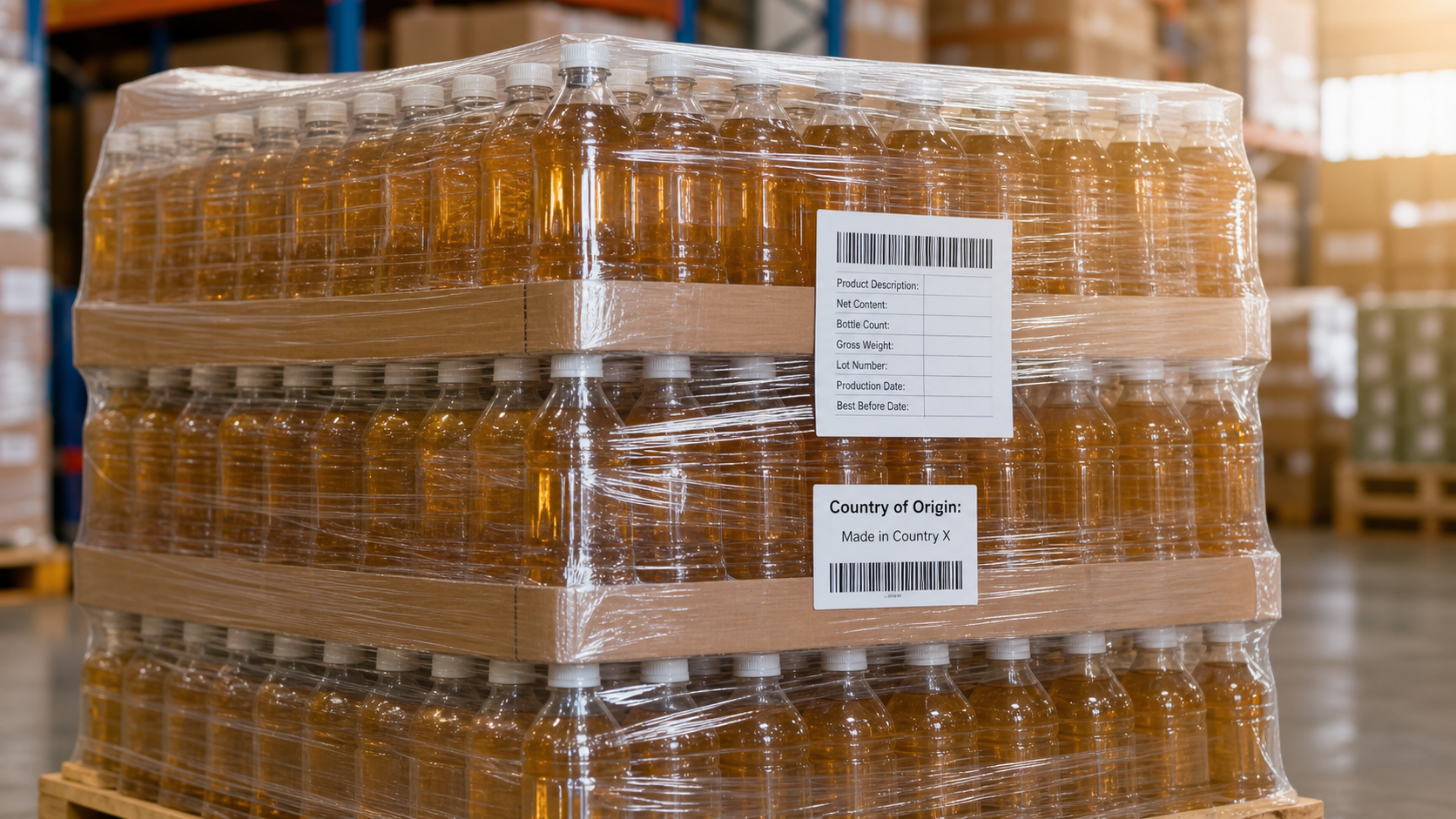
FAQ: certificate of origin Vietnam for beverages
Do all beverage shipments from Vietnam require a C/O?
No. A C/O is generally required when your buyer or destination customs asks for it, or when you claim preferential duty under a trade agreement. Some shipments clear without a formal C/O, but buyers often prefer it for consistency.
Is Form D the same as a general certificate of origin?
No. Form D is specific to the ASEAN Trade in Goods Agreement and is used to claim ATIGA preferences. A non-preferential C/O (often called Form B) is used to prove origin without claiming an FTA benefit.
What about Form E?
Form E is typically associated with the ASEAN–China FTA. It is used when a qualifying shipment from Vietnam to China claims preferential duty under that agreement.
Can a beverage made with imported concentrate qualify for preferences?
Possibly. Eligibility depends on the product-specific rule (e.g., a change in tariff classification, a regional value content threshold, or a required process). You must analyze your formula and processing against the chosen agreement.
Should we wait to plan origin until after the first shipment?
It is better to plan early. Align HS code, ingredients, processing steps and documentation during product development so your commercial pricing can reflect the intended duty treatment.
Key takeaways
A well-prepared certificate of origin from Vietnam supports smooth beverage imports and, where applicable, preferential duties. Success depends on correct HS classification, the right agreement and form (e.g., Form D or Form E), and tight alignment across commercial, shipping and origin documents. Build origin strategy into product development and logistics to protect pricing and timelines for your beverage brand.
If you are mapping out your document flow, labeling and shipping plan, see our articles on export & logistics for beverages, country-of-origin marking for the U.S., and country of origin labelling for Australia for market-specific considerations. When you develop new SKUs, align early with your manufacturer on origin evidence and the applicable certificate of origin Vietnam requirements.
Compliance and shipping at ACMFOOD
For the certificates and food safety systems buyers and customs ask us to produce, see certifications and food safety systems. For shipping terms, the document pack and container planning, see export and logistics. To discuss a specific market, request a quote.
Request a quote