


 Français
 Español
 العربية
 한국어
한국어rPET (recycled polyethylene terephthalate) is PET plastic that has been recovered after use, sorted, cleaned, and reprocessed into material that can be formed into new products, including beverage bottles and caps depending on the application. In beverages, rPET most commonly refers to post-consumer recycled (PCR) PET used in preforms and bottles.
This guide explains what rPET is, how it is made, where it fits versus other packaging, and the key design, quality, and labeling considerations for beverage brands. Because resin quality, recycling technology, and regulations vary by market, treat rPET selection and claims as project-specific decisions supported by testing and local compliance checks.
What is rPET?
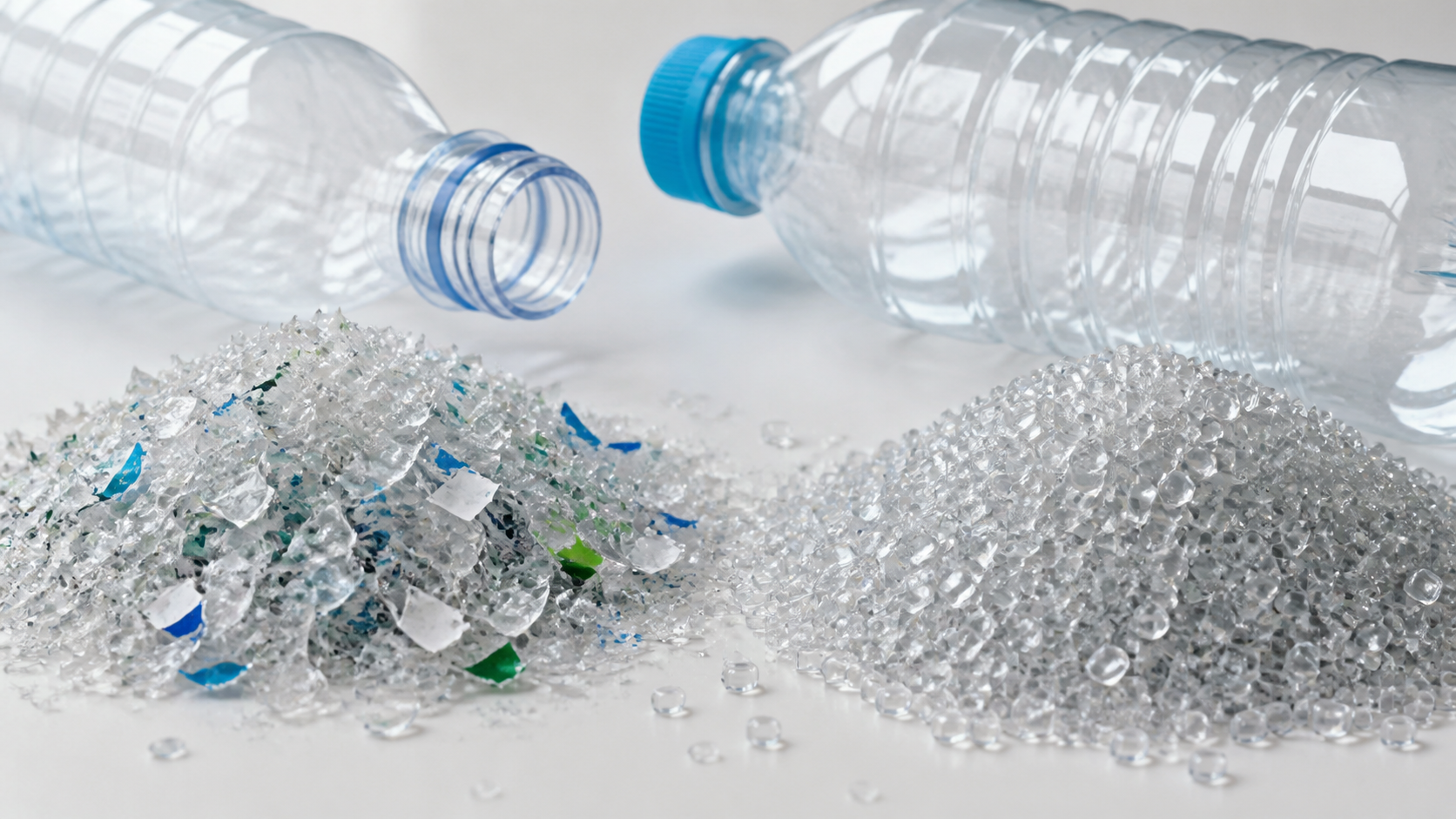
rPET is recycled PET plastic made by processing used PET (typically bottles) into new material that can be used again. For beverages, rPET is often blended with virgin PET to achieve the desired clarity, strength, and regulatory compliance, and in some cases bottles can be produced with very high recycled content.
What does rPET mean in beverage packaging?
In beverage packaging, rPET usually means PCR PET used in bottle preforms and blown bottles. The term can also appear on labels as “contains recycled plastic” or “made with recycled PET”, referring to the percentage of PCR used. The exact claim, allowable wording, and verification method depend on the destination market’s regulations and standards.
How is rPET made?
Recycled PET can be produced through mechanical or chemical routes. Mechanical recycling is the most common for beverage bottles: it recovers PET via sorting, washing, flake production, decontamination, and pelletizing. Chemical recycling breaks PET down to its building blocks (e.g., monomers) and rebuilds PET; while less common at scale, it aims to deliver resin quality closer to virgin PET.
- Collection & sorting: Used PET (bottles and sometimes thermoforms, depending on the system) is collected and separated from other materials.
- Washing & flaking: Labels, caps, and contaminants are removed; PET is washed and cut into flakes.
- Decontamination: Food-contact–intended rPET undergoes high-performance decontamination steps to reduce potential contaminants.
- Pelletizing or SSP: Flakes may be pelletized; solid-state polycondensation (SSP) can help restore intrinsic viscosity (IV) and improve properties for bottle-grade use.
- Preforms & bottles: rPET is processed into preforms (often blended with virgin PET) and blown into bottles under controlled conditions.
Is rPET safe for beverage bottles?
Yes—when the rPET resin and the recycling process meet food-contact requirements for the target market and when the final bottle passes relevant migration and performance tests. Compliance pathways and terminology differ by region (for example, approvals or opinions from authorities such as those in the EU or the U.S.), so brands should confirm supplier documentation and perform application-specific testing.
What are the pros and cons of rPET for beverage brands?
Recycled PET offers clear sustainability and branding advantages, balanced by design and supply considerations that must be managed in development and procurement.
- Advantages
- Supports circularity by using post-consumer material and reducing demand for virgin PET.
- Can help brands communicate credible packaging progress when claims are substantiated.
- Bottle performance can be tuned via resin selection, IV, blends, and process settings.
- Lightweighting strategies developed for PET can often be applied to rPET blends.
- Considerations
- Appearance: rPET may introduce slight tint or haze versus virgin PET; target clarity requires careful resin and color masterbatch selection.
- Supply consistency: PCR supply and pricing can be more volatile; require robust sourcing and quality monitoring.
- Processing window: Preform and blow molding parameters may need optimization for rPET blends.
- Compliance & claims: Documentation, traceability, and accurate on-pack wording are essential and market-dependent.
How much recycled content can a bottle use?
Successful bottles can range from partial to very high recycled content; the feasible percentage depends on resin quality, decontamination performance, IV, color targets, mechanical needs (top-load, drop), product type (still vs. carbonated), shelf-life requirements, and regulatory allowances. The practical approach is to run trials with the intended product and line conditions to determine the optimal PCR level.
Design considerations to make rPET bottles perform well
Good outcomes with rPET start with a design and process that respect the material’s characteristics. These points commonly improve consistency:
- Clarity & color management: Specify target appearance early. Use appropriate color masterbatch and consider UV absorbers as permitted. Agree on acceptable tint and haze ranges with suppliers.
- Preform design: Gate design, wall distribution, and preform weight affect stretch ratios and clarity. Validate for still vs. CSD needs.
- Resin specification: Define IV range, contaminant limits, pellet or flake spec, and decontamination process for food contact.
- Process settings: Optimize drying, reheat, stretch-blow parameters, and cooling to minimize haze and achieve consistent wall thickness.
- Barrier & shelf life: For oxygen- or CO2-sensitive beverages, consider barrier strategies (e.g., blends, coatings, scavengers) consistent with market rules.
- Label, closure, and sleeve: Ensure labels and closures are compatible with recycling guidelines in the sale market to support circularity.

rPET vs virgin PET, cans, glass and cartons
Each packaging material brings distinct performance, sustainability attributes, and consumer perceptions. Use this qualitative table to frame early decisions and then validate with market-specific data and trials. For a deeper overview across materials, see our beverage packaging options compared.
| Material | Overview | Strengths | Limitations | Typical beverage use | Positioning & notes |
|---|---|---|---|---|---|
| Virgin PET | Food-grade PET resin made from fossil or bio-based feedstocks. | High clarity, consistent properties, broad line compatibility. | Relies on virgin inputs; perception challenges vs. recycled. | Water, CSD, RTD tea/coffee, juices, functional drinks. | Lightweight, shatter-resistant, widely recycled (market-dependent). |
| rPET | Reprocessed PET from post-consumer sources for new packaging. | Supports circularity; can approach PET clarity with right spec. | Potential tint/haze; variable supply; requires robust QA. | Many still beverages; growing use in CSD with tuned specs. | Claims must be accurate and compliant; validate on-pack text. |
| Aluminum cans | Metal container with very high recycling rates in some markets. | Excellent barrier, portability, rapid chilling. | Opaque (no product visibility); format-dependent line needs. | CSD, energy, beer, cocktails, functional beverages. | Strong on-the-go appeal; premiumization via printing finishes. |
| Glass | Inert, transparent container with premium look & feel. | Excellent product protection; strong premium cues. | Heavier, breakable; logistics & CO2 trade-offs. | Juices, mixers, premium RTDs, kombucha. | Great shelf presence; consider returnable systems where viable. |
| Cartons | Paper-based composite with liner(s); recycling depends on market. | Lightweight, printable surfaces, ambient options. | Complex recycling streams; opaque to product. | Juices, dairy alternatives, ambient beverages. | Communicate responsibly about recyclability by region. |
Quality and sourcing checklist for rPET resin and preforms
Set clear specifications with suppliers and verify them through trials and ongoing QA. Consider including the following elements in your product brief and supplier agreements:
- Food-contact documentation: Evidence that the recycling process and resin are intended for food-contact use in your destination market(s).
- Material spec: Intrinsic viscosity (IV) range, pellet/flake format, moisture limits, contaminant controls, and decontamination method.
- Color and haze targets: Define acceptable appearance metrics and masterbatch usage that meet brand standards.
- Mechanical performance: Top-load, drop, torque, and capping performance validated under your product and line conditions.
- Migration testing: Where applicable, migration/sensory assessments with your beverage, closure, and label.
- Traceability & PCR verification: Transparent chain-of-custody and recycled content substantiation aligned to local claim rules.
- Process reproducibility: Preform dimensional controls and blow-molding settings documented for consistent outcomes.
Labeling, claims and on-pack communication
Consumers value clarity. Use terms precisely and in line with regulations:
- “Recycled” vs. “Recyclable”: “Recycled” refers to content already recovered and reused (PCR), while “recyclable” indicates the packaging can be collected and processed for recycling in applicable systems.
- Percentage claims: Any stated recycled content should be truthful, verifiable, and supported by documentation.
- Logos and icons: Use only marks you are authorized to use and that are recognized or permitted in your market.
- End-of-life guidance: Consider simple disposal or recycling instructions that match local infrastructure and rules.
Sustainability metrics that matter with rPET
rPET is one lever in a broader sustainability strategy. Balance these dimensions during design and procurement:
- Recycled content (PCR): Specify levels that achieve material goals without compromising performance or compliance.
- Lightweighting: Reduce resin mass where feasible while maintaining required strength and consumer experience.
- Recyclability in market: Use label, adhesive, and closure systems that support bottle-to-bottle recycling flows.
- Transport efficiency: PET formats are generally light and space-efficient; optimize case, pallet, and container layouts.
- Line energy and waste: Minimize blow-molding rejects and rework through robust process control.
Product development and cost optimization tips
Successful rPET programs combine design, resin selection, and operations discipline. For practical guidance on reducing cost while elevating shelf impact, see our PET bottle innovation guide. Additional tips include:
- Lock critical-to-quality metrics: Define CTQs (appearance, top-load, burst, torque) and test at lab, line, and distribution levels.
- Pilot early with real product: Test with actual beverage, closure, and label to capture interaction effects.
- Plan for resin variability: Agree on change control and alternative lots to maintain continuity without surprises.
- Integrate artwork with DfR: Label and sleeve choices can enable or hinder recycling; align early with recyclability guidelines.
Regional and channel notes
Recycling systems and packaging norms vary by market. Tailor your approach to local infrastructure and retail expectations:
- Australia: Align bottle, closure, and label choices with local collection and sorting capabilities. See packaging options for Australia and scan beverage trends in Australia when positioning your format.
- United States: Requirements and infrastructure can differ by state or municipality; align claims and MRF compatibility across your primary markets. For channel planning, explore private label beverages for U.S. brands.
When to choose rPET vs other formats
Choose rPET when transparency, lightweighting, and circularity messaging are priorities and when your market supports PET recycling. Consider cans for robust barrier and on-the-go consumption, glass for premium cues and inertness, and cartons for ambient distribution scenarios. Match the package to product needs, channel, consumer expectations, and the claims you can substantiate in your destination markets.
Project checklist for brand teams
Use this quick checklist to prepare your rPET brief and reduce development risk:
- Define target look and feel (clarity, tint, label style) and the desired recycled content range.
- Lock functional requirements: still vs. carbonated, shelf-life, seal integrity, top-load, distribution environment.
- Gather compliance needs for all sales markets, including food-contact documentation and claim wording.
- Request resin and preform specs, plus samples for lab and line trials; plan sensory checks with your beverage.
- Align artwork, label, sleeve, and closure with recyclability guidelines for your market(s).
- Validate on real lines at pilot and production speeds; document process windows to control variability.
- Establish ongoing QA monitoring and a change-control protocol for resin and suppliers.
For a holistic materials view beyond PET and rPET, see our cross-format overview: beverage packaging options compared.
FAQs about rPET for beverages
Does rPET look different from virgin PET?
It can. Some rPET lots show a slight tint or higher haze versus virgin PET. With the right resin, color masterbatch, and process control, many brands achieve clarity close to virgin—confirm acceptable appearance in your brand standards and QA specs.
Can rPET be used for carbonated drinks?
Yes, provided the resin, preform design, and blow-molding parameters meet the mechanical and barrier needs of your product, and the bottle passes required performance tests. Pilot trials with your beverage and closure system are essential.
Is 100% rPET possible for bottles?
High recycled content is achievable in some applications. Feasibility depends on resin quality, decontamination process, performance requirements, and regulatory allowances. Many teams determine the optimal percentage through iterative trials.
What about labels, sleeves, and closures?
Choose components that support recycling in your target markets (e.g., compatible adhesives, floatable labels, or sleeves with appropriate perforations as applicable). Components should also meet your performance needs and brand look.
Where can I learn more about packaging strategy?
For inspiration on format selection, cost, and branding, explore the deep-dive on beverage packaging options compared and the playbook on PET bottle innovation guide.
Conclusion
In short, rPET is recycled PET that, when specified and processed well, can deliver bottles with strong aesthetics and performance while advancing circularity goals. Because resin quality, regulations, and infrastructure differ by market, validate food-contact documentation, run application-specific trials, and ensure on-pack claims are accurate and verifiable. If your brief calls for transparency, lightweighting, and credible sustainability messaging, rPET deserves a place on your shortlist alongside cans, glass, and cartons—then let testing decide. For regional choices and positioning, see packaging options for Australia and our read on beverage trends in Australia.