Français
 Español
 العربية
 한국어
한국어Cold aseptic filling is a process in which a drink is sterilised by a short, controlled heat treatment, cooled, and then filled into a pre-sterilised container inside a sterile zone, so the pack itself never has to be heated with the product inside. The result is a shelf-stable drink that has seen less heat than hot fill or retort.
This guide explains how cold aseptic filling works, how high-acid and low-acid products differ, what the validation involves, where lightweight PET fits and when aseptic is more process than a simple juice needs. It is written for brand owners and sourcing teams comparing routes for an ambient-stable drink. The wider range of heat treatments is summarised on the page about beverage processing technology choices.
What is cold aseptic filling?
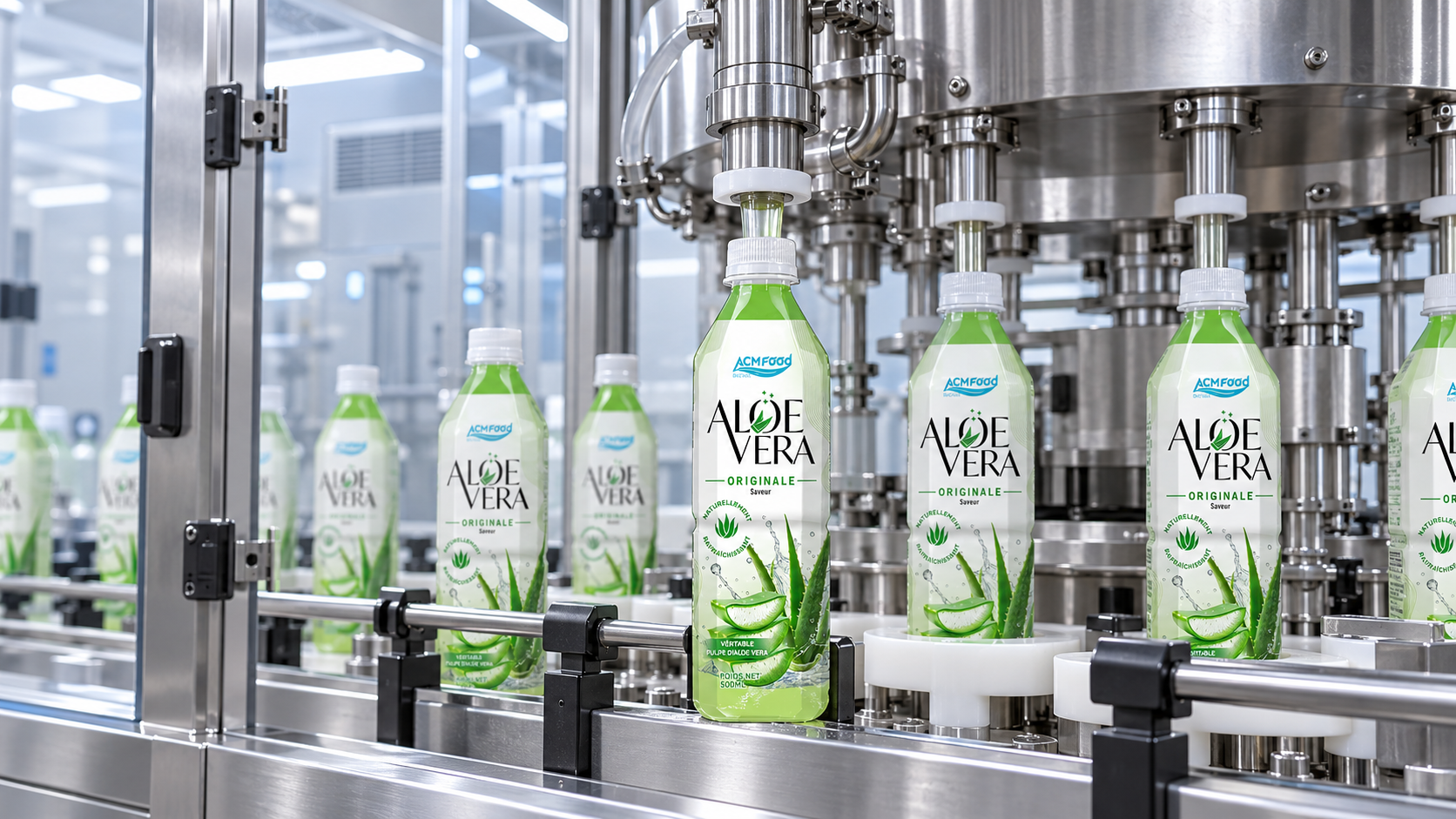
Cold aseptic filling separates the sterilising of the product from the filling of the pack. The drink is sterilised in a heat exchanger, cooled to a low temperature, and filled into a container and closure that were sterilised beforehand, all in a controlled sterile environment.
The word cold describes the temperature at filling, not the process as a whole, because the product still receives a heat treatment before it is cooled. What changes against hot fill is that the heat is applied to a thin stream of liquid for a short time instead of to a filled pack for a long one. The goal is the same as in other thermal routes, namely a product that is commercially sterile, a term defined in United States regulation as free of microorganisms capable of reproducing in the food under normal non-refrigerated storage and distribution, and free of viable microorganisms of public health significance.
How does a cold aseptic filling line work?
A cold aseptic line works in six stages: sterilise the product, hold and cool it, sterilise the container and closure, fill in a sterile zone, seal, and check the pack. Each stage has its own controls, and a failure in any one of them can compromise the whole batch.
- Product sterilisation. The drink passes through a plate, tubular or direct heating system using HTST or UHT conditions validated for the recipe.
- Cooling. The sterile product is cooled in a closed system and held in a sterile buffer tank, protected by sterile air or gas.
- Container sterilisation. Bottles or preforms and their caps are sterilised with a chemical sterilant, steam or another validated method and then rinsed or dried.
- Sterile filling. The filler sits inside a zone with filtered air under positive pressure, so that unsterile air cannot enter while the container is open.
- Sealing. Caps are applied inside the sterile zone and checked for torque and seal integrity.
- Verification. Samples from the run are incubated and tested, and the batch is released only once the records and results are complete.
The filler is the point where a sterile product meets a sterile container, so the whole path is treated as one system. Pipes, tanks and valves are cleaned and then sterilised before production starts, and the filling zone is held under positive pressure with filtered air. If any of these conditions is lost during a run, the affected packs are normally held and investigated instead of being released.
The sterilant chosen for the container matters because residues must be controlled. In the United States, for example, hydrogen peroxide used to sterilise food packaging material is not considered compliant if more than 0.5 part per million can be determined in distilled water packaged under production conditions.
How do high-acid and low-acid aseptic products differ?
High-acid aseptic products, with a finished pH of 4.6 or below, rely on acidity to help control spoilage, while low-acid aseptic products, above pH 4.6, depend on heat alone and fall under stricter rules. The recipe pH therefore sets how demanding the process and the paperwork will be.
| Aspect | High-acid aseptic | Low-acid aseptic |
|---|---|---|
| Finished pH | 4.6 or below | Above 4.6, with water activity above 0.85 |
| Typical drinks | Juice, nectar, acidified tea, isotonic drinks | Milk drinks, plant-based drinks, coffee, plain tea, coconut water |
| Heat step | HTST or UHT, scaled to acid-tolerant organisms | UHT, scaled to heat-resistant bacterial spores |
| Regulation in the United States | Usually outside the low-acid canned food rules | Covered by the low-acid canned food regulations, including process filing |
| Validation effort | Moderate | High, with a process authority and written scheduled process |
| Failure consequence | Spoilage, off flavour, recall risk | Spoilage plus potential public health risk if botulinum-type spores survive |
The pH decision is explained in more depth on the page about choosing a filling technology by pH, and the product side of non-acid drinks is covered in the guide to low-acid beverage formulation and packaging.
Why does aseptic filling often give a fresher flavour?
Aseptic filling often gives a fresher flavour because the product is heated only briefly in a heat exchanger and then cooled quickly, instead of being kept hot in the pack. Less time at high temperature means less cooked taste, less colour change and fewer changes in heat-sensitive aroma compounds.
- Short heat exposure reduces the cooked note that long holds can cause in citrus, berry and tea flavours.
- Rapid cooling before filling limits colour shift and vitamin loss compared with a slow cool-down in the pack.
- Delicate dairy and plant-based drinks keep a cleaner taste than they would after in-container sterilisation.
- The effect still depends on the recipe, because some products are not flavour limited by heat at all.
Flavour is a benefit to test, not a guarantee. A blind tasting of a hot fill sample and an aseptic sample of the same recipe, after storage, is the most reliable way to see whether the difference justifies the extra process.
How does aseptic filling change packaging choices?
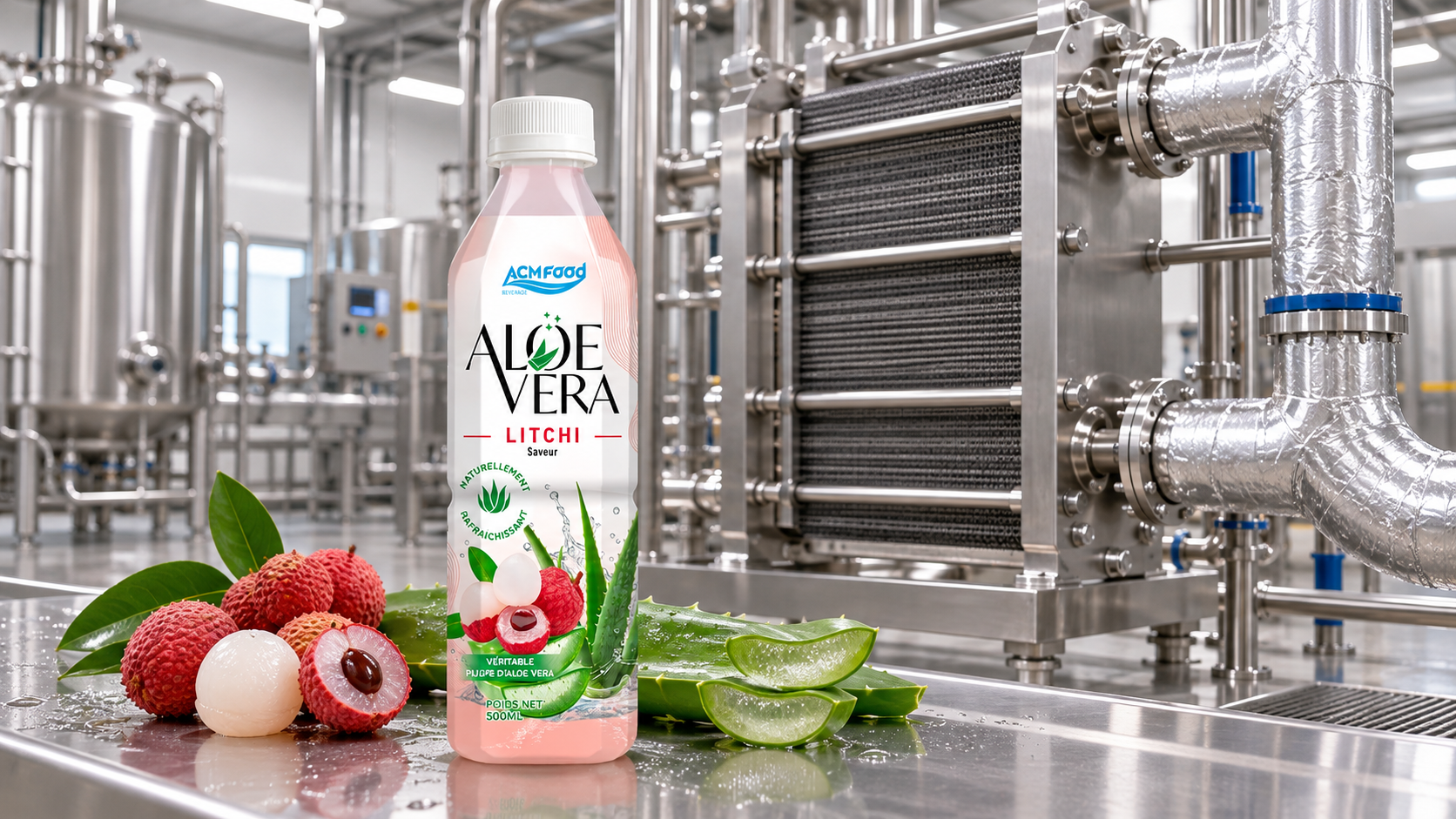
Aseptic filling changes packaging because the container is not heated with the product, so it does not need heat-set resin, and lighter bottles become possible. The container only has to survive sterilisation, filling pressure and the supply chain, and the closure must still seal reliably.
- PET bottles can be lighter than heat-set bottles, which can reduce resin use and shipping weight.
- Barrier needs depend on the drink. Milk-based and vitamin-rich drinks may need oxygen and light protection beyond standard PET.
- Cartons, pouches and other formats can also be filled aseptically, but each requires its own equipment and sterilisation method.
- Closures and liners are sterilised too, so their material and geometry must suit the chosen method.
An overview of the options for export is given on the page that compares cans, PET, glass and carton packaging.
What makes aseptic filling harder to validate?
Aseptic filling is harder to validate because several independent systems must all work: the product sterilizer, the container sterilisation, the sterile air, the filling zone and the seal. A validation has to show that each one performs consistently and that the combined line produces commercially sterile packs.
- Product sterilizer. Temperature, flow and hold time are measured and recorded against the scheduled process.
- Container and closure sterilisation. Challenge tests show a defined microbial reduction on the container surface.
- Sterile environment. Air filtration, pressure differences and cleaning cycles are verified.
- Cleaning and sterilising in place. Product lines and tanks are cleaned and sterilised before every production run.
- Packaging integrity. Seal strength and leak tests are repeated during the run.
- Release testing. Packs are incubated and inspected before shipment.
In the United States, the regulation on low-acid canned foods includes specific requirements for aseptic processing and packaging systems, such as temperature-indicating devices on the product sterilizer. Incubation test methods in FDA guidance use incubators set at temperatures such as 30, 35 and 55 degrees Celsius to look for mesophilic and thermophilic growth.
When is aseptic filling more than a simple juice needs?
Aseptic filling is more than a simple juice needs when a high-acid recipe can already be made safe and stable with hot fill or tunnel pasteurisation. In that case aseptic adds equipment cost, validation work and operating complexity without a flavour gain that consumers can notice.
The decision is easier to make with a side-by-side look at the two routes, as set out in the comparison of aseptic filling and hot fill. Aseptic is usually justified when the product is low-acid, when heat-sensitive flavour is central to the brand, when the pack cannot take heat or when lightweight bottles are part of the cost plan.
What should a buyer ask for in an aseptic project?
A buyer should ask for the product pH and water activity, a written scheduled process, container sterilisation and residue data, a validation summary, batch records and release results. Together these show that the line is controlled and that each batch has been checked before it ships.
- Product pH and water activity. Confirm the finished range and the acidification method.
- Process authority letter. A written scheduled process for the product and container, for low-acid products in particular.
- Sterilant and residue data. The method used for the container and the residue results.
- Validation summary. Evidence for product sterilizer, container sterilisation and filler environment.
- Batch records. Temperature, flow, pressure and cleaning logs for each production run.
- Release results. Incubation and inspection results per batch.
- Shelf life evidence. Stored samples tested for flavour, colour and microbiology.
FAQ about cold aseptic filling
Is cold aseptic filling the same as cold filling?
No. In cold aseptic filling the product is first sterilised by heat and then filled cold into a sterile pack. Simple cold filling without a sterilising step would not make the drink shelf stable.
Does aseptic filling need preservatives?
Not by default. A properly sterilised and sealed drink can be stable without preservatives. Whether one is used depends on the recipe, the market and the target shelf life.
Can aseptic filling be used for carbonated drinks?
It is rarely used for carbonated drinks, which are acidic and usually filled cold with other controls. Aseptic lines are generally set up for still drinks.
Why are aseptic lines expensive?
The line needs a product sterilizer, a sterile filling zone, container sterilisation and extensive controls. Cleaning, validation and operator training add to the cost.
How long can an aseptic drink last at room temperature?
The tested shelf life depends on the product, pack and storage. It is confirmed with stored samples during development instead of being taken from the process name.
Choosing between aseptic and other routes
Cold aseptic filling is a good fit for low-acid drinks, heat-sensitive recipes and lightweight packs, provided that validation and records are in place. For a simple acid juice, a hot fill or tunnel route may meet the same shelf life with less complexity.
Brands and importers can send a drink specification with the target market, and ACMFOOD will confirm which processing route fits the product, the pack and the shelf life requirement.
Sources
- Cornell Law School (Legal Information Institute) — 21 CFR 113.3, definitions of commercial sterility and low-acid foods
- Cornell Law School (Legal Information Institute) — 21 CFR 113.40, equipment and procedures for heat processing systems, including aseptic systems
- Cornell Law School (Legal Information Institute) — 21 CFR 178.1005, hydrogen peroxide solution for sterilising food packaging
- U.S. Food and Drug Administration — Bacteriological Analytical Manual, Chapter 21A: Examination of Canned Foods