


 Français
 Español
 العربية
 한국어
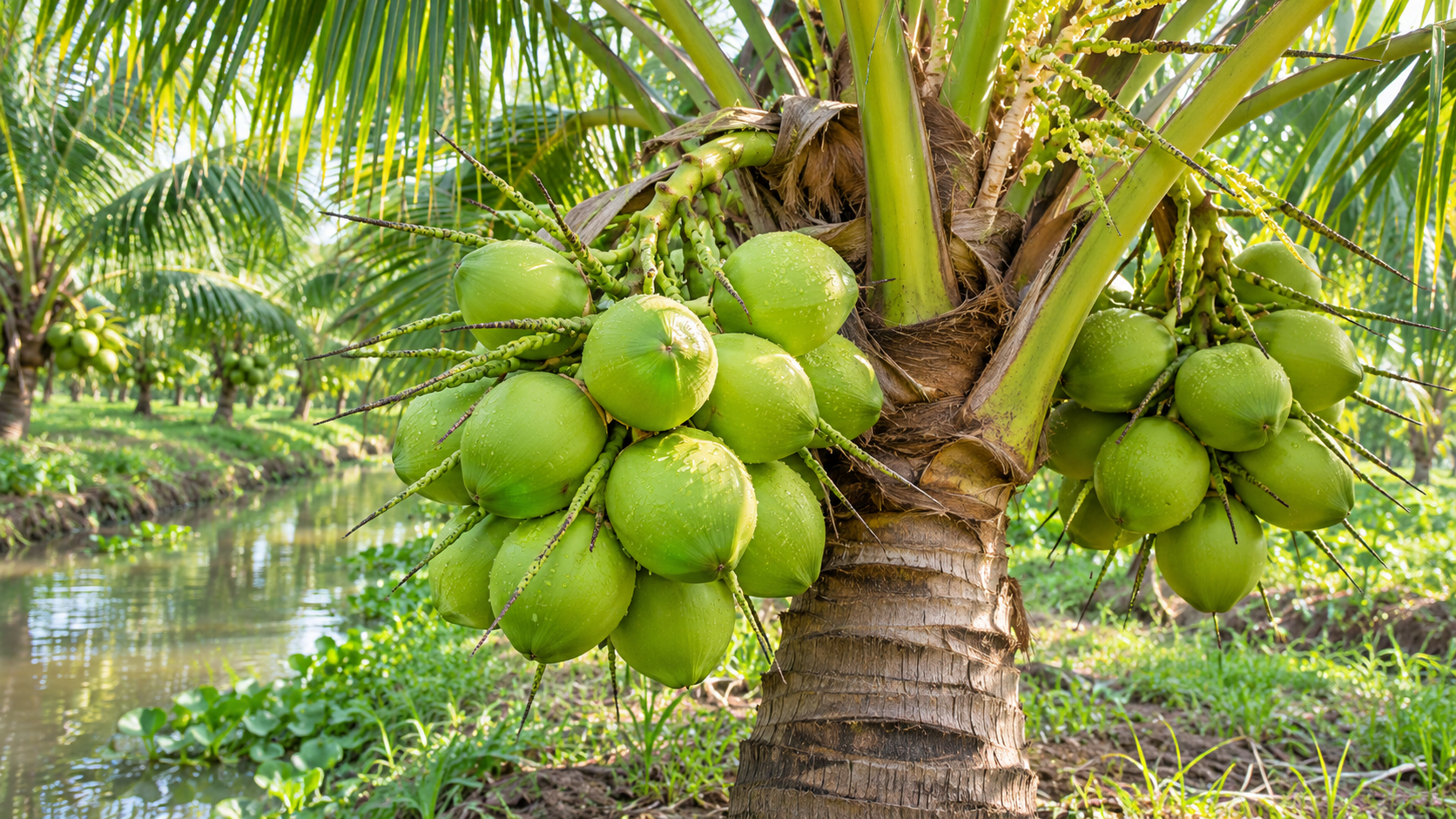
Coconut varieties for coconut water differ in sweetness, aroma, water volume and the stage at which they are best harvested, and these differences carry through into the taste of the finished can or bottle. In Vietnam, the varieties most discussed for drinking are the Xiem group, including Xiem xanh and the aromatic Xiem dua, and the local tall coconut known as Dua ta.
This article compares those varieties and the broader dwarf and tall palm types, explains why harvest age matters, and shows how variety affects Brix and flavour in packaged coconut water. It is written for brand owners and importers who want to understand what sits behind a coconut water specification. ACMFOOD produces coconut water from Vietnamese coconuts, and variety selection is part of how a consistent product is made.
Why does coconut variety matter for coconut water?
Coconut variety matters because it sets the natural sweetness, aroma and volume of the water inside the nut. Two coconuts harvested at the same age but from different varieties can taste noticeably different, one sweet and fragrant, the other milder or slightly salty. For a packaged product, those differences become differences in Brix, taste and consumer preference.
Variety is not the only factor. Soil, climate, season, harvest age and handling after picking also influence the water. But variety is the starting point a manufacturer controls through sourcing, and it is the first thing to ask about when comparing coconut water from different suppliers. Our overview of Vietnamese coconut water explains how origin and variety combine in the Vietnamese supply.
What is the difference between dwarf and tall coconut palms?
Dwarf and tall palms are the two broad types of coconut. Dwarf palms are shorter, generally start bearing earlier and are widely used for drinking coconuts; tall palms grow higher, live longer and are traditionally grown for both water and mature nuts used for copra, milk and oil. Hybrids between the two are also cultivated.
| Feature | Dwarf palms | Tall palms |
|---|---|---|
| Palm height | Shorter, easier to harvest | Taller, harvesting needs more effort |
| Typical main use | Drinking coconuts and coconut water | Mature nuts for copra, milk and oil; also water |
| Nut size | Often smaller to medium | Often larger |
| Water taste | Often described as sweeter, depending on variety | Often milder, varies by variety and age |
| Examples in Vietnam | Xiem xanh, Xiem dua | Dua ta (local tall coconut) |
These are general tendencies, not fixed rules. Individual varieties within each group can differ widely, which is why sampling coconut water from the actual source remains essential.
Which Vietnamese coconut varieties are used for coconut water?
The varieties most associated with drinking coconut water in Vietnam are Xiem xanh (green Siamese coconut), Xiem dua (aromatic, pandan-scented coconut) and Dua ta (local tall coconut). Xiem varieties are widely chosen for drinking because of their sweet, refreshing water; Dua ta is more traditional and often grown for mature nuts.
Xiem xanh
Xiem xanh is a green-skinned coconut of the Xiem group, widely grown in the Mekong Delta for drinking. Its water is typically sweet and clean-tasting, which makes it a common choice for coconut water processing. Its consistency and availability make it a practical base for packaged products.
Xiem dua
Xiem dua, often called aromatic or pandan coconut, is valued for a natural fragrance in its water that many people compare to pandan leaf. It is generally considered a premium drinking coconut. In packaged form, this aroma is delicate and can be affected by processing, so it needs careful handling to keep its character.
Dua ta
Dua ta is the local tall coconut, grown in Vietnam for generations. It is traditionally used for mature nuts and coconut milk, but young nuts are also drunk. Its water is often described as milder and less sweet than Xiem types, though taste varies.
Names can vary by region and seller, and trade names sometimes group several local selections together. For a specification, it is more useful to agree a taste and Brix profile than to rely on a variety name alone. Our guide to the best-tasting coconut water discusses how consumers perceive these differences.
Why does harvest age matter?
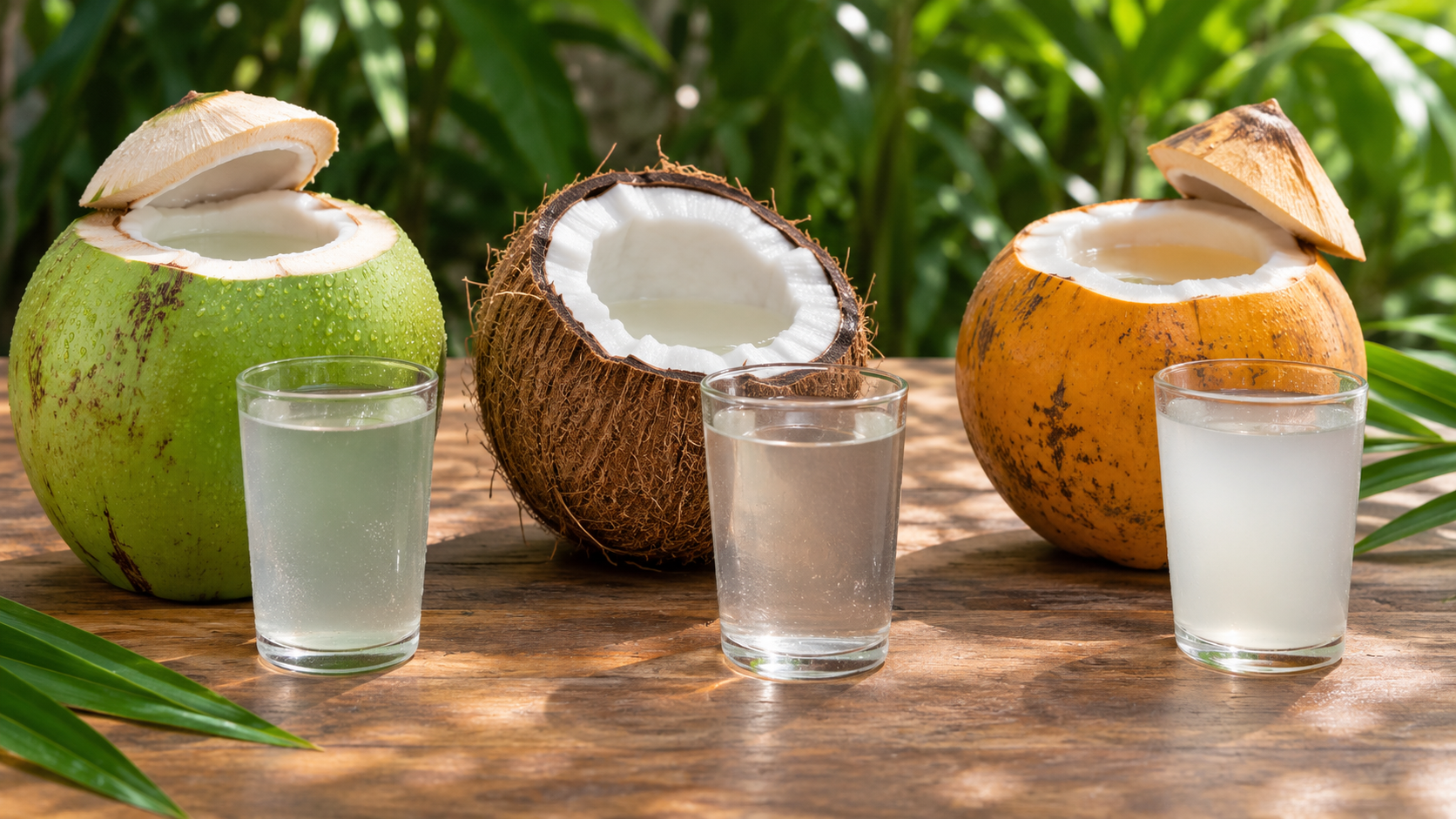
Harvest age matters because the water changes as the coconut matures. Young coconuts, harvested before the inner flesh hardens, contain more water with a fresher, sweeter taste. As the nut matures, the flesh thickens, water volume generally falls and taste can become less sweet. The best harvest window balances volume, sweetness and aroma.
For coconut water processing, nuts are generally harvested young, when the flesh is still soft and thin. The exact timing depends on variety and growing conditions, and experienced harvesters judge readiness by sound, appearance and experience as well as by age. Our article on green coconut water explains why young green nuts are used.
Practical points:
- Harvesting too early can give less developed flavour.
- Harvesting too late can lower water volume and sweetness.
- Mixed-age loads lead to batch variation in taste and Brix.
- Time from harvest to processing affects freshness, so logistics from orchard to factory matter.
How does variety affect Brix and taste in the can?
Variety affects Brix because sweeter varieties contain more dissolved sugars in their water, which shows up as a higher Brix reading. It affects taste through sweetness, aroma and the balance of sugars and minerals. Processing then modifies these traits slightly, so the variety’s character is the base on which the final product is built.
Brix is the most common measure used to describe coconut water sweetness in specifications. It is read with a refractometer and reflects dissolved solids, mainly sugars. Our Brix guide explains how the measure works.
How variety translates into the finished product:
- Sweet varieties give a naturally sweeter product without added sugar, which supports “100% coconut water” positioning.
- Aromatic varieties give a distinctive fragrance that can set a premium product apart, if the process protects it.
- Milder varieties may suit blends or flavoured coconut water, where other ingredients carry the taste.
- Mixed sourcing requires blending or tighter selection to keep Brix and taste within specification.
Some brands choose to state the variety on the label, for example highlighting an aromatic coconut. Others focus on origin and taste. Either way, the claim must match the raw material actually used.
How does processing interact with variety?
Processing interacts with variety because heat, oxygen and time affect delicate aromas and colour. A sweet, robust variety may come through processing with little change, while an aromatic variety may lose part of its fragrance if heating is strong. The process is therefore tuned to protect the qualities the brand is paying for.
Points to consider:
- Fast processing after extraction helps keep fresh flavour and limits colour change.
- The heat treatment must make the product safe and stable; within that requirement, it is chosen to limit cooked flavour.
- Oxygen control helps protect aroma and colour.
- Pack choice affects how flavour holds during storage.
Season also plays a part. In periods of heavy rain, some growers and buyers notice water that tastes less sweet; in drier periods, the reverse. A manufacturer that tracks Brix at intake can adjust selection to stay within specification through the year.
Packaged coconut water will never taste exactly like water drunk straight from the nut. Our comparison of coconut water in a coconut versus packaged explains why, and what consumers notice.
How can buyers check variety and sourcing claims?
Buyers can check variety and sourcing claims by asking for the manufacturer’s raw material specification, a description of how nuts are selected and received, and samples made from the same sourcing that will supply production. Where a label names a variety, sourcing records should support it.
- Raw material specification. States the variety or variety group, origin region, harvest stage and acceptance criteria at intake.
- Intake checks. Describes how incoming nuts are inspected, for example appearance, maturity and a Brix check on sampled nuts.
- Supplier base. Explains whether nuts come from contracted growers, collectors or a mix, and how consistency is managed.
- Traceability. Shows how a finished batch links back to the raw material lots used.
- Production samples. Confirms that approved samples came from the same source as commercial production.
A visit to the orchards or the raw material intake area, in person or by video, often answers these questions quickly and builds confidence in the supply chain.
Does variety matter for flavoured coconut water?
Variety still matters in flavoured coconut water, but less than in pure coconut water. When fruit juice or flavour is added, the coconut base becomes a background, so a clean, consistent variety is often more important than a strongly aromatic one. An aromatic coconut can even compete with delicate added flavours.
For this reason, some brands use their most fragrant coconut water for a premium “pure” SKU and a sweet, neutral base for flavoured variants. This keeps costs balanced and lets each product show its best side.
Specification points linked to variety
| Parameter | Why it relates to variety |
|---|---|
| Raw material description | Defines variety or variety group and origin |
| Harvest stage | Young nuts with soft flesh for drinking water |
| Brix range | Reflects natural sweetness of the variety |
| Taste and aroma reference | Approved sample capturing variety character |
| Colour range | Varieties and maturity differ in tendency to change colour |
| Label wording | Any variety or origin claim must match the raw material |
Commercial terms
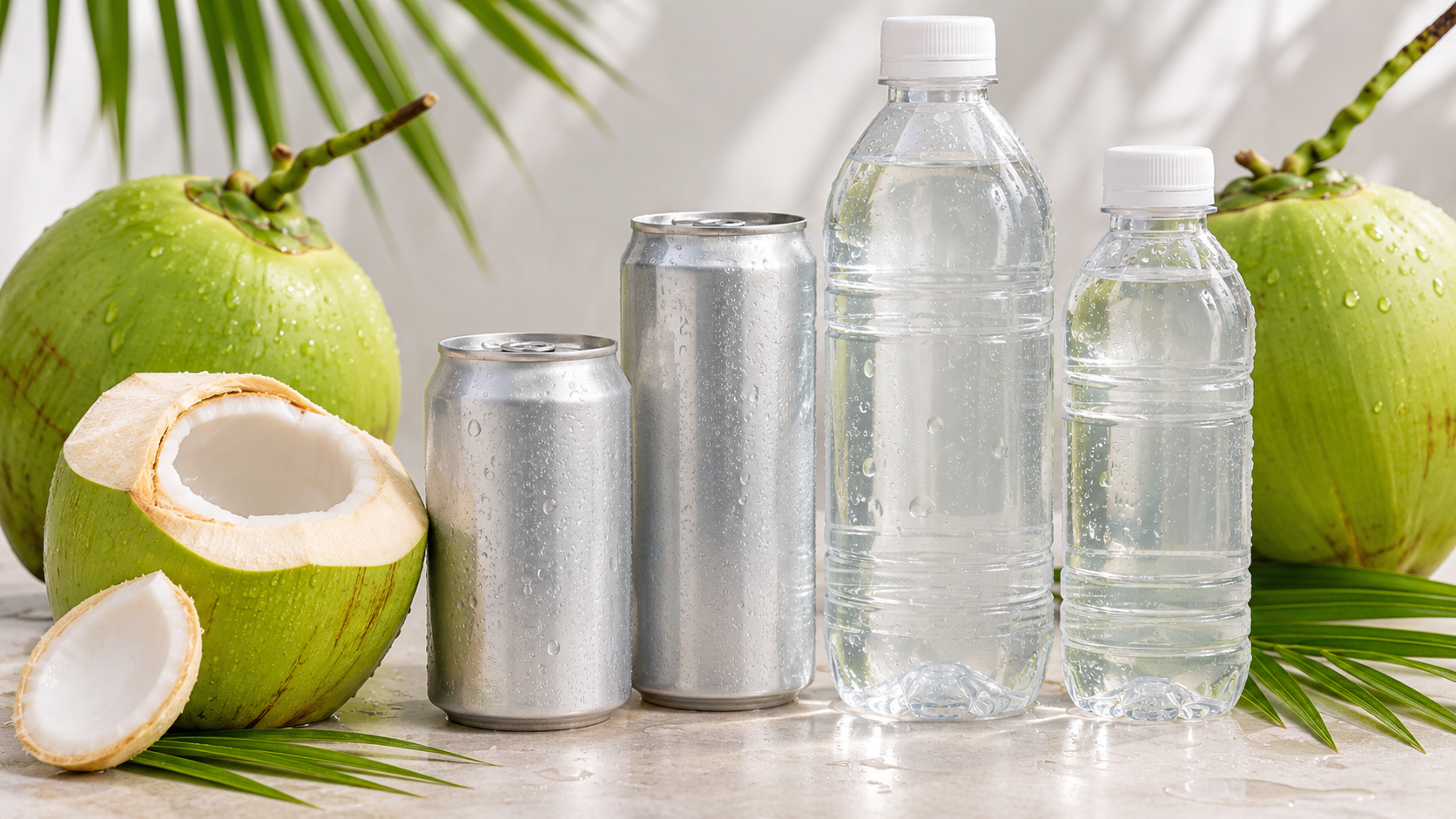
ACMFOOD’s terms for coconut water are a minimum order of 500 cartons per SKU and a production lead time of 15–30 days after samples and artwork are approved. Production runs under HACCP, ISO 22000 and FSSC 22000 systems, with aluminium cans, PET bottles and glass bottles available. Prices depend on variety selection, pack and volume and are quoted per project.
Frequently asked questions
Which coconut variety makes the sweetest coconut water?
Xiem varieties are widely regarded in Vietnam as sweet drinking coconuts, and aromatic types are prized for fragrance. Actual sweetness varies by growing conditions and harvest age, so samples and Brix readings are the reliable guide.
Is dwarf coconut water better than tall coconut water?
Not always. Dwarf palms are widely used for drinking coconuts and often give sweet water, but some tall varieties also give good water. Variety and harvest stage matter more than palm type alone.
Can a label name the coconut variety?
Yes, if the raw material used matches the claim. Variety wording should be agreed with the manufacturer and supported by sourcing records.
Why does coconut water taste different between batches?
Variety, harvest age, season and handling all influence taste. A specification with a Brix range and approved taste reference keeps variation within agreed limits.
Choosing a coconut profile
Coconut varieties for coconut water shape sweetness, aroma and Brix long before processing begins. In Vietnam, Xiem xanh offers sweet, consistent water, Xiem dua adds natural fragrance, and Dua ta represents the traditional tall coconut. Harvest age and processing then decide how much of that character reaches the can.
Send ACMFOOD your taste preference, target market and pack, and we will prepare coconut water samples that show how variety choices affect the final product.