


 Français
 Español
 العربية
 한국어
한국어Functional fruit juice is fruit-based beverage product development that adds ingredients such as vitamins, minerals, fibers, botanicals or electrolytes to deliver specific value propositions beyond taste. In practice, effectiveness, label claims and consumer acceptance depend on the active’s form, dosage, processing, stability and sensory execution.
This guide maps the key ingredient options, formulation principles, stability checks, packaging choices and commercialization steps so R&D and brand teams can design functional fruit juice concepts that are technically feasible and commercially clear.
What is functional fruit juice?
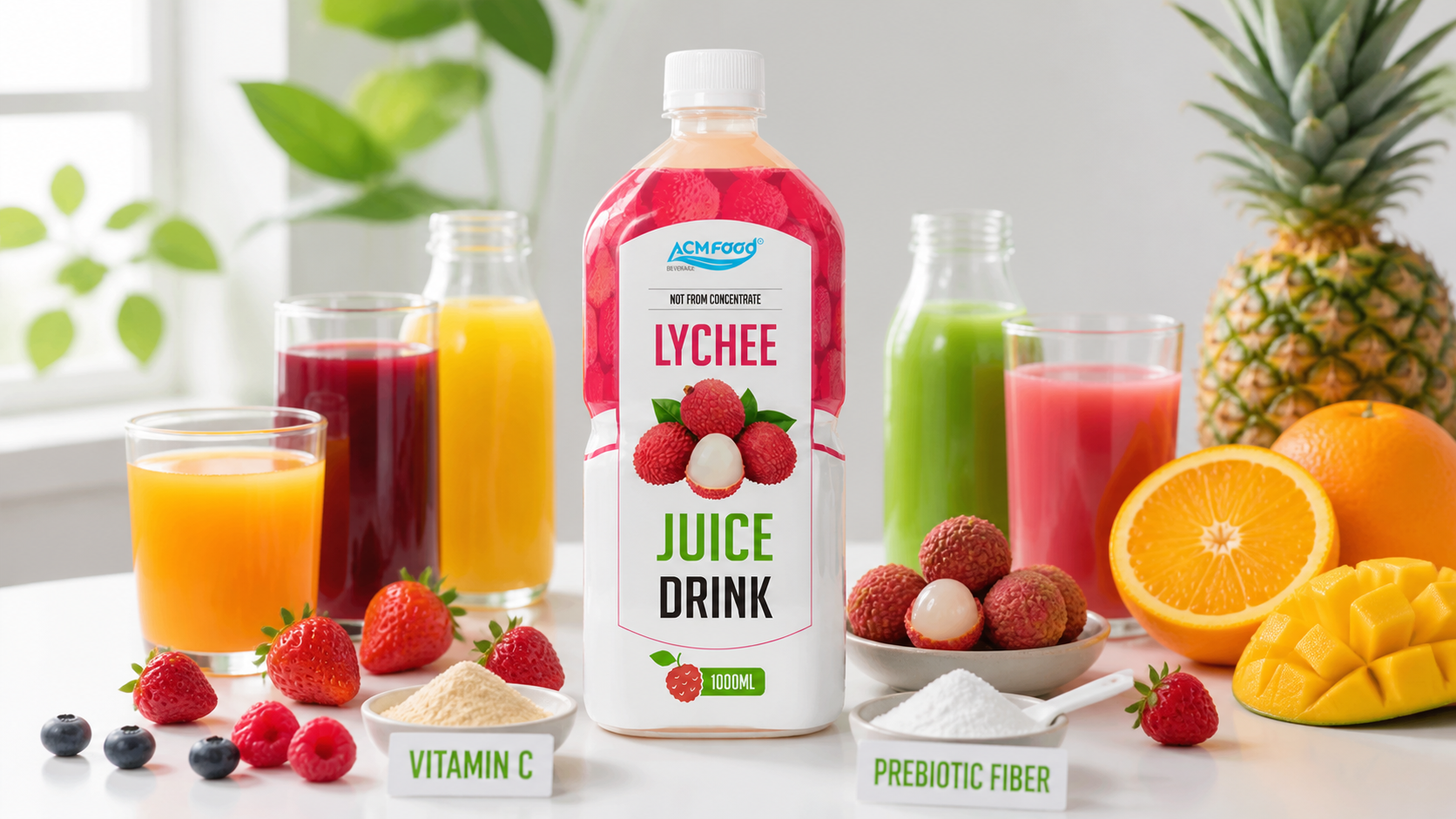
Functional fruit juice is a juice or juice-based drink formulated with added ingredients to provide specific attributes such as added vitamins, electrolytes, polyphenols or prebiotic fiber. The product’s positioning should be supported by measured content and compliant labeling, with taste, color and clarity balanced against the added functional components.
Depending on your market, formats range from 100% juice with added nutrients to nectar or juice drinks where water, sweeteners and other ingredients create space for fortification. Because most actives change flavor, mouthfeel or stability, sensory and processing fit must be considered early in R&D.
Which functional ingredients work well in fruit juice?
Common choices include vitamins (C, B-complex), electrolytes (potassium, sodium), minerals (magnesium, calcium with suitable salts), polyphenol-rich extracts, prebiotic fibers, and selected botanicals. The best options are those that dissolve or disperse well at juice pH, remain stable through processing, and harmonize with your chosen fruit’s aroma and acidity.
- Vitamins: Ascorbic acid (vitamin C) is widely used; certain B vitamins can be added in low sensory-impact levels. Consider light and heat sensitivity; microencapsulation can help in some cases.
- Minerals & electrolytes: Potassium salts often pair naturally with fruit matrices; magnesium or calcium may need chelation or specific salts to limit bitterness and haze.
- Prebiotic fibers: Inulin, FOS and other soluble fibers can add body and mild sweetness. Watch for clouding, sediment or gelation; titrate levels during bench work.
- Polyphenol sources: Grape skin, berry concentrates, or green tea extracts contribute color and astringency. Balance with sweetness, acidity and aroma top notes.
- Botanicals & adaptogens: Ginger, turmeric or other botanicals can fit naturally with citrus or tropical profiles. Use standardized extracts compatible with your process; keep flavor impacts in check.
- Caffeine or guarana: Consider only when aligned with the concept and regulations; bitterness management and declaration requirements apply.
- Probiotics: Typically suited to chilled/HPP formats rather than high-heat shelf-stable products. Strain selection and viability validation are essential.
For each candidate, vet solubility, interactions at low pH, heat/light sensitivity, organoleptics, and label declarations. A small dose with strong sensory impact can be harder to balance than a neutral-tasting nutrient at higher allowed levels.
How do processing and stability influence ingredient choice?
Thermal processes (e.g., hot-fill, tunnel pasteurization, UHT) and non-thermal options (e.g., HPP) affect color, flavor and nutrient retention differently. Choose ingredient forms proven to withstand your intended process, and confirm compatibility with pH, ionic strength and packaging.
- Heat sensitivity: Some vitamins and botanicals degrade with time/temperature; choose stable forms or adjust process severity.
- pH & chelation: Acidic environments can improve microbial safety but may impact mineral taste and clarity.
- Cloud & separation: Added powders and fibers can settle; use appropriate homogenization, stabilizers (as regulations allow) or select naturally cloudy matrices.
- Light/oxygen: Choose packaging that reduces light exposure if color or vitamin content is sensitive; manage headspace oxygen.
- Emulsions: For oil-soluble actives or citrus oils, use beverage-grade emulsions designed for your process and storage temperature.
Plan validation studies: accelerated shelf-life, real-time storage, thermal abuse checks, and package compatibility. When sugar is reduced, monitor acid balance and aroma intensity to avoid a thin or sour profile.
Can you reduce sugar while keeping great taste?
Yes—but it requires a holistic approach across juice selection, Brix, acidity, aroma loading and mouthfeel. Lowering sugars often reveals bitterness, acidity or astringency from actives, so combine modest sweetness reduction with flavor architecture, body-building ingredients and careful acid management.
- Matrix selection: Blend naturally lower-sugar juices (e.g., citrus with water and flavor) to target a specific Brix while preserving character. See the fruit juice Brix guide for buyer terminology and control points.
- Flavor strategy: Use top notes and natural flavors to restore aroma impact at lower Brix.
- Acid & buffer balance: Fine-tune citric/malic ratios and total acidity for brightness without harshness.
- Mouthfeel: Prebiotic fibers can add body; pectins or hydrocolloids may be allowed per market rules.
- Sweeteners: Where permitted, carefully blend high-intensity sweeteners to reduce sugar while minimizing aftertaste.
Which base formats fit your concept: 100% juice, nectar or juice drink?
Each base offers different headroom for actives, sugar control and cost. Align your format with positioning and regulations, then tune flavor and Brix. For a deeper overview of category definitions, see 100% juice vs nectar vs juice drink.
| Base format | Juice content style | Functional headroom | Sensory & mouthfeel | Positioning & notes |
|---|---|---|---|---|
| 100% juice | All fruit juice ingredients | Limited space for large doses; choose low-impact actives | Natural body and flavor; color can mask some actives | Premium, simple labels; claims depend on measured content and local rules |
| Nectar | Juice plus water and sweetener | More formulation room than 100% juice | Adjustable sweetness and acidity; moderate body | Balanced taste and cost; flexible for moderate fortification |
| Juice drink | Lower juice content with flavor system | Most headroom for actives and cost control | Lean body unless structured; relies on flavors | Accessible price points; broad flavor palette; style must fit regulations |
Which packaging works for functional fruit juice?
Choose packaging based on process, shelf-life target, distribution and light sensitivity of actives. Glass and cans offer strong barriers; PET and cartons enable different cost and handling benefits. For a structured comparison, review beverage packaging options.
- Light-sensitive formulas: Opaque cans or cartons can help protect color and vitamins.
- Chilled vs shelf-stable: HPP products favor cold-chain PET or HDPE; hot-fill suits PET or glass; aseptic enables cartons or certain PET systems.
- Consumer use: On-the-go favors resealable PET or small cartons; premium gifting may suit glass.
- Recyclability & weight: Consider local infrastructure and logistics costs alongside sustainability goals.
What is a practical workflow from brief to scale-up?
Define the value proposition and constraints first, then iterate quickly from benchtop to pilot with clear go/no-go gates. Lock down process parameters, packaging and claims only after stability and analytical checks confirm targets are met.
- Product brief: Target consumer, use occasion, base format, Brix/acidity range, ingredient guardrails, sweetening approach, color/clarity goals, processing and shelf-life intent, and claim direction.
- Ingredient screening: Shortlist actives by sensory fit, regulatory status and process compatibility.
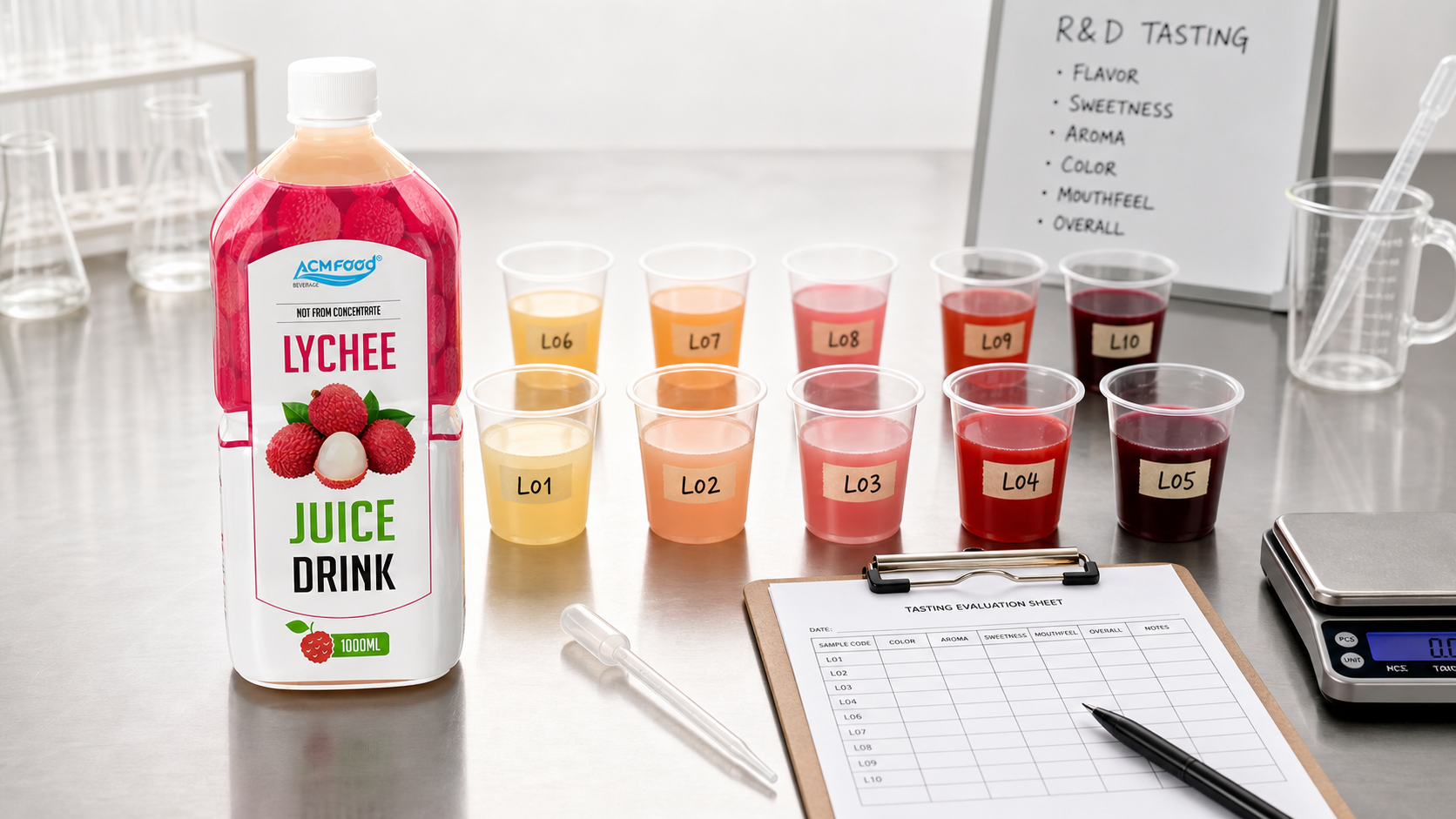
- Benchtop trials: Build a flavor system; titrate actives; measure pH, Brix and dispersion; document with tasting notes.
- Pilot & stability: Validate heat/non-heat process, packaging, and storage conditions; run accelerated and real-time studies.
- Analytical & label: Confirm active levels, allergens, nutrition panel and any eligible statements per local rules.
- Commercialization: Finalize specs, artwork, QA plan and launch timeline; prepare documents per the fruit juice RFQ guide.
How should you approach flavor and mouthfeel design?
Start with a fruit matrix that naturally complements your actives, then layer top notes and texture to deliver a rounded profile at your target Brix. Prebiotic fibers or pectin can add body; acids shape brightness; flavors restore aroma intensity reduced by sugar cuts.
- Citrus + electrolytes: Lemon-lime or grapefruit can carry slight salinity well.
- Berries + polyphenols: Blackcurrant or blueberry support tannic notes with rich aroma.
- Tropical + botanicals: Pineapple-mango pairs with ginger or turmeric warmth.
- Texture: Small adjustments in fiber or pulp level can turn a thin profile into a satisfying sip.
- Testing: Use triangle tests and time-intensity notes to refine aftertaste and balance.
How can you keep claims clear and compliant?
Anchor language in what the product contains rather than promising outcomes. Terms like fortified fruit juice or vitamin fruit juice should reflect verified content per serving and local regulations. Final wording, serving size and label panels must follow the target market’s rules.
- Describe content: “Contains vitamin C” or “with added fiber” is usually clearer than implying a health effect.
- Substantiate: Keep certificates of analysis and process records for each lot.
- Be specific: Name the vitamin/mineral; avoid vague terms like “immune” or “detox” unless regulations clearly allow and you meet thresholds.
- Mind serving size: Eligibility often depends on the declared portion, not the whole bottle.
- Artwork alignment: Align front-of-pack statements with the nutrition table, ingredient list and any mandatory fortification statements.
How do you control costs and evaluate suppliers?
Cost-to-value rests on base juice selection, active ingredient cost-in-use, process route and packaging. Ask suppliers to quote against the same specs and verify what is included (ingredients, processing, packaging, testing, logistics) to make apples-to-apples comparisons.
- Cost drivers: Juice grade and seasonality, active dosage and form, process (HPP, hot-fill, aseptic), packaging, and quality testing scope.
- Quote discipline: Standardize your brief and request breakdowns; see how to compare supplier quotations.
- Service fit: Experience with your chosen actives and format reduces risk.
- Risk controls: Confirm QA plan, batch documentation, and change-control procedures before locking the spec.
FAQs about functional fruit juice
Is “vitamin fruit juice” different from “functional fruit juice”?
Vitamin fruit juice typically highlights added vitamins specifically, while functional fruit juice is a broader category that may include minerals, electrolytes, fibers, botanicals or other components. Either way, label wording should match verified ingredient levels and local regulations.
How much fortification can I add before taste changes?
It depends on the active and base matrix. Some minerals or botanicals impart noticeable notes even at low levels, while others remain neutral. Bench trials are essential to determine sensory thresholds in your specific recipe.
Can botanicals be used in mainstream markets?
Many botanicals are permitted, but allowable forms, limits and wording vary by country. Always check local regulations and use standardized, food-grade extracts suited to your processing method.
What shelf-life can I expect?
Shelf-life depends on process (chilled vs shelf-stable), packaging barriers, pH, oxygen exposure and the stability of added actives. Validate with both accelerated and real-time studies before finalizing claims and date codes.
What should I include in a manufacturer brief?
Define the base format, target Brix, desired actives and dosage range, processing route, packaging, label direction and shelf-life target. Include sensory goals and guardrails. Use the fruit juice RFQ guide to structure your request.
Conclusion and next steps
Winning functional fruit juice products combine credible ingredient choices, process-ready formulations and delightful sensory profiles. Align the base format with positioning, protect stability through processing and packaging, and keep claims anchored to verified content. With a tight brief and disciplined trials, your team can scale a concept that is both compliant and commercially attractive.
Turning this into a product
For the formats, ingredients and processing routes the factory actually runs, see beverage product capabilities. The manufacturing side is covered in contract beverage production; for launching under your own label, see private label beverages. Raw material specification is covered in ingredients and sourcing. To discuss a specification, request a quote.
Request a quote