


 Français
 Español
 العربية
 한국어
한국어Fruit juice quality consistency means consumers experience the same recognizable taste, aroma, color, and mouthfeel every time they open a bottle, even when batches are produced weeks or months apart. In practice, achieving that sameness requires tight control from fruit sourcing through blending, processing, packaging, and shelf-life monitoring.
This article explains how manufacturers maintain consistent fruit juice taste between batches: where variability comes from, which controls matter most, and how sensory, instrumental, and statistical tools work together on the factory floor. It also provides a buyer’s checklist to evaluate a supplier’s systems and align expectations before you launch or scale.
What does fruit juice quality consistency actually mean?
Consistency means a defined product profile—covering sweetness, acidity, aroma, color, mouthfeel, and aftertaste—stays within narrow, pre-agreed tolerances. In operations, that profile is translated into a product specification with sensory descriptors plus analytical targets such as Brix, titratable acidity (TA), pH, color parameters, and dissolved oxygen limits.
Manufacturers align on a “golden sample” and a written specification. Every batch is measured against both, using in-line checks and lab verification, then signed off through batch records and Certificates of Analysis (COA). The tighter and clearer the spec, the easier it is to replicate batch to batch.
Why does fruit juice taste vary between batches?
Even with one recipe, taste can drift because juice is agricultural and processing-sensitive. The largest sources of variation include:
- Raw fruit variability: variety, growing region, seasonality, maturity at harvest, weather, soil, and storage.
- Concentrate variability: different lots may vary in Brix-to-acid ratio, color, and volatile aroma profile.
- Processing conditions: extraction method, clarification vs. cloudy style, enzymation, deaeration, aroma recovery, and pasteurization profile can nudge flavor.
- Water quality: minerals, hardness, and microbiological standards must be controlled for reconstituted juices and drinks.
- Formulation accuracy: dosing errors for juice, sweeteners, acids, flavors, or stabilizers cause perceptible shifts.
- Oxygen & light exposure: oxidation alters aroma and color; light can degrade sensitive compounds.
- Packaging & closures: barrier properties, headspace oxygen, and seal integrity influence flavor stability over time.
Which controls keep raw fruit variability in check?
Manufacturers reduce incoming variability before it reaches the kettle:
- Sourcing strategy: define approved varieties and regions; plan seasonal transitions; dual-source with matched specs; keep safety stocks of matched lots.
- Supplier specifications: Brix range, TA, pH, sensory descriptors, color targets, and micro standards for NFC or concentrate inputs.
- Lot qualification: pre-ship samples, rapid lab tests on arrival, hold-and-release until specs are verified.
- Staged blending: blend multiple lots to center attributes before final standardization; avoid relying on a single lot outlier.
- Golden sample alignment: use a retained sensory reference to judge whether the incoming fruit character suits your brand profile.
For buyers, understanding how Brix, acidity, and flavor precursors interact is crucial. If you want a refresher on sweetness measurement, see the fruit juice Brix guide.
How do manufacturers standardize sweetness and acidity?
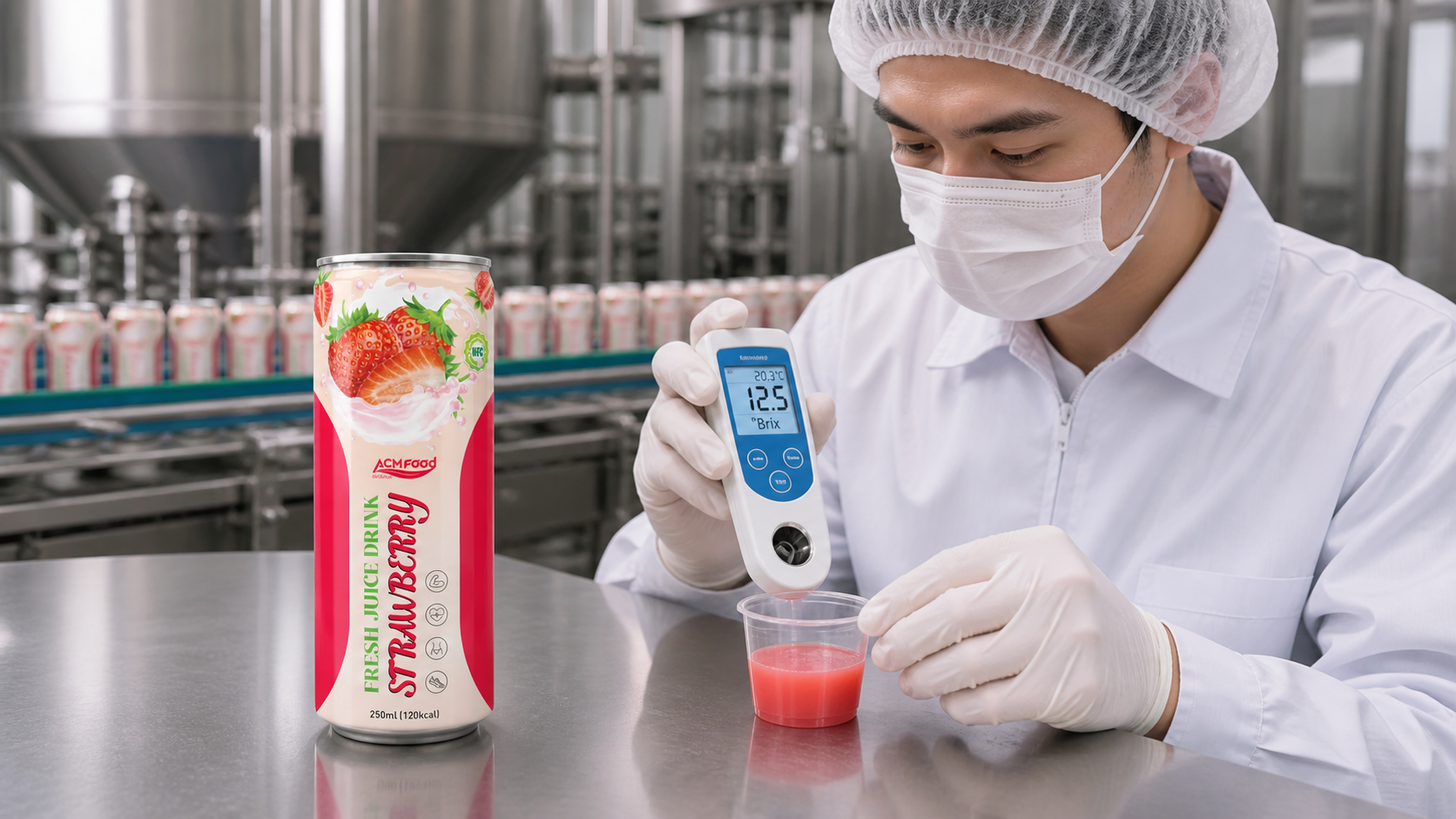
The core levers are Brix (sweetness proxy) and titratable acidity (perceived tartness), balanced alongside pH for stability and taste. Manufacturers reconstitute concentrates or blend NFC lots, then adjust toward targets by dosing juice concentrate, water, or approved acids within the declared formulation and regulations.
Controls typically include calibrated meters, in-line or at-line sampling, and confirmation in the lab. Adjustments are made incrementally to avoid overshooting—then verified again before filling. Sensory checks confirm that numerically matched Brix–TA also matches perceived taste, since sweetness–sourness balance is not perfectly linear.
| Attribute | Why it varies | Typical measurements | Standardization actions | Notes for buyers |
|---|---|---|---|---|
| Sweetness | Seasonal sugars, dilution errors | Brix, refractometry | Adjust concentrate or water; blend lots | Align on Brix target and tolerance |
| Acidity | Fruit maturity, variety | TA, pH | Balance with permitted acids or blend | Specify both TA and pH |
| Aroma | Volatile loss, oxidation | Sensory, aroma capture checks | Deaeration, aroma recovery, gentle heat | Retain a golden sample |
| Color | Variety, heat exposure | Visual, colorimetry | Blend to target; limit heat/light | Set acceptable color range |
| Mouthfeel | Pulp level, pectin breakdown | Sensory, viscosity trends | Control enzymation, homogenization | Define cloudy vs. clarified |
Formulation consistency goes beyond juice percentage
Many juice products include added ingredients—natural flavors, botanicals, sweeteners, minerals, or stabilizers—each with its own variability. Consistency depends on documented ingredient specs, verified potency, and precise dosing. Weighing, pre-dissolving, and staged addition minimize clumping or local over-dosing that can create hot spots in taste.
- Water: minerals and hardness affect perceived sweetness, bitterness, and mouthfeel; manufacturers use controlled, food-grade water treatment.
- Flavors: natural extracts can drift by lot; vendors supply spec sheets and guidance for dose ranges.
- Sweeteners: for reduced-sugar designs, the balance among sweeteners, acids, and flavor modulations needs validation. Learn more in no added sugar vs reduced sugar.
- Label goals: clean-label constraints may limit stabilizers or flavor options; plan your tolerance accordingly. See clean label fruit juice formulation.
Processing steps that influence taste—and how they’re controlled
Processing can preserve or shift flavor. Manufacturers standardize critical steps to keep batch outcomes aligned:
- Extraction & clarification: gentle extraction protects volatiles; clarified vs. cloudy choices affect mouthfeel and flavor carry.
- Enzymation: controls pectin breakdown and cloud stability; time and temperature are standardized.
- Deaeration: reduces dissolved oxygen before heat, protecting aroma and color.
- Aroma recovery: systems can capture and return characterful volatiles to the juice matrix.
- Thermal processing: pasteurization setpoints and holding times are calibrated to meet safety targets while minimizing sensory impact.
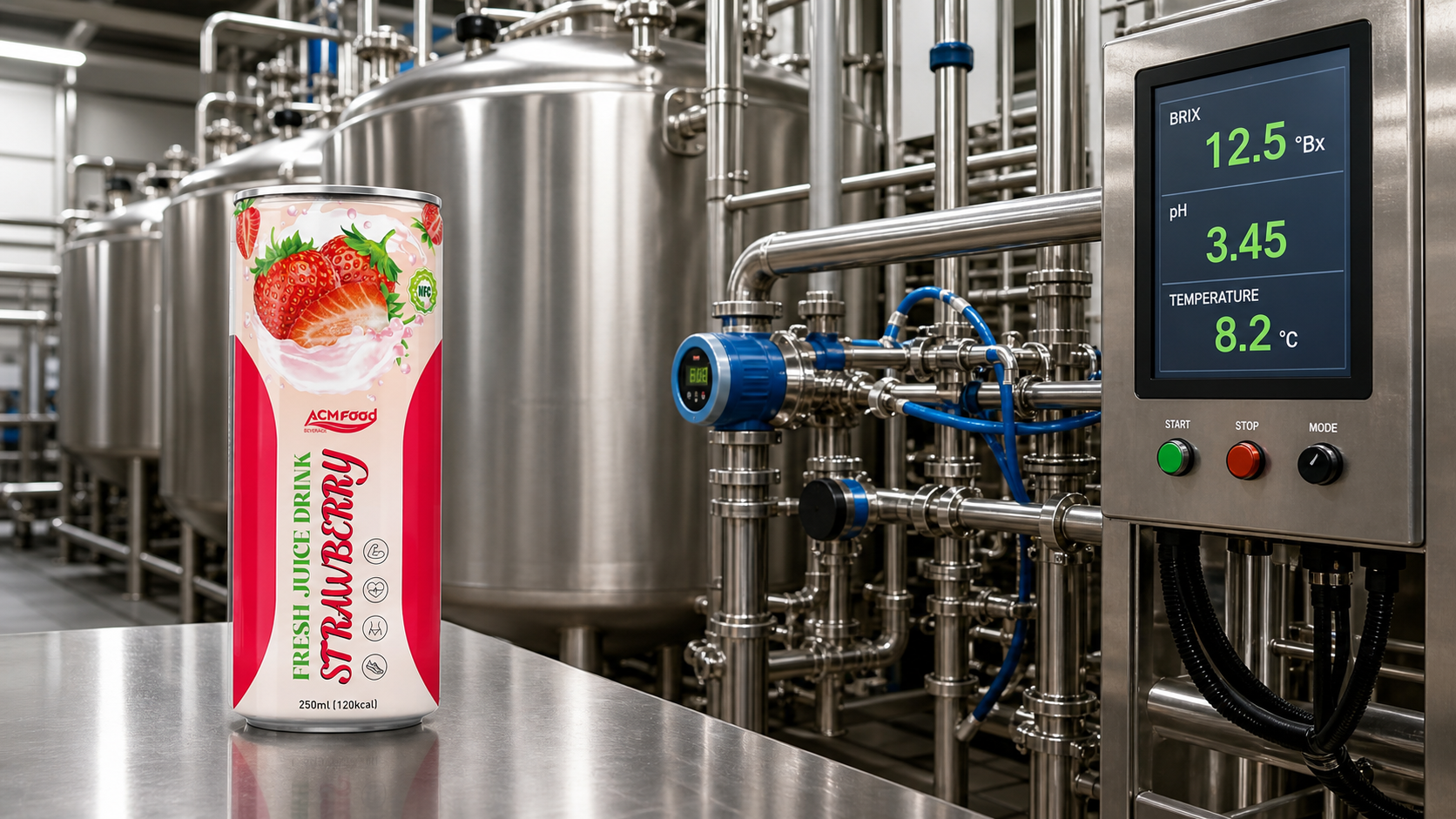
- In-line instrumentation: Brix, temperature, flow, and sometimes color/turbidity meters guide real-time adjustments.
- Oxygen management: headspace control, inert gas blanketing, and low-turbulence transfers help protect flavor.
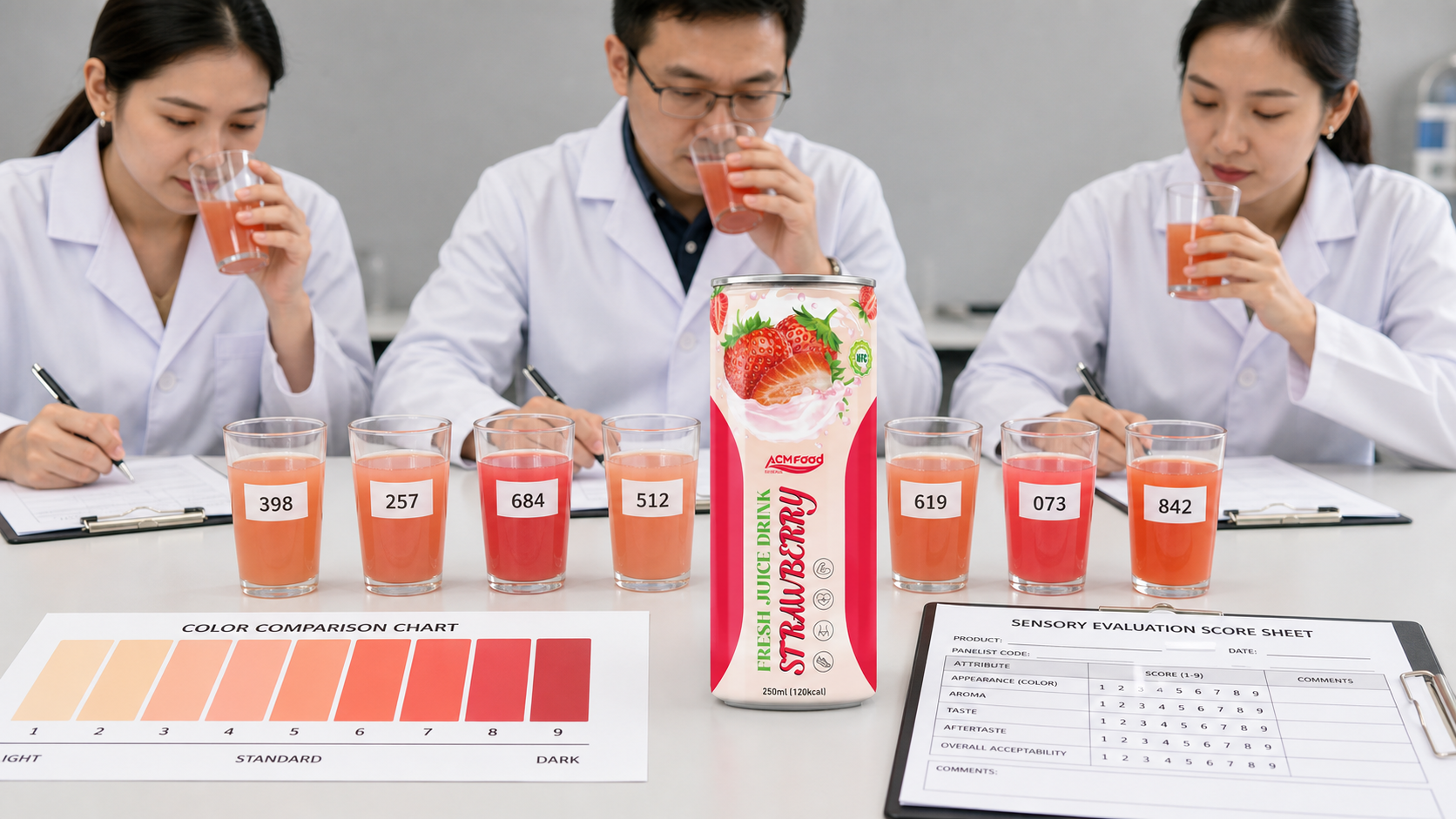
Sensory evaluation: where analytics meet perception
Instruments verify targets, but sensory decides if the product still “drinks like your brand.” Teams use:
- Golden sample comparisons: reference retained from approved production; replaced on a defined cadence.
- Descriptive profiling: lexicon-based evaluation of aroma notes, sweetness–acidity balance, body, and aftertaste.
- Difference tests: triangle or duo–trio tests to detect batch-to-batch shifts.
- Consumer validation (when relevant): small clinics to confirm no perceptible change for target drinkers.
Sensory sign-off is typically paired with lab verification and a review of batch records. Retention samples are kept across shelf life to monitor drift and inform continuous improvement.
Statistical process control (SPC) and batch records
Consistency is sustained with documented systems, not heroic last-minute fixes. Manufacturers apply:
- Control plans: define critical control points, test frequencies, and acceptance criteria.
- SPC charts: monitor Brix, TA, pH, fill volume, and temperature against control limits to detect trends early.
- Calibration routines: scheduled checks for balances, refractometers, pH meters, thermometers, and flowmeters.
- Change control: formal evaluation before altering ingredients, equipment, or parameters; updated specs and golden samples as needed.
- COA & traceability: lot genealogy, test results, and sign-offs compiled for each batch.
If you’re aligning suppliers, this juice supplier audit checklist can help you assess consistency systems during visits or remote evaluations.
How do multi-fruit blends stay consistent?
Blends introduce extra variables—multiple juices, potentially multiple suppliers—yet they can be highly consistent when built on a robust base and constrained by a clear flavor map. Manufacturers often:
- Anchor the blend: fix the primary juice’s Brix–TA center and allow minor tuning of secondary juices.
- Use staged blending: create stable sub-blends (e.g., tropical base) then adjust top notes in a second stage.
- Document a flavor map: priority aroma notes and intensity targets, linked to sensory descriptors.
- Vet natural flavor adds: define permitted range and substitution strategy for lot changes.
See practical approaches in fruit juice blends for private labels.
Packaging, storage, and flavor stability
Even a perfectly standardized batch can drift later if stability is not protected. Manufacturers control:
- Packaging selection: oxygen and light barrier fit the product’s sensitivity and intended shelf life.
- Headspace oxygen: controlled filling and effective closures reduce oxidation risk.
- Warehouse conditions: temperature, light exposure, and rotation (FIFO/FEFO) to minimize quality loss.
- Distribution testing: shipping simulations or real-route trials to confirm robustness.
Troubleshooting off-notes and drift
When a batch reads “in spec” but tastes different, manufacturers work through likely causes:
- Spec gaps: are aroma descriptors or color tolerances too broad? Tighten qualitative ranges.
- Instrument drift: check recent calibration of refractometer, pH meter, and thermometers.
- Blend bias: did one lot dominate? Re-balance with a centering blend.
- Oxygen pickup: review deaeration efficacy and headspace control.
- Thermal exposure: verify hold times and any unplanned recirculation or slow cooling.
- Ingredient potency: confirm flavor strength and re-validate dose within the approved window.
Setting realistic tolerances with your manufacturer
Tight tolerances deliver sameness but may raise costs or scrap risk when agricultural inputs fluctuate. Agree upfront on a defensible window for Brix, TA, pH, color, and sensory notes. Pilot runs and first-article approval help set those windows with real plant data, not purely benchtop assumptions.
Map the development stages from bench to plant in the private label development timeline to plan alignment checkpoints before scale-up.
What buyers should ask about consistency systems
Before awarding volume, request documentation and walk through the process:
- Product specification: numeric targets plus sensory descriptors, with a current golden sample.
- Incoming control: how are fruit/concentrate lots qualified and blended before standardization?
- Instrumentation: which in-line and lab tests are used and how often are they calibrated?
- Adjustment protocol: who signs off on Brix–TA corrections and how is overshoot avoided?
- Sensory program: panel method, frequency, and retention sample policy across shelf life.
- Records & traceability: example batch records, control charts, and COA templates.
- Change control: how are ingredient, process, or equipment changes assessed and communicated?
- Shelf-life validation: approach to real-time or accelerated checks for flavor stability.
For a broader category context, see types of beverages to align drink format and regulatory definitions with your specification strategy.
FAQ: Common questions about beverage batch consistency
Can 100% NFC juice taste the same all year?
Often yes within a well-defined tolerance, but NFC (not-from-concentrate) reflects seasonal nuances. Skilled sourcing, lot blending, and careful Brix–TA standardization help keep the profile steady while preserving the character of the fruit.
Which is more reliable for sameness: NFC or reconstituted from concentrate?
Reconstituted juice typically allows tighter standardization because the concentrate’s solids can be adjusted more precisely and water quality is controlled. NFC consistency can still be excellent with strong sourcing and blending programs.
How tight should Brix and TA tolerances be?
They should be tight enough that consumers won’t perceive swing, but wide enough to remain practical with agricultural variability. Define tolerances collaboratively after pilot runs and early production data, pairing analytics with sensory thresholds.
Does pasteurization change the taste?
Thermal steps can nudge aroma and color. Manufacturers use validated time–temperature combinations, rapid cooling, and oxygen control to meet safety targets while minimizing sensory impact.
Do reduced-sugar formulations make consistency harder?
They can, because sweetener systems and acid balance are more complex and sweetness perception depends on matrix effects. Robust specs, pilot validation, and tight dosing control help. See the overview of no added sugar vs reduced sugar for positioning options.
Key takeaways
Consistency is engineered: start with matched fruit inputs, standardize Brix–TA with validated instruments, lock in process parameters, and confirm with trained sensory. Document everything through SPC and batch records, retain golden samples, and validate shelf-life stability. For buyers, define realistic tolerances and audit the supplier’s systems early. These practices create a repeatable, recognizable taste your consumers can trust, batch after batch.
When you brief a manufacturer, align on Brix–TA targets, sensory descriptors, ingredient ranges, in-line controls, and approval checkpoints. Use resources like the fruit juice Brix explained article and this juice supplier audit checklist to sharpen requirements, and explore blend design principles in fruit juice blends for private labels. For timelines and cross-functional milestones, review the private label development timeline.
Turning this into a product
For the formats, ingredients and processing routes the factory actually runs, see beverage product capabilities. For how contract production is structured, see OEM beverage manufacturing; for launching under your own label, see private label beverages. Recipe development and sampling are described under formulation and R&D. To discuss a specification, request a quote.
Request a quote